The Celtic Cross tarot spread, step by step
The Celtic Cross is the most famous tarot spread, and the one Arthur Edward Waite printed in the book that came with the 1909 deck. It uses ten cards: six in a cross and four in a column beside it. It looks daunting, but read in pairs it becomes a clear picture of a situation.
Laying it out
Shuffle with one situation in mind. Lay the first card in the centre, and the second across it sideways. Then place four cards around them: above, below, to the left and to the right. That makes the cross. Finally lay four cards in a column to the right of the cross, from the bottom up.
The ten positions
Readers vary the wording a little, but the positions are usually these:
- 1. The heart of it: the situation as it stands
- 2. What crosses it: the challenge or the complication, for good or ill
- 3. Above: what you are aiming for, or what you are aware of
- 4. Below: the foundation: what lies underneath, often unspoken
- 5. Behind: what is passing, the recent past
- 6. Ahead: what is coming into view next
- 7. You: your own attitude and position
- 8. Around you: other people and your surroundings
- 9. Hopes and fears: often the same thing seen from two sides
- 10. Where it leads: where things are heading if nothing changes
Reading it in pairs
Ten cards at once is too much to take in. Read them as five pairs instead. Cards 1 and 2 are the core: the situation and what complicates it. Cards 3 and 4 are the conscious and the unconscious: what you think it is about and what it is really built on. Cards 5 and 6 are the movement: what is leaving and what is arriving. Cards 7 and 8 are you and the world around you. Cards 9 and 10 are what you hope or fear, and where things are going.
Suppose the heart of the matter is the Six of Swords, a boat moving towards calmer water, and it is crossed by the Five of Wands, five people sparring. You are trying to move on, and a squabble keeps pulling you back into the rough water. Each pair works like that: a small sentence.
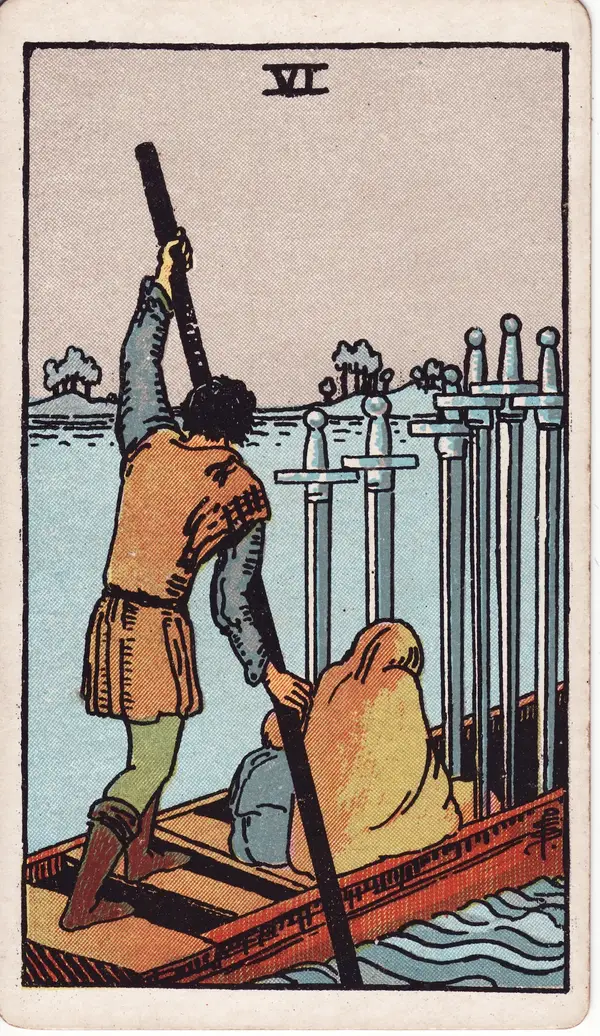
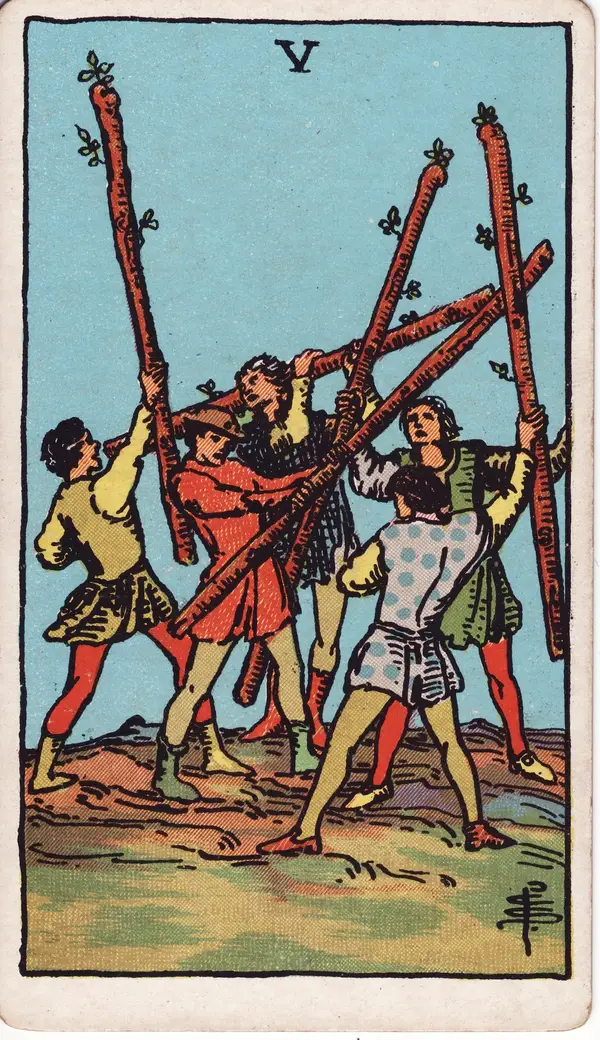
A crossing: moving on, crossed by a squabble.
The last card is not a verdict
The tenth card is often called the outcome, and it is the one people turn over with the most nerves. It is better read as a direction than a sentence: where things are heading if nobody changes course. The rest of the spread shows you where the course could change. Card 4, the foundation, and card 7, your own attitude, are usually the places to start.
Tips for a first Celtic Cross
Count the major cards: three or more means the situation is bigger than it looks. Look for a suit that dominates. Notice where the court cards fall, because they are often the people involved. And if the spread feels like too much, it is fine to lay only the cross of six and leave the column for another day.
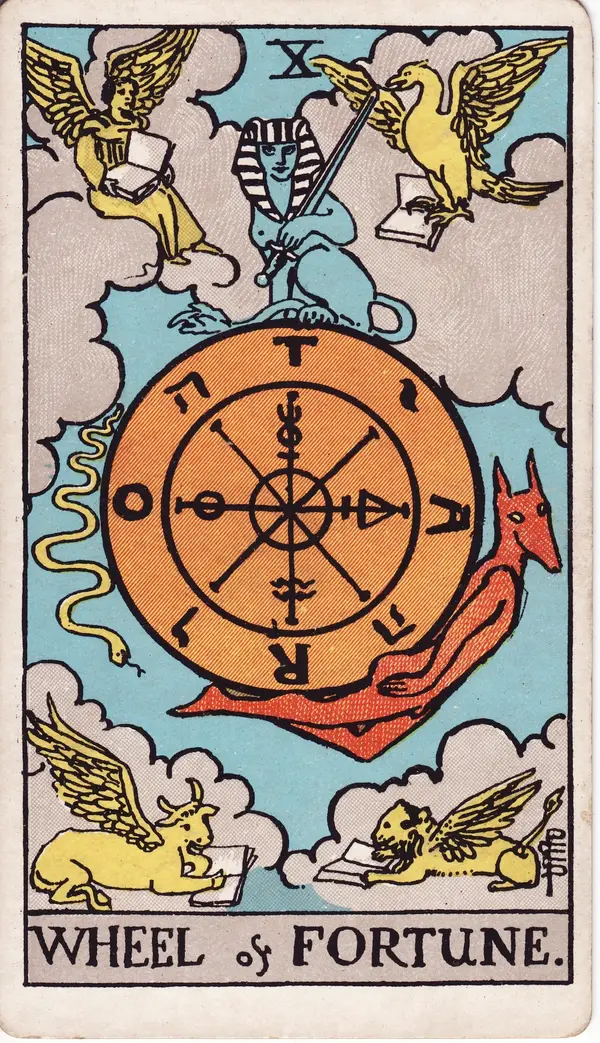
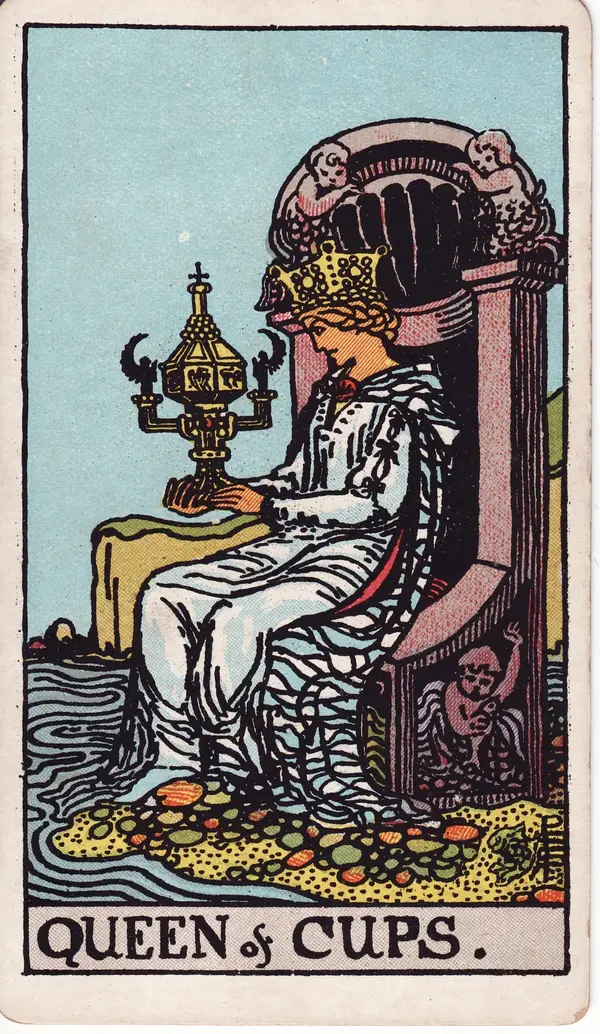
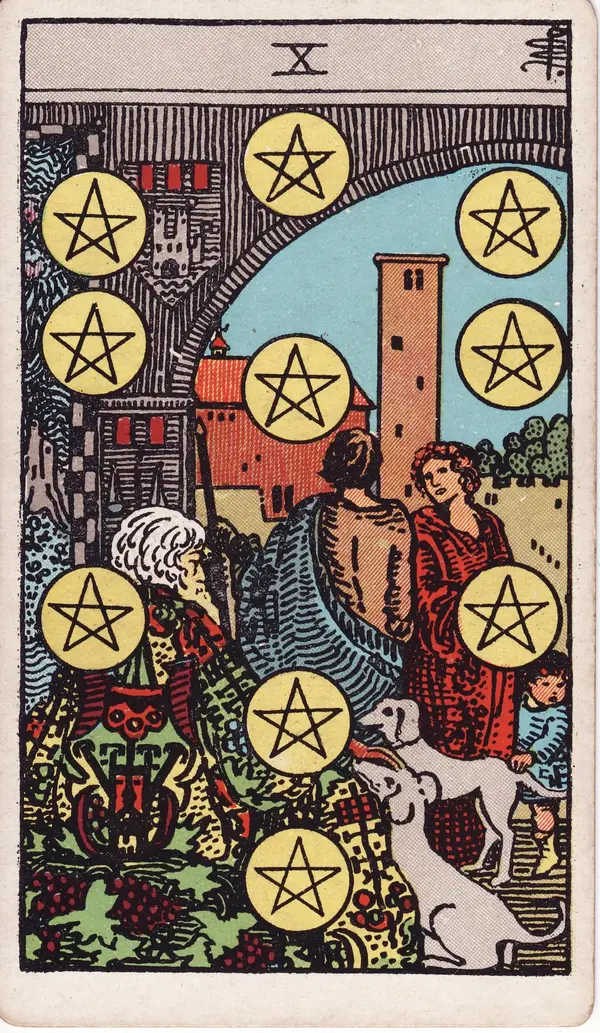
A major card, a court card, a suit card: three kinds of weight.
See which three cards come up for you today, read for your star sign and the moon.
Get today’s readingRider–Waite–Smith, 1909 · art by Pamela Colman Smith