Your first tarot deck, and how to do a daily draw
You do not need anything special to start reading tarot: a deck, a few minutes in the morning, and somewhere to write things down. This guide covers choosing the deck, getting to know it, and a daily habit that teaches the cards faster than any book.
Choosing a deck
There are thousands of tarot decks, and almost all of them follow one of three traditions. For learning, the easiest is a deck based on the 1909 Rider-Waite-Smith cards, the deck used on this site, because every one of its seventy-eight cards shows a scene. When you forget what the Five of Cups means, you can look at the figure in a black cloak staring at three spilled cups and work it out.
The Tarot of Marseille, the older French pattern, shows the number cards as plain arrangements of cups, coins, swords and batons, so those cards have to be learned by number and suit. The Thoth deck, painted by Lady Frieda Harris to designs by Aleister Crowley, is beautiful and dense with symbols, and it renames several cards. Both are rewarding, and both are harder going for a first deck.
Beyond that, choose the art you want to look at every day. A deck you like holding is a deck you will use. And ignore the old superstition that your first deck has to be a gift. Plenty of readers bought their own.
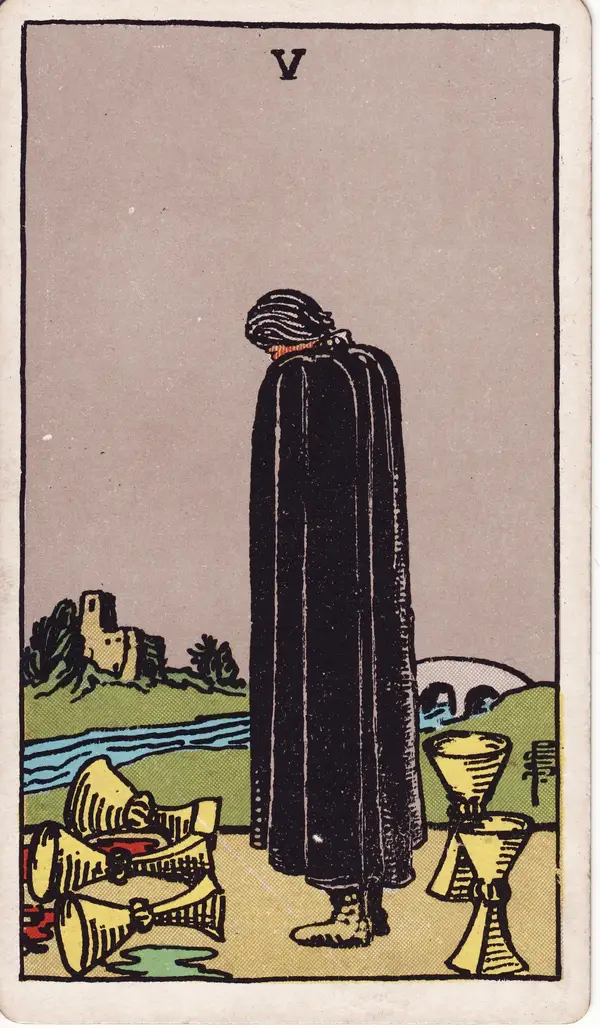
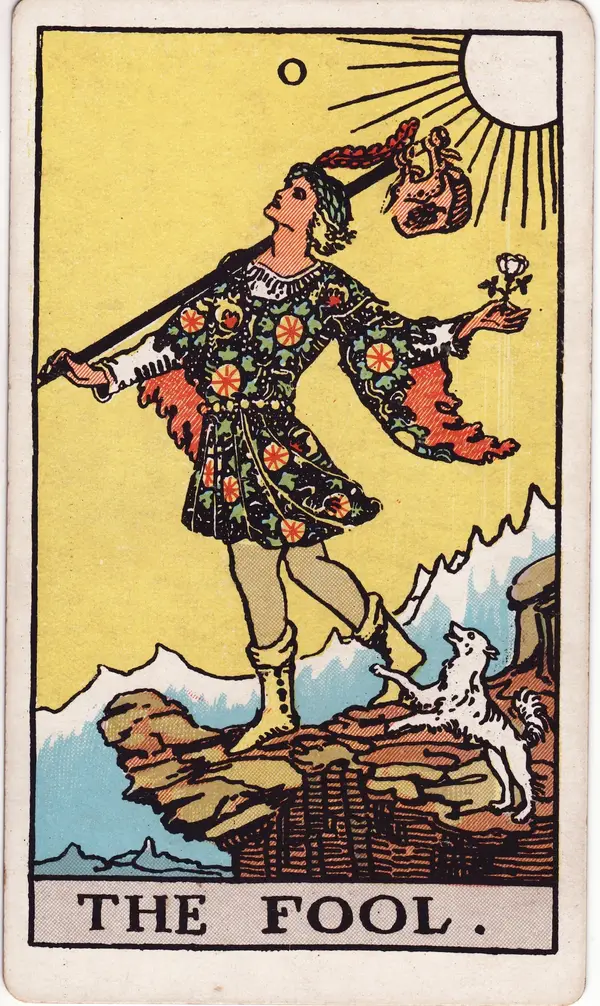
Scenes on every card make the 1909 deck the easiest to learn from.
Getting to know the cards
Before reading anything, go through the whole deck once, slowly. Sort it into five piles: the twenty-two major cards and the four suits. Lay each suit out from Ace to Ten, then the four court cards, and look at how the pictures change along the row. You will notice things no book mentions, and those first impressions are worth noting down.
It helps to pick one card that you like and one that you dislike, and to write a few lines about why. The card you dislike often turns out to be the one with the most to say to you.
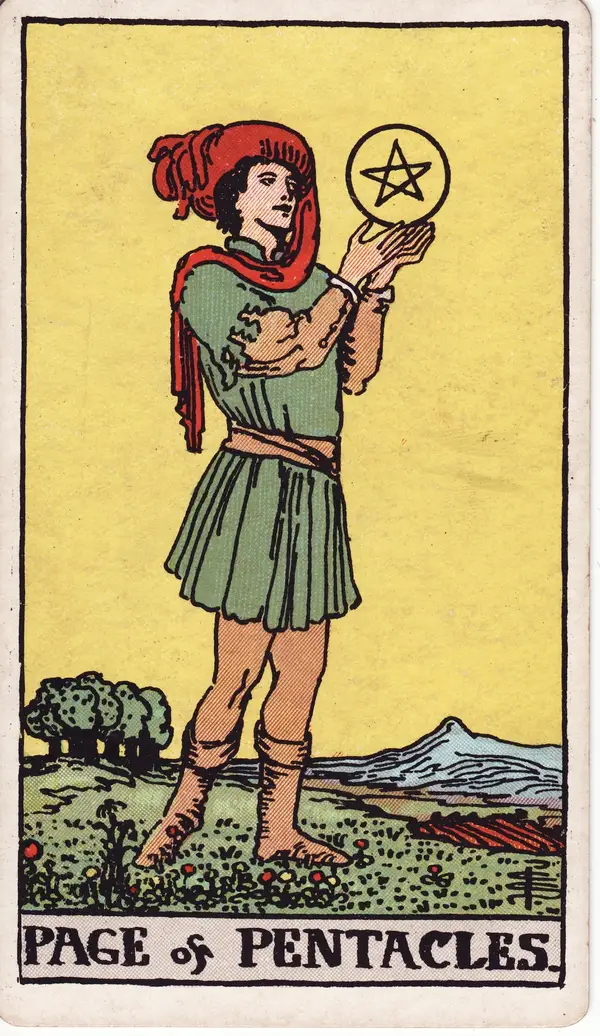
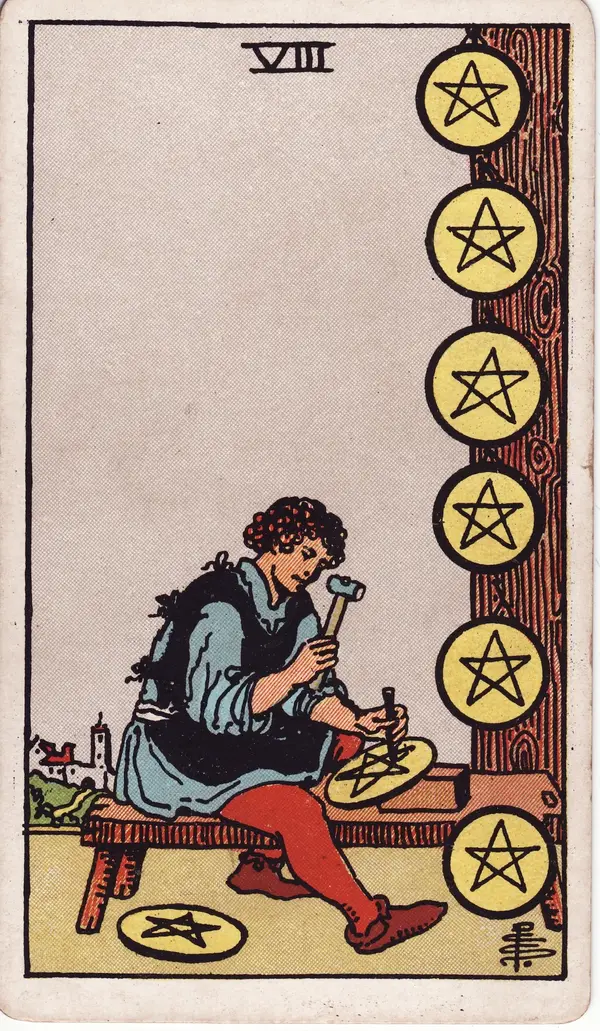
The Page of Pentacles studies; the Eight of Pentacles practises.
Shuffling
Any shuffle that mixes the cards will do. An overhand shuffle, moving small packets from one hand to the other, is gentle on the cards and easy with a large deck. Riffling, bending the two halves so the corners interleave, mixes well but wears the cards and keeps them all the same way up, which matters if you read reversed cards. The simplest method of all is to spread the cards face down on a table and swirl them around with both hands, then gather them up. That also turns some of them upside down, so reversals come up naturally.
The one-card daily draw
A single card each morning is the quickest way to learn a deck. A routine that works:
- Shuffle: while thinking about the day ahead, not about a particular worry
- Draw one card: and look at it for a minute before you look anything up: the figures, the colours, which way things are facing
- Write one line: about what you see and what it might mean for today
- Then read the meaning: and add a second line if it changes your first thought
- In the evening: look at the card again and write a sentence about how the day actually went
Keeping a tarot journal
The evening line is where the learning happens. After a few weeks you will have your own record of what each card turned out to mean in your life, which is far more useful than any list of keywords. You will also notice cards that keep coming back. A card that turns up four times in a month is worth sitting with.
Be honest in it. A reading is only useful if you let it say something you did not want to hear, and a journal is where that shows: the days you ignored the card, and the days it was right about you.
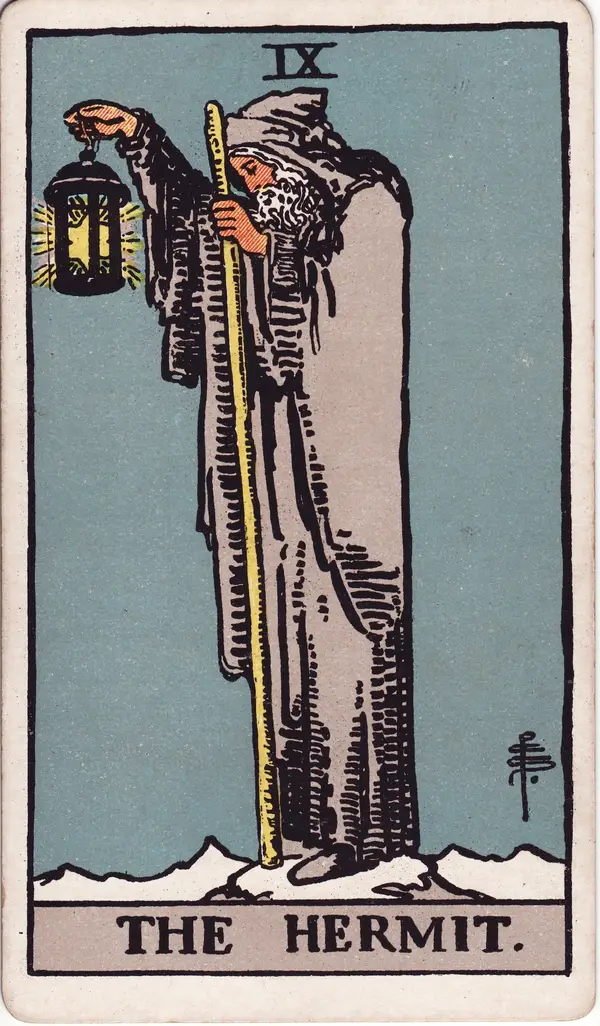
The Hermit: a lantern, a quiet hour and your own light to read by.
When you have no deck with you
The daily reading on this site is a three-card spread drawn for you each morning, read for your star sign and the phase of the moon, and it can be emailed to you before breakfast. The pages for each sign show that sign's cards for the day. Both work well alongside your own draw: compare what the site deals with what your deck says.
See which three cards come up for you today, read for your star sign and the moon.
Get today’s readingRider–Waite–Smith, 1909 · art by Pamela Colman Smith