The four tarot suits: Wands, Cups, Swords and Pentacles
Fifty-six of the seventy-eight cards belong to the four suits. Each suit covers one area of life, so knowing the suits is half of knowing the deck. When you see a card from a suit, you already know roughly what the card is about before you know what it says.
Where the suits came from
The suits are older than tarot. The playing cards that reached Italy in the 1300s already had four suits: cups, coins, swords and batons. They are still used in Italian and Spanish playing cards today. When the occultists of the nineteenth century took up tarot, they matched each suit with one of the four classical elements and renamed coins as pentacles, coins marked with a five-pointed star. The 1909 deck kept the new name.
Wands: fire, drive and making things
Wands are living branches, still sprouting leaves. The suit covers ambition, creativity, the drive behind a project, travel and the urge to start something. Its element is fire. The suit runs from the Ace, a branch offered out of a cloud, through the Three of Wands, a man on a cliff watching for his ships, to the Ten of Wands, a man bent double under ten heavy staves. It is the story of an idea that grows until it becomes a burden.
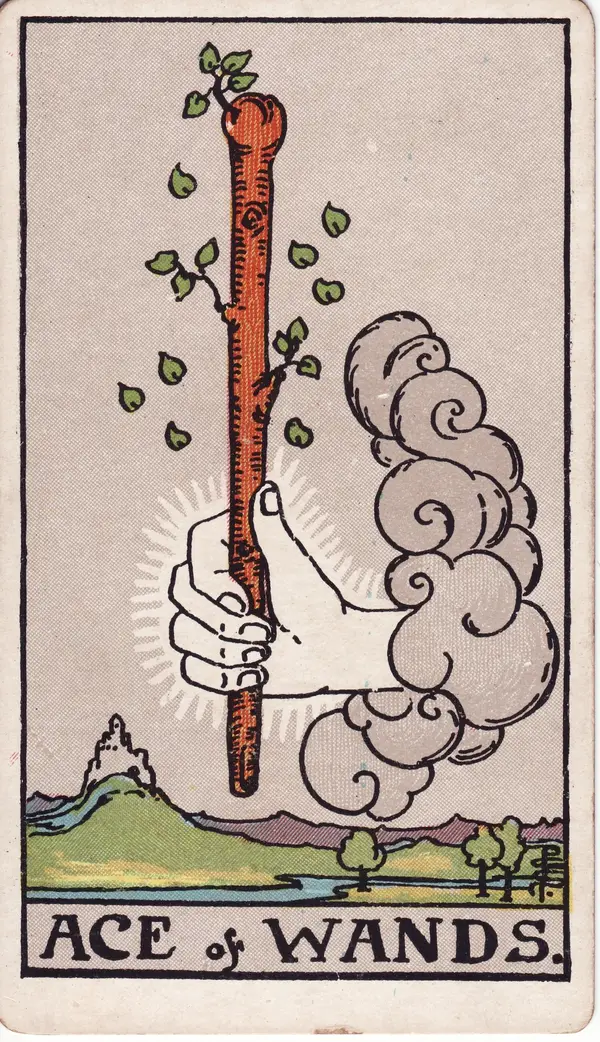
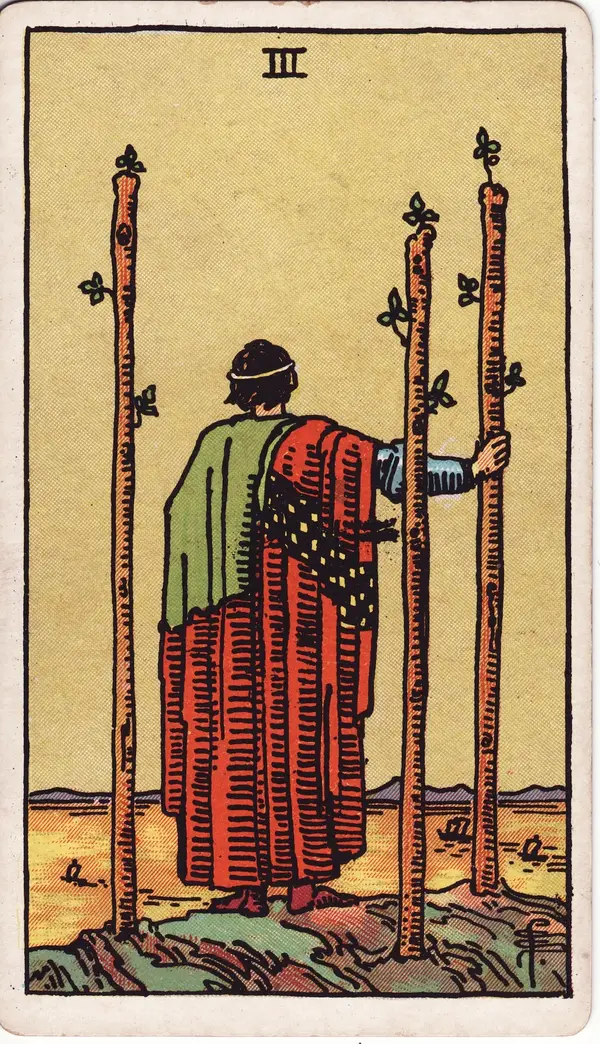
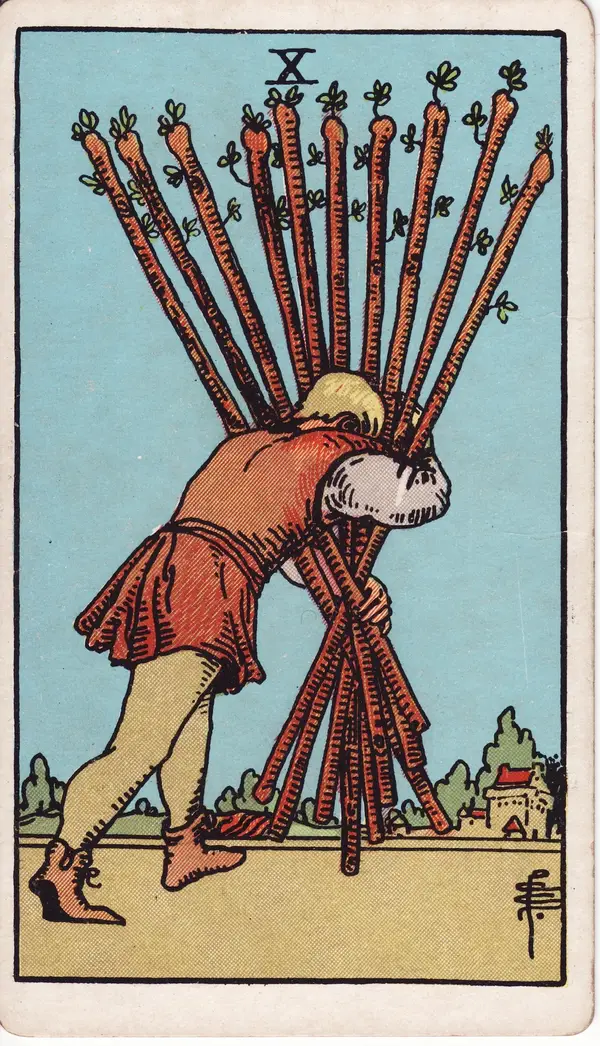
Wands: the spark, the waiting, the weight.
Cups: water, feeling and the people close to you
Cups hold feelings: love, friendship, family, longing, disappointment and the imagination. Its element is water. The Ace overflows; the Two of Cups is a couple pledging to each other under a winged lion's head; the Ten of Cups is a family under a rainbow of cups, two children dancing. Many of the suit's harder cards are about feeling too much or too little, like the Five of Cups, where a figure mourns the spilled cups and does not see the two still standing.
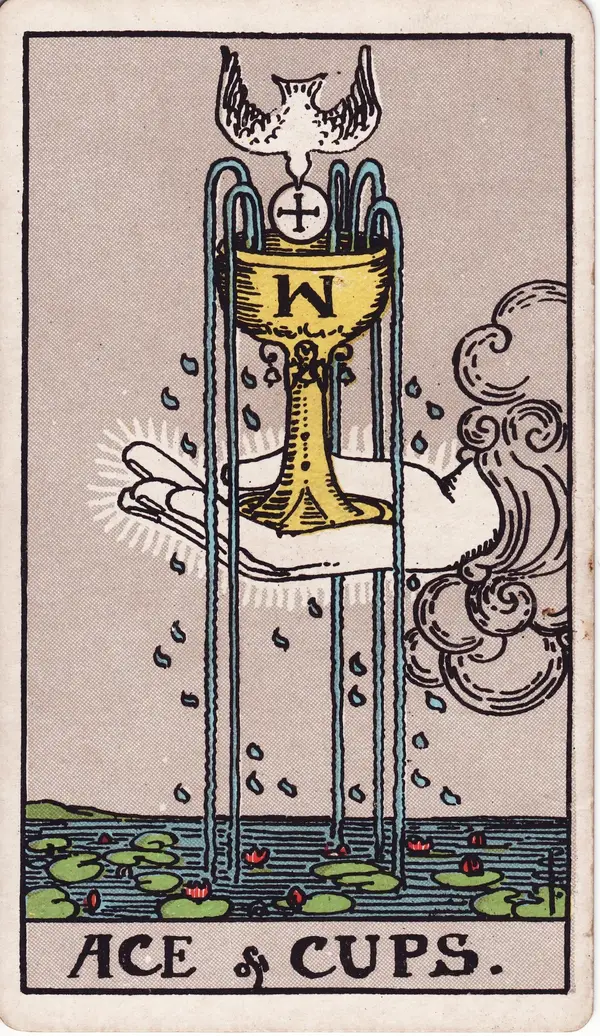
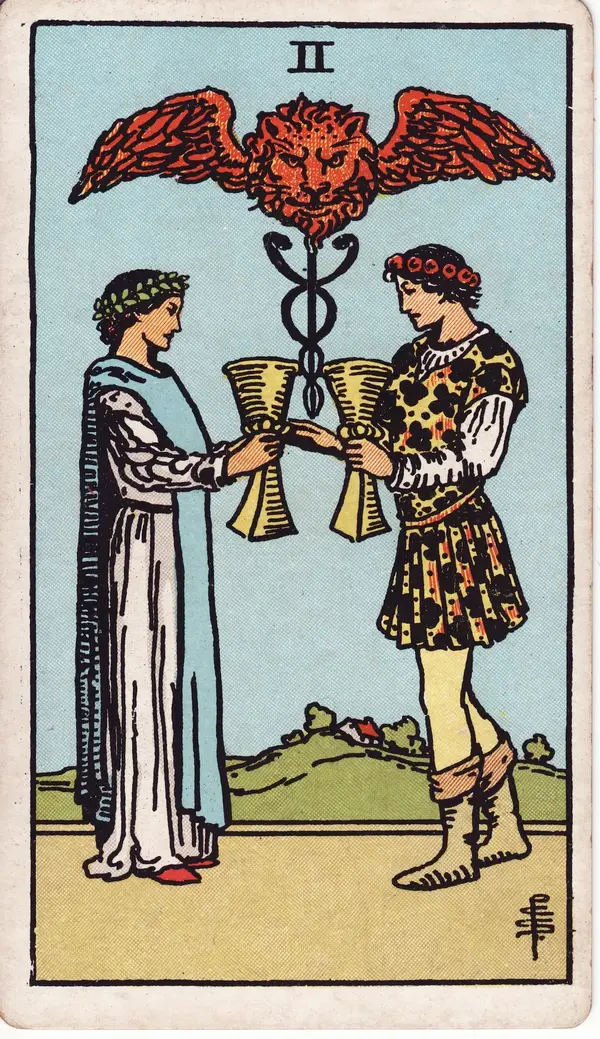
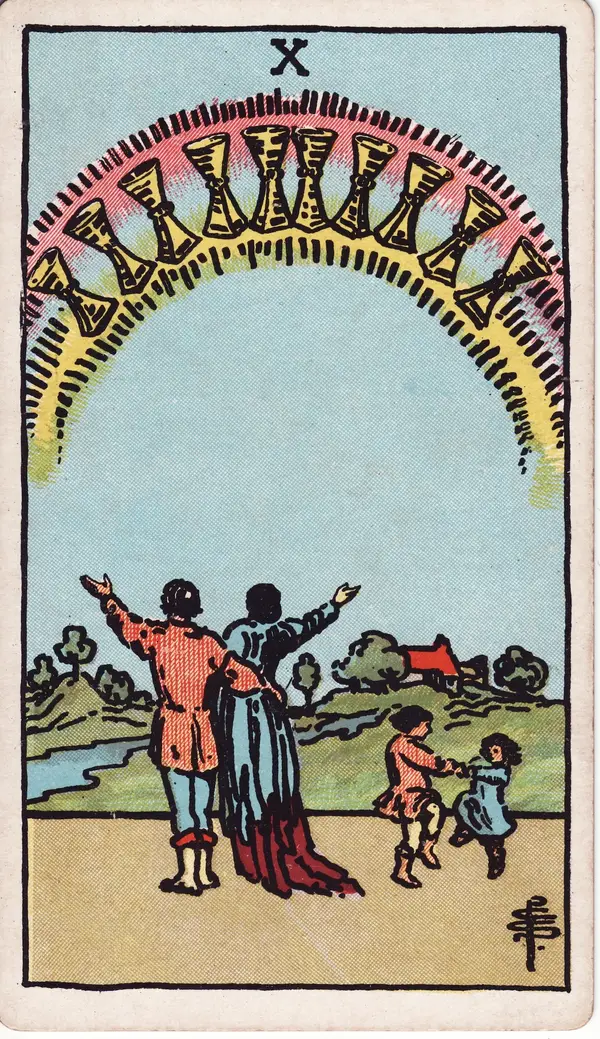
Cups: an overflowing heart, a promise, a home.
Swords: air, thought and conflict
Swords are the mind: thinking, deciding, arguing, telling the truth and the worry that keeps you awake. Their element is air. It is the suit people fear, because so many of its pictures are painful, the heart pierced by three swords or the figure sitting up in bed with nine swords on the wall behind her. But a sword also cuts through confusion. The Ace is a single blade held up and crowned, a clear idea; the Six of Swords is a boat carrying people across water towards calmer ground.
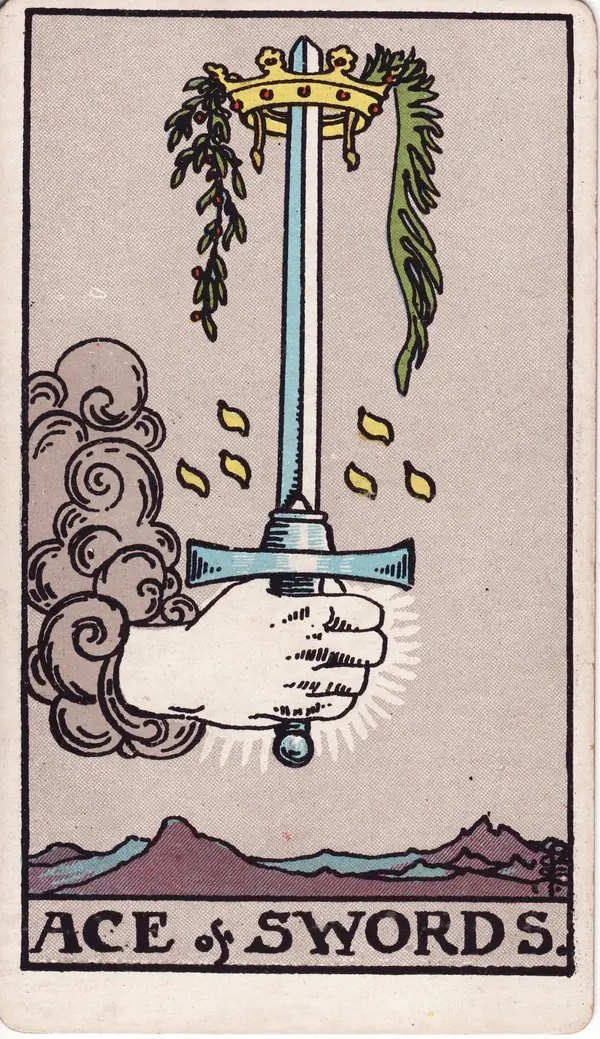
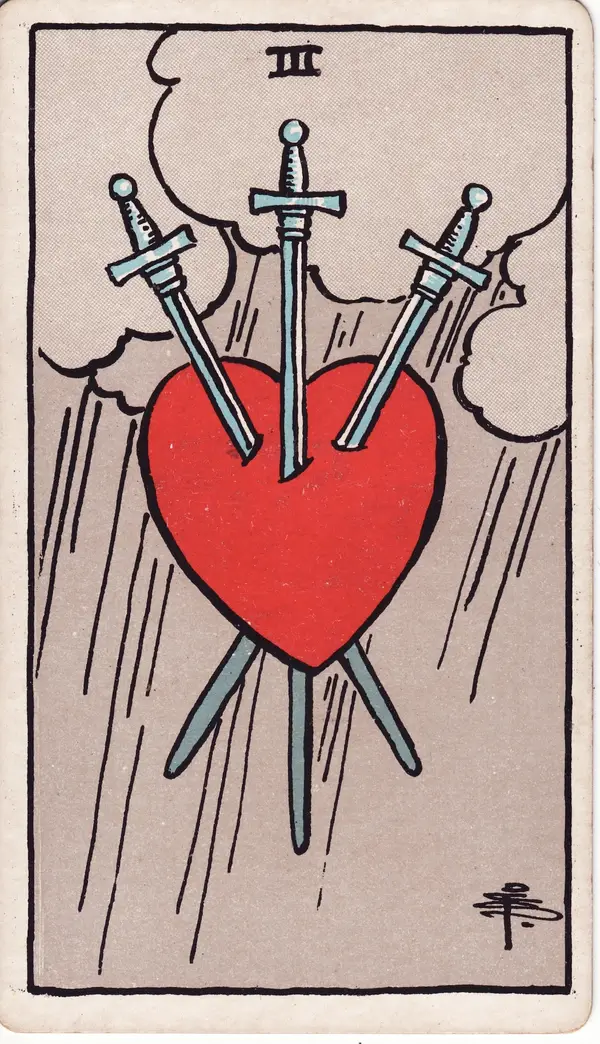
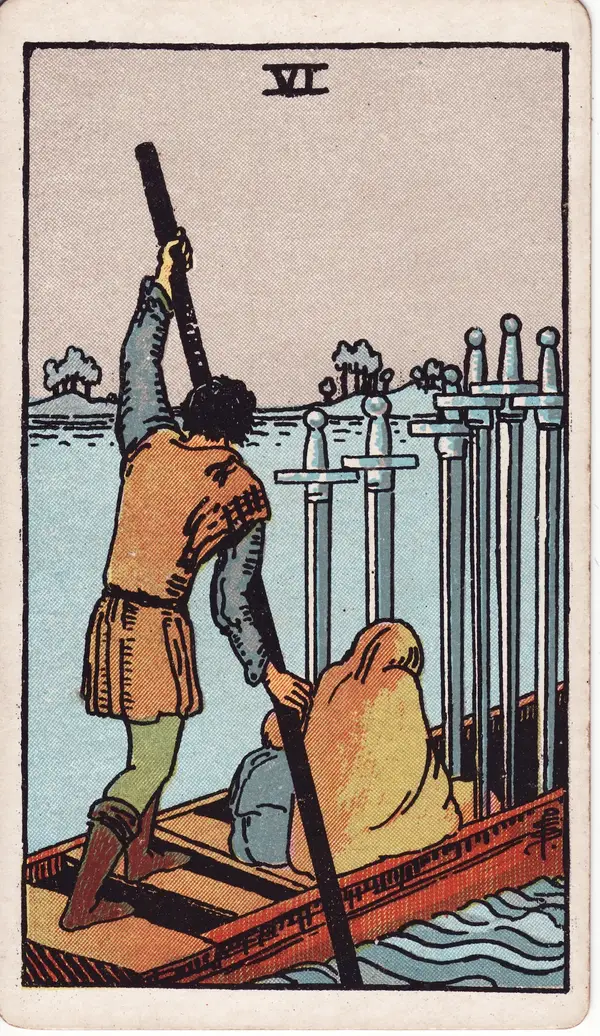
Swords: clarity, a painful truth, moving on.
Pentacles: earth, work and the body
Pentacles are the material world: work and craft, money, health, home, and anything that grows slowly. Their element is earth. The Ace hangs over a garden gate; the Eight of Pentacles is an apprentice carving one coin after another; the Ten of Pentacles is a whole household, three generations and two dogs, in the archway of the family home. It is the most patient suit in the deck.
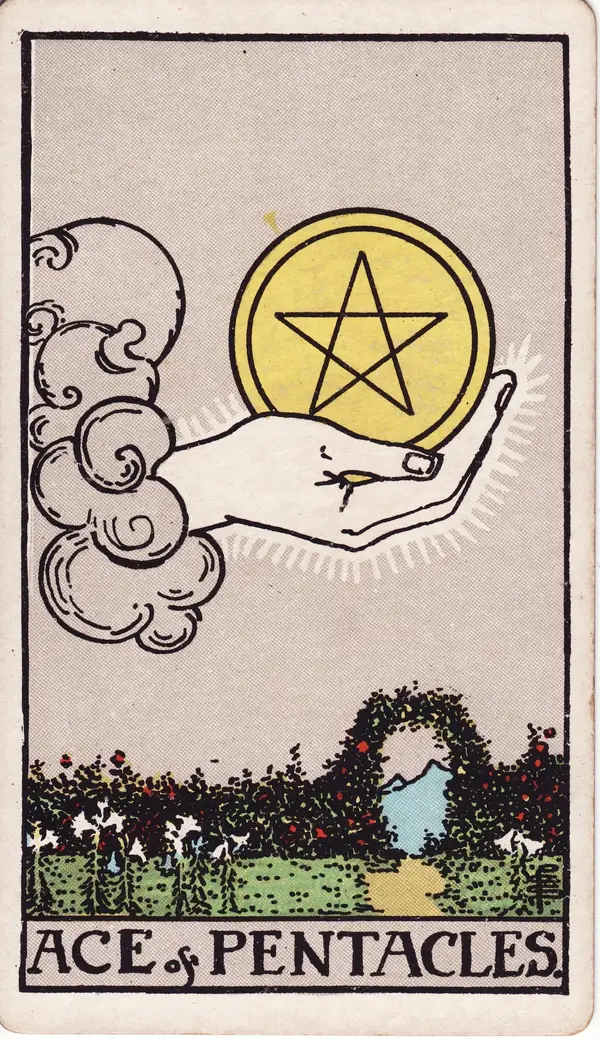
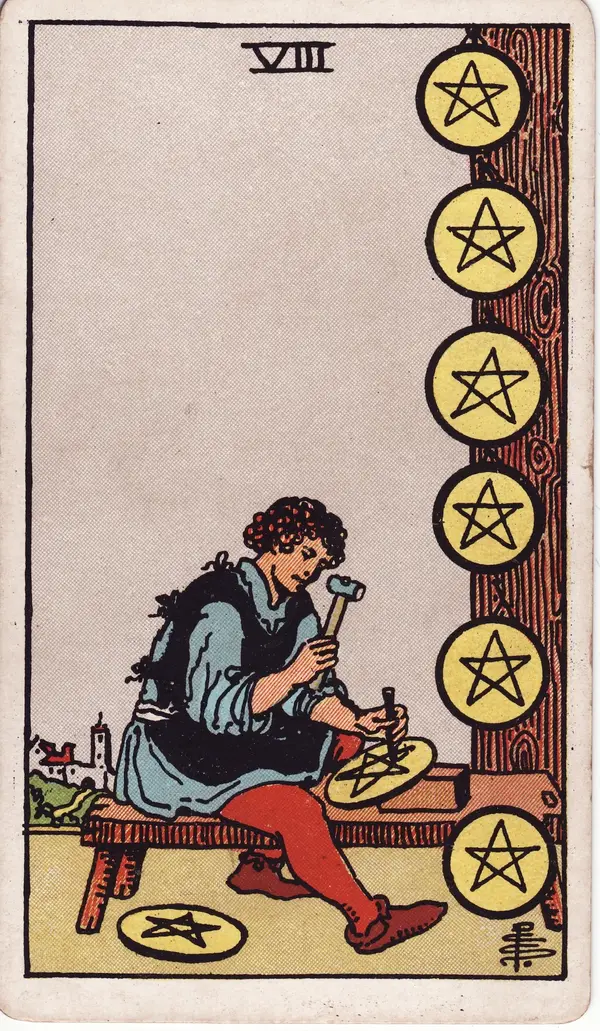
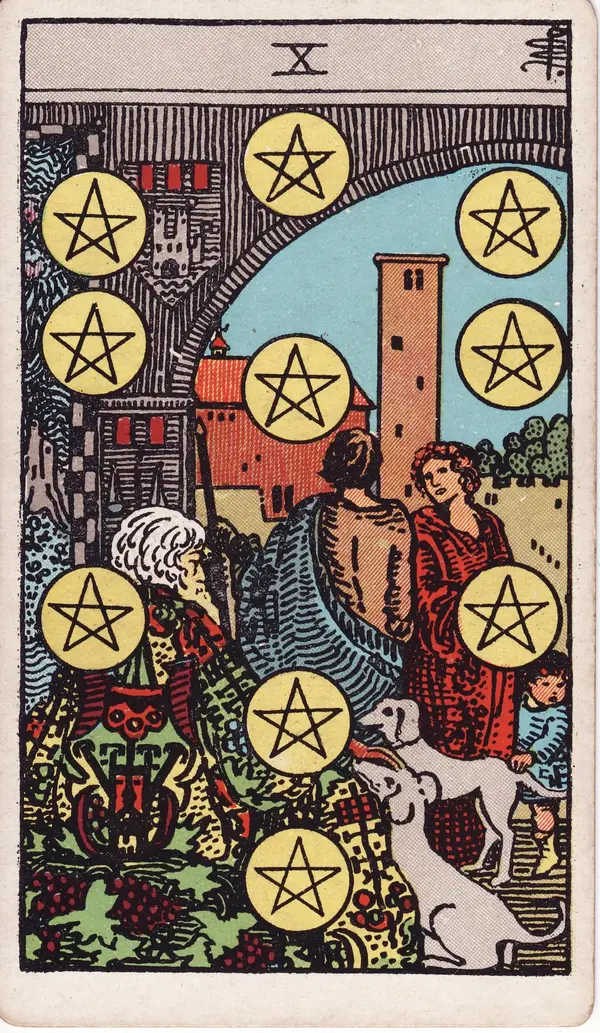
Pentacles: an opportunity, practice, what lasts.
When one suit fills a reading
In a spread of three, two cards from one suit tell you where the day is centred. Mostly Wands: the question is about what you want to do or build. Mostly Cups: someone you care about, or how you feel. Mostly Swords: a decision, a conversation or a worry. Mostly Pentacles: work, money or something practical. And a spread with no suit cards at all, all major cards, is touching something bigger than the everyday.
Each suit also has four court cards, a page, a knight, a queen and a king, and ten number cards whose numbers carry their own meaning. Both have their own guides.
See which three cards come up for you today, read for your star sign and the moon.
Get today’s readingRider–Waite–Smith, 1909 · art by Pamela Colman Smith