Tarot court cards: pages, knights, queens and kings
Each suit has four court cards: a page, a knight, a queen and a king. They are the cards beginners find hardest, because they are people rather than events. Once you see that each rank is a way of handling things and each suit a part of life, the sixteen of them sort themselves out.
The four ranks
The page is a student or a messenger: curious, new to the subject, often bringing news. The knight is action, the one who goes out and does something, usually too much of it. The queen has mastered the suit from the inside and knows how it feels. The king has mastered it from the outside and knows how to run it.
You can see the difference in the Cups. The Page of Cups stares in surprise at a small fish looking out of his cup. The Knight of Cups rides slowly forward, holding his cup out like an offering. The Queen of Cups sits at the water's edge gazing into a closed, ornate cup. The King of Cups sits on a throne afloat on a rough sea, calm, with a cup in one hand and a sceptre in the other.
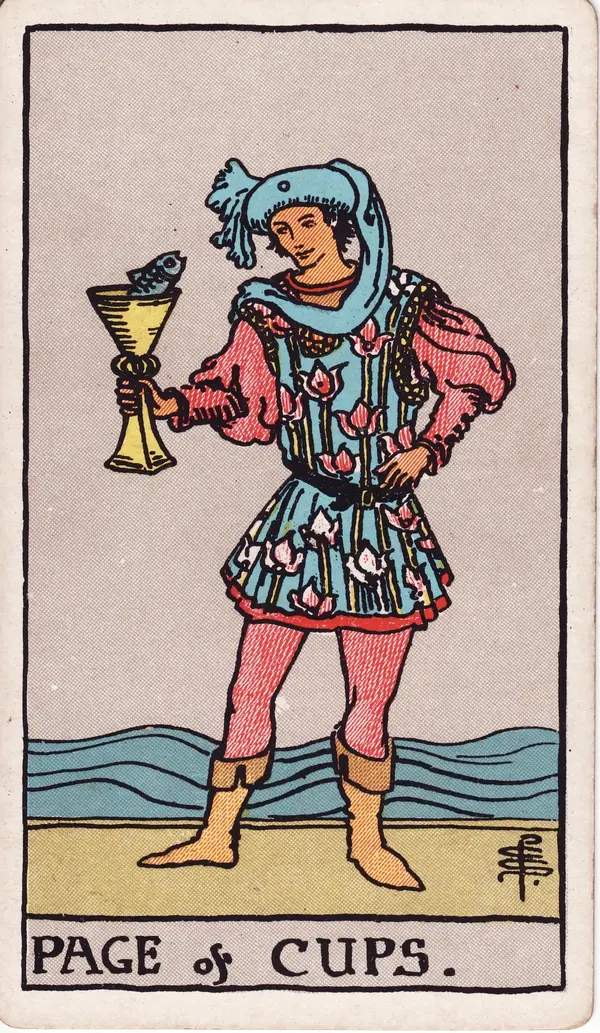
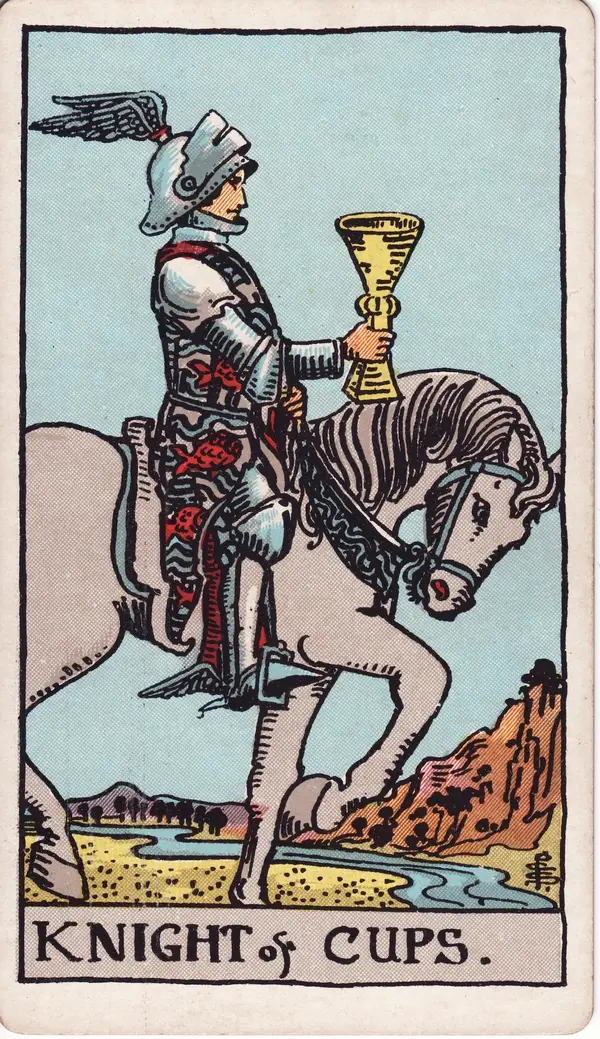
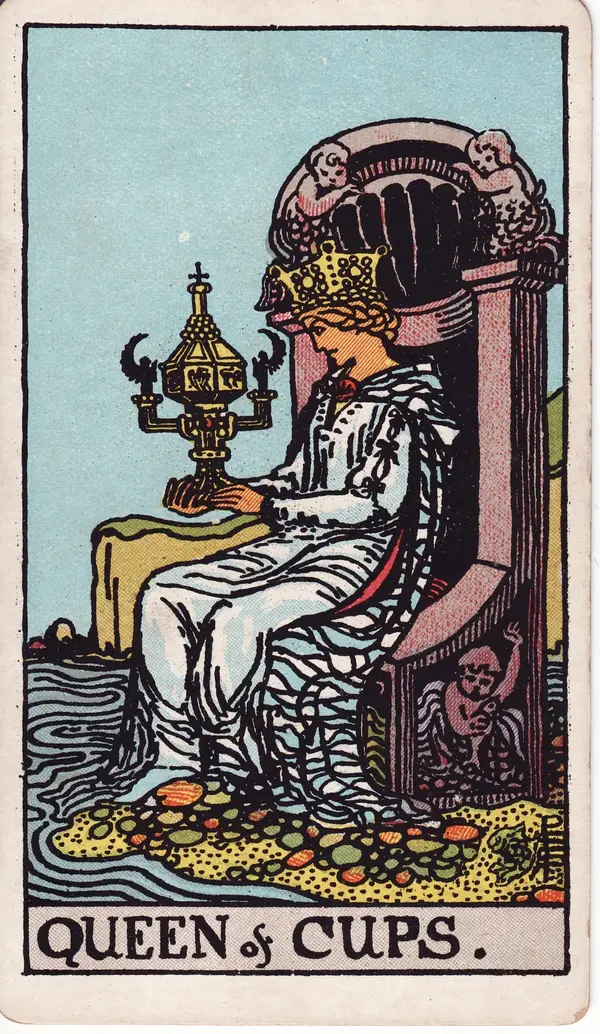
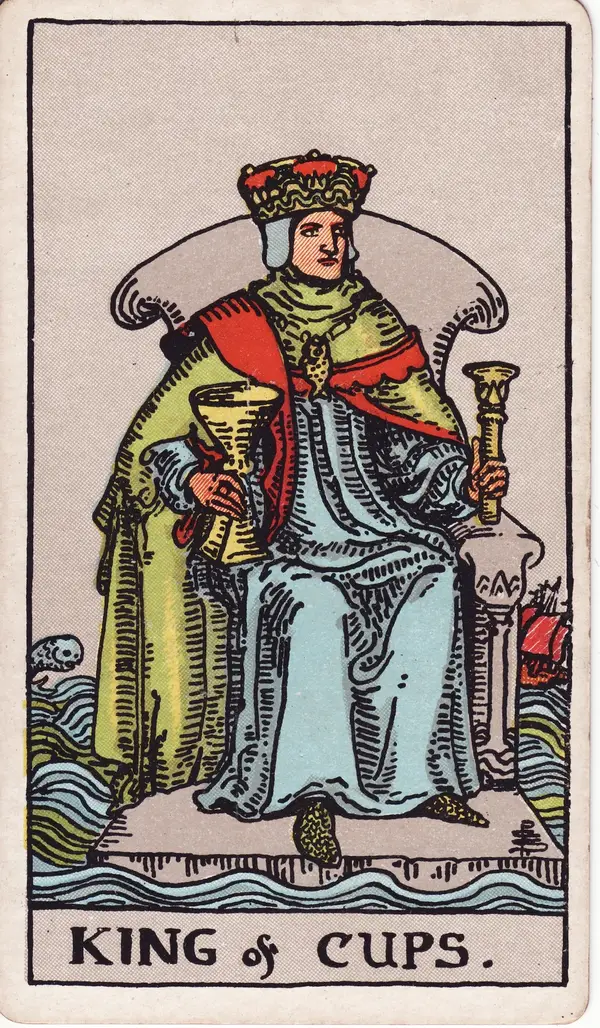
The four ranks of Cups: surprise, offering, feeling, command.
The knights, at four speeds
The four knights are the easiest court cards to tell apart, because their horses show how they move. The Knight of Wands rides a rearing horse with a plume like a flame on his helmet: all enthusiasm, not much plan. The Knight of Swords charges headlong into the wind, sword raised. The Knight of Cups walks his white horse slowly. The Knight of Pentacles sits on a heavy black horse that is standing quite still in a ploughed field. Fire, air, water, earth: fast, faster, gentle and steady.
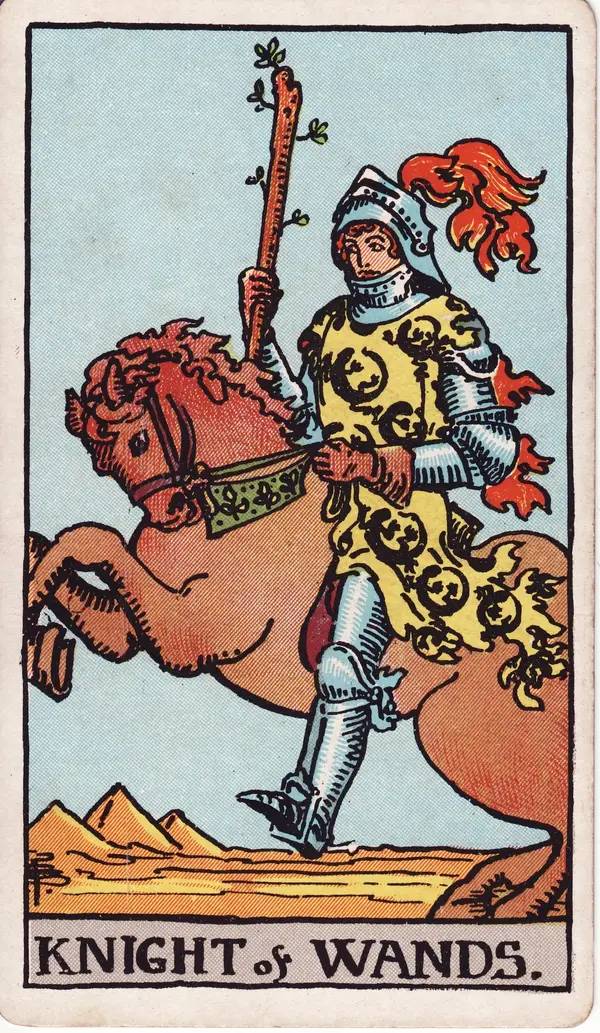
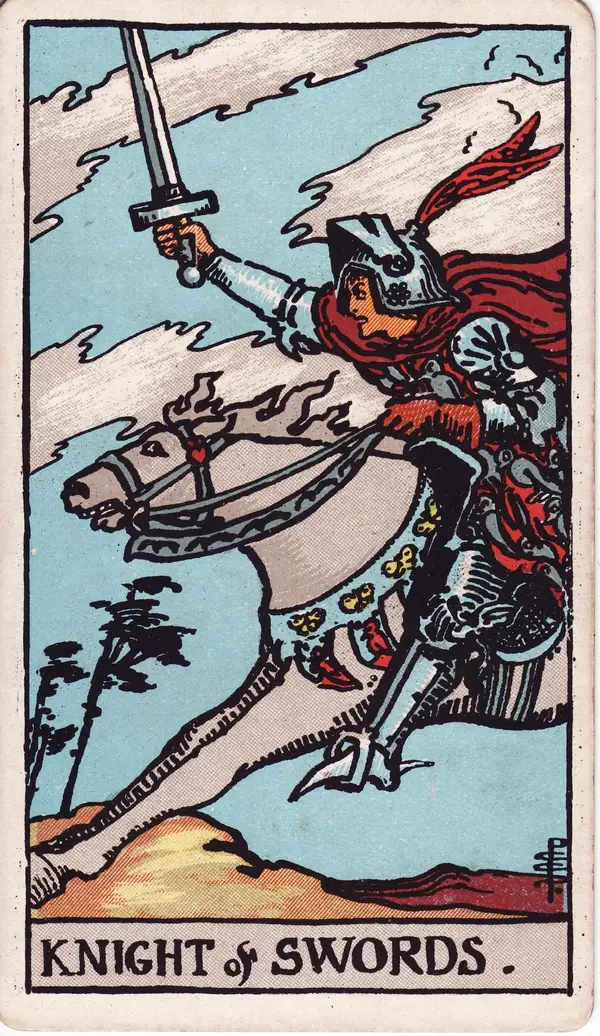
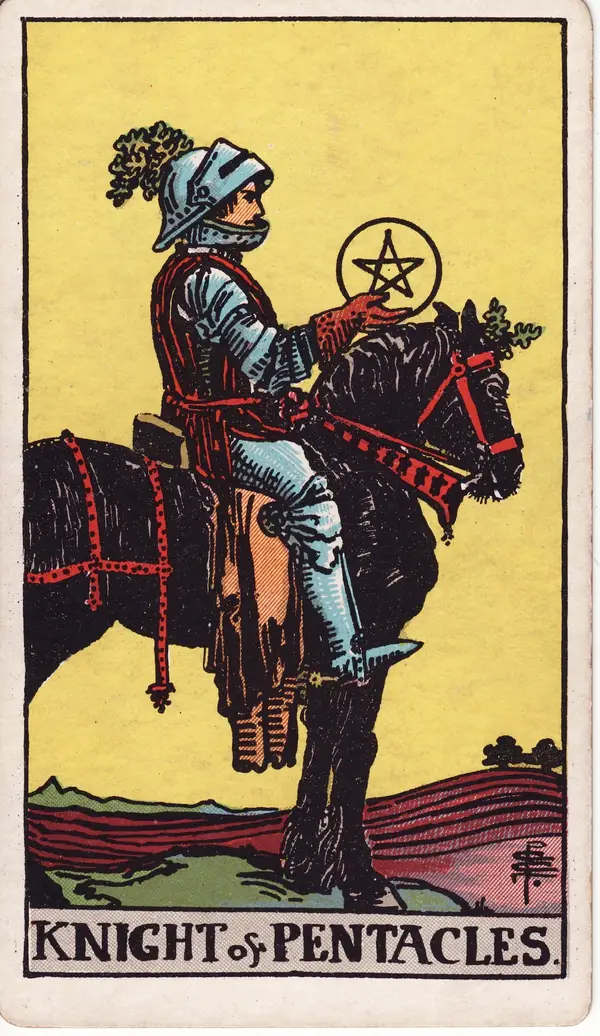
Rearing, charging, walking, standing.
All sixteen in a line each
A quick key to the whole court:
- Page of Wands: an eager beginner with a new idea
- Knight of Wands: adventure and impatience
- Queen of Wands: warm confidence that draws people in
- King of Wands: a leader with a vision
- Page of Cups: a tender surprise, a creative idea
- Knight of Cups: a romantic offer, following the heart
- Queen of Cups: empathy and emotional depth
- King of Cups: calm under emotional pressure
- Page of Swords: curiosity, questions, watchfulness
- Knight of Swords: speed and argument, charging ahead
- Queen of Swords: clear judgement from experience
- King of Swords: authority through reason and fairness
- Page of Pentacles: a student, a practical first step
- Knight of Pentacles: reliability, slow and sure work
- Queen of Pentacles: care for home, body and the people in it
- King of Pentacles: security built over time
Queens and kings: look at the throne
The thrones are full of clues. The Queen of Wands holds a sunflower and has a black cat sitting at her feet, a sign of her independence. The Queen of Pentacles sits in a garden under an arch of roses, and a rabbit, an old symbol of fertility, sits in the corner of the card. The King of Pentacles' throne is carved with bulls' heads, the animal of the earth sign Taurus, and his robe is patterned with grapes. Butterflies are carved into the thrones of the Queen and King of Swords: thought, and change.
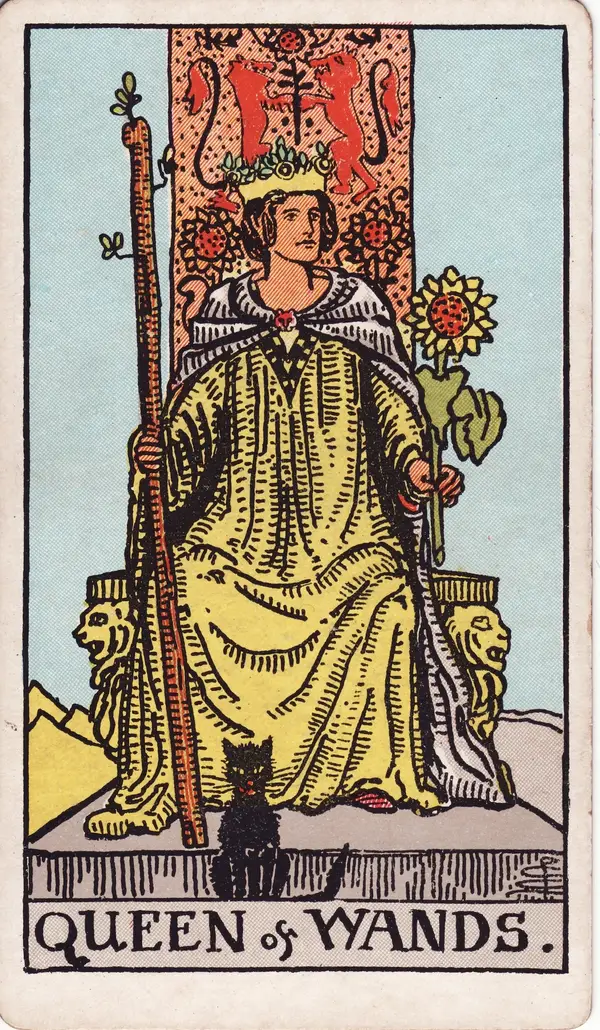
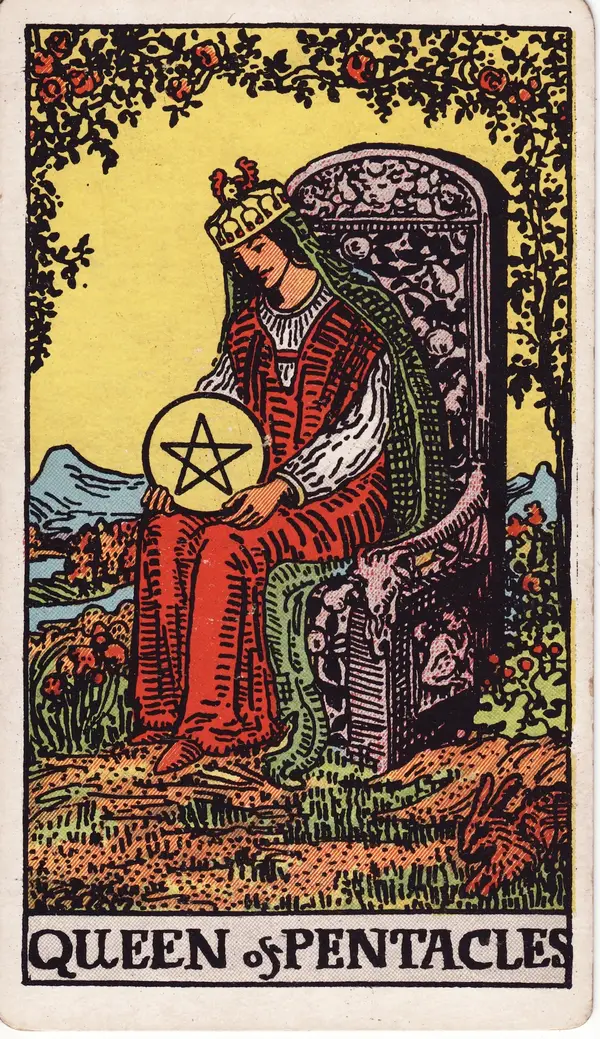
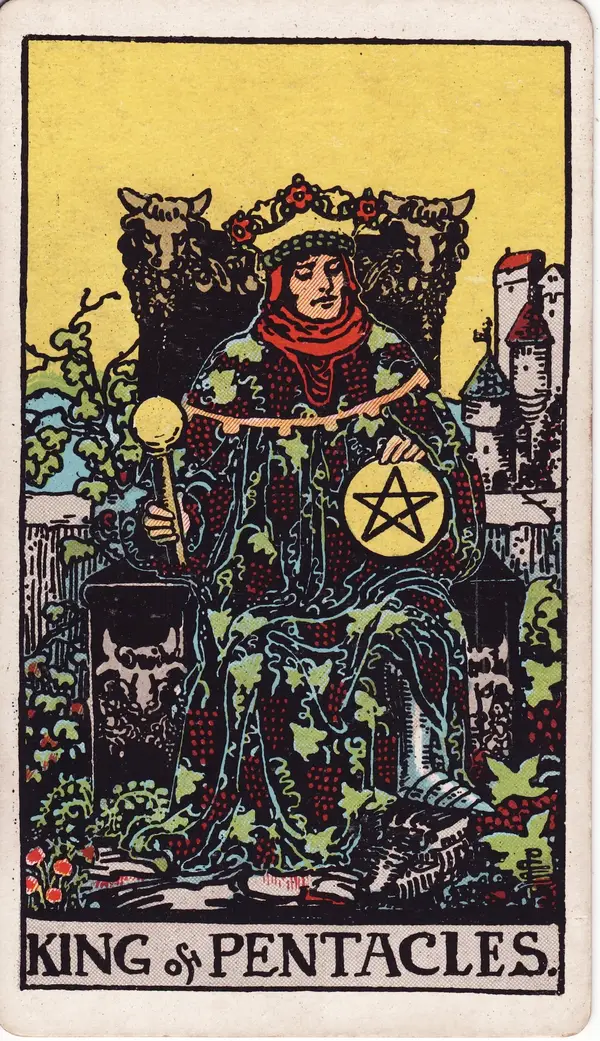
A black cat, a rabbit, bulls' heads.
Three ways to read a court card
A court card in a reading can be another person, often someone whose manner matches the card: the Queen of Swords as a sharp, fair friend. It can be a side of you: the Knight of Wands as the side of you that wants to leave for somewhere new tomorrow. Or it can be the approach the day asks for: the Page of Pentacles asking you to learn before you act. When in doubt, try all three and see which one holds up.
Readers are often tempted to tie the ranks to age or gender. Kings do not have to be men, and pages do not have to be young. The card describes how someone behaves, not who they are.
When a court card goes too far
Each court card has a shadow, its strength pushed too far, which is often how the card reads reversed. The Knight of Swords becomes reckless and cruel in argument. The Queen of Cups is swamped by other people's feelings. The King of Pentacles holds on too tightly to what he owns. The Page of Wands starts many things and finishes none. Asking "what does this person do too much of?" usually finds the shadow.
See which three cards come up for you today, read for your star sign and the moon.
Get today’s readingRider–Waite–Smith, 1909 · art by Pamela Colman Smith