Crowns, hats and headwear in tarot
Look at the heads in a tarot deck. Almost every major card figure wears something, and what they wear says who they are: a crown is authority, a wreath is something grown or won, a helmet is protection, a hood is withdrawal. A bare head can mean as much as a crown.
Crowns of the major cards
The Empress wears a crown of twelve stars above a wreath of leaves. Twelve is the number of the signs of the zodiac and the months of the year, and a crown of twelve stars is how Christian art often shows the Virgin Mary, so her authority comes from the sky and the seasons as much as from the garden she sits in. The Emperor's crown is solid and heavy, like his stone throne. The Hierophant wears a three-tiered crown like the papal tiara, layer on layer of spiritual authority.
The Chariot's driver wears a crown with a star on it, and Justice a plain crown with a small square at the front. Every one of these crowns matches the card: the Empress's grows, the Emperor's governs, the Hierophant's instructs.
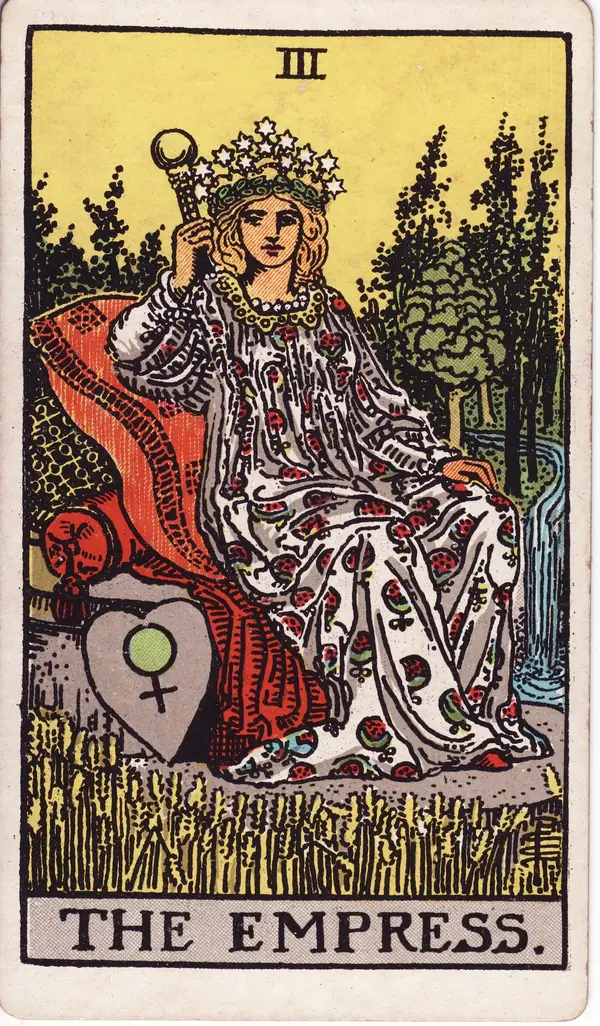
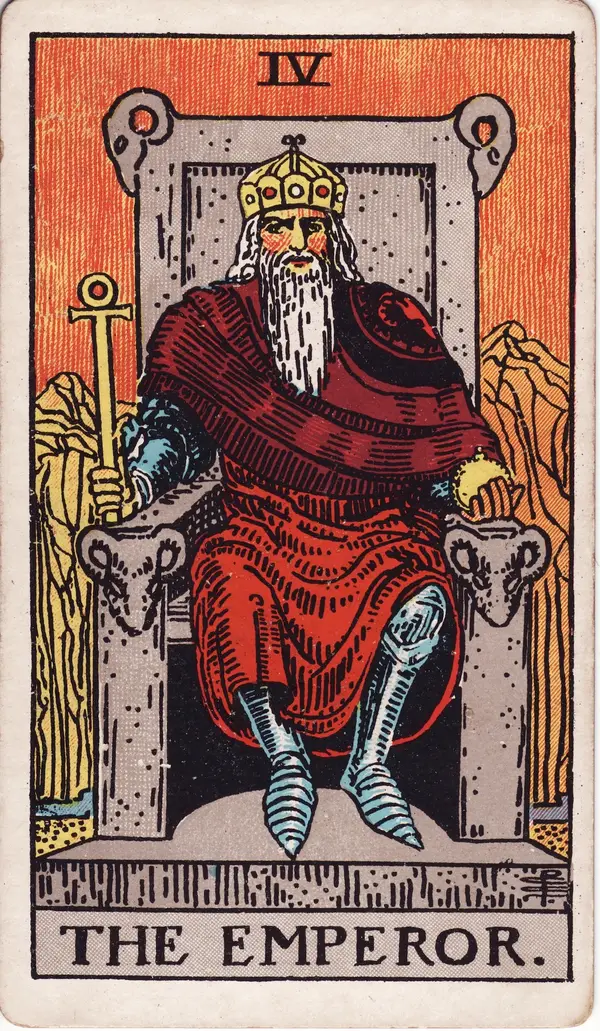
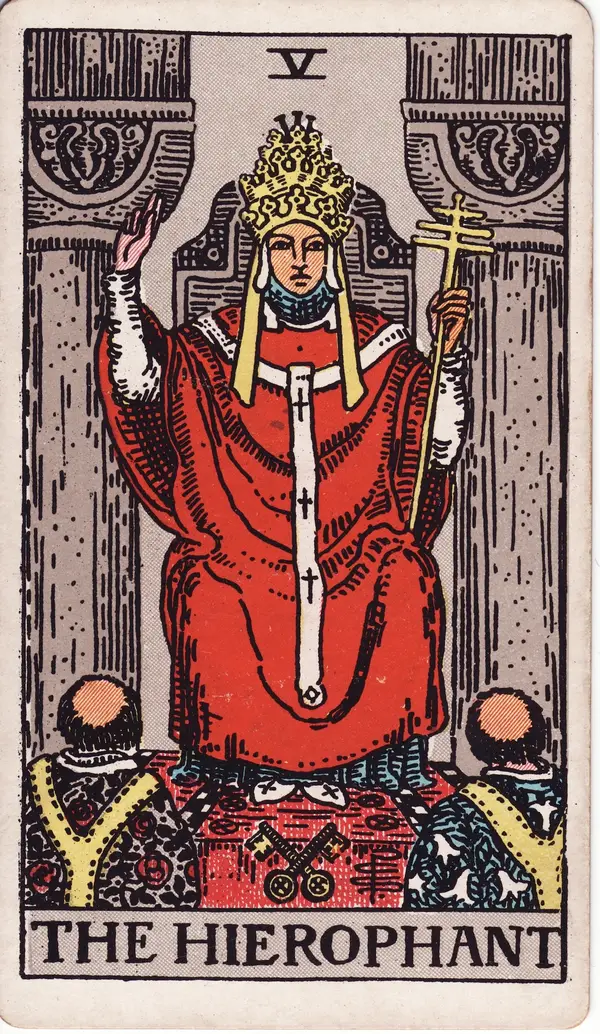
Twelve stars, a heavy crown, a triple crown.
Crowns without a ruler
Some crowns are not being worn by anyone who deserves them. In the Ace of Swords, a crown circles the tip of the blade itself: the idea is in charge, not a person. The man in the Four of Pentacles wears a crown and balances a coin on top of it, while gripping another to his chest: the crown of someone holding on to what he has. And in the Tower, a crown is struck from the top of the building by lightning as two figures fall. When a crown falls, a false authority is coming down.
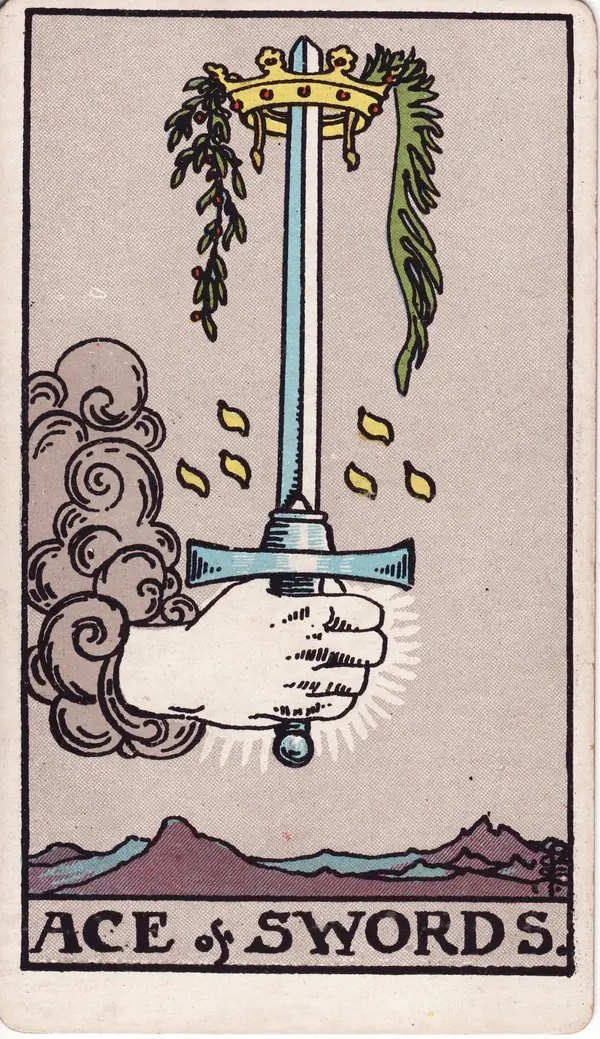
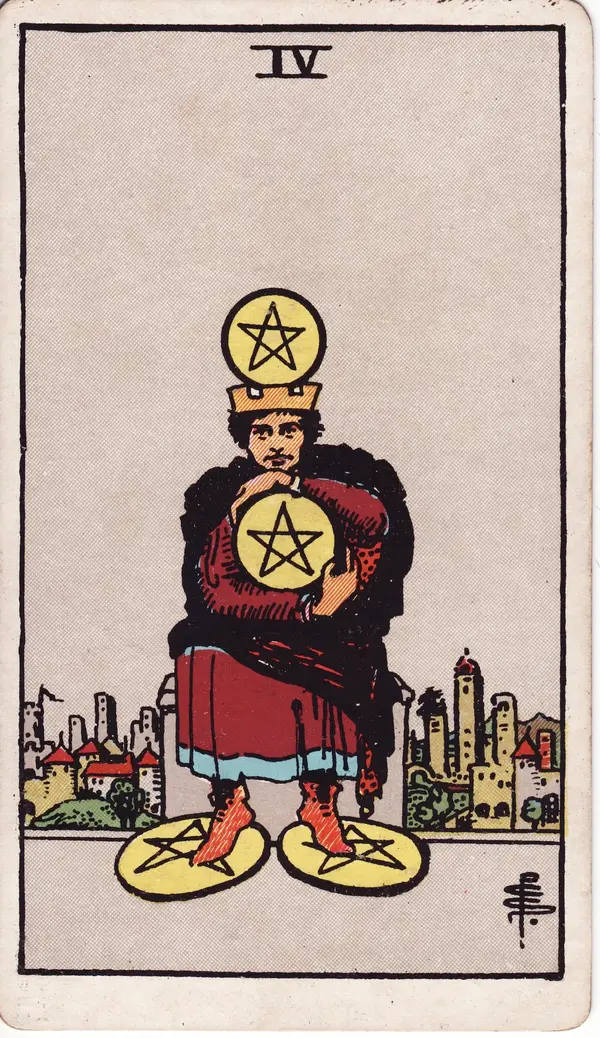
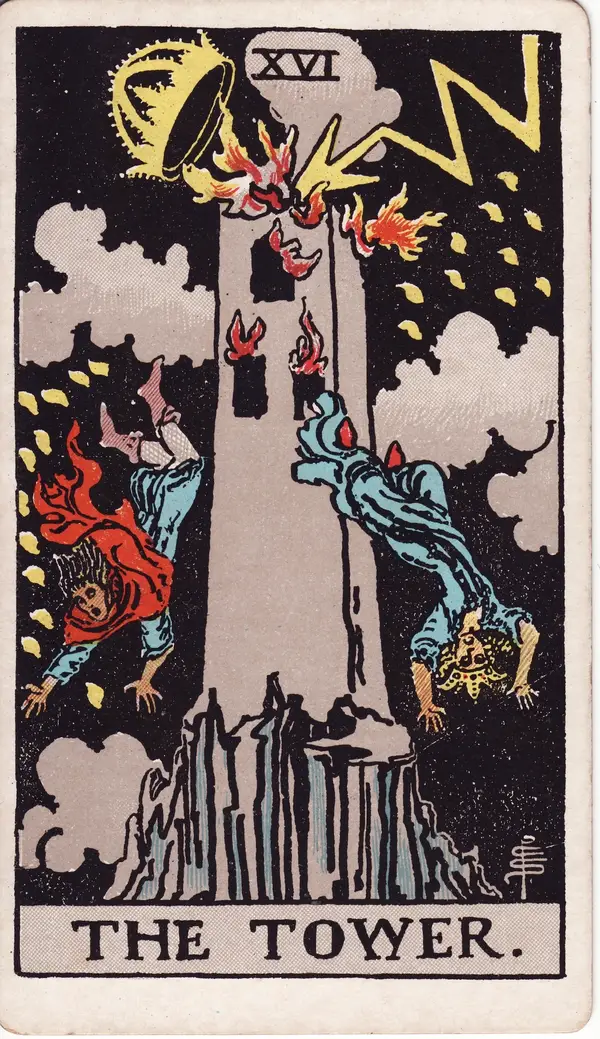
A crowned blade, a clutched coin, a falling crown.
The court cards' crowns
The queens and kings wear their suit on their heads. The Queen of Swords' crown is made of butterflies, for a mind that changes and sees clearly. The King of Pentacles' crown is wound with flowers and leaves, as rooted in the soil as he is. The Queen of Wands wears a crown of leaves, alive like the branches of her suit.
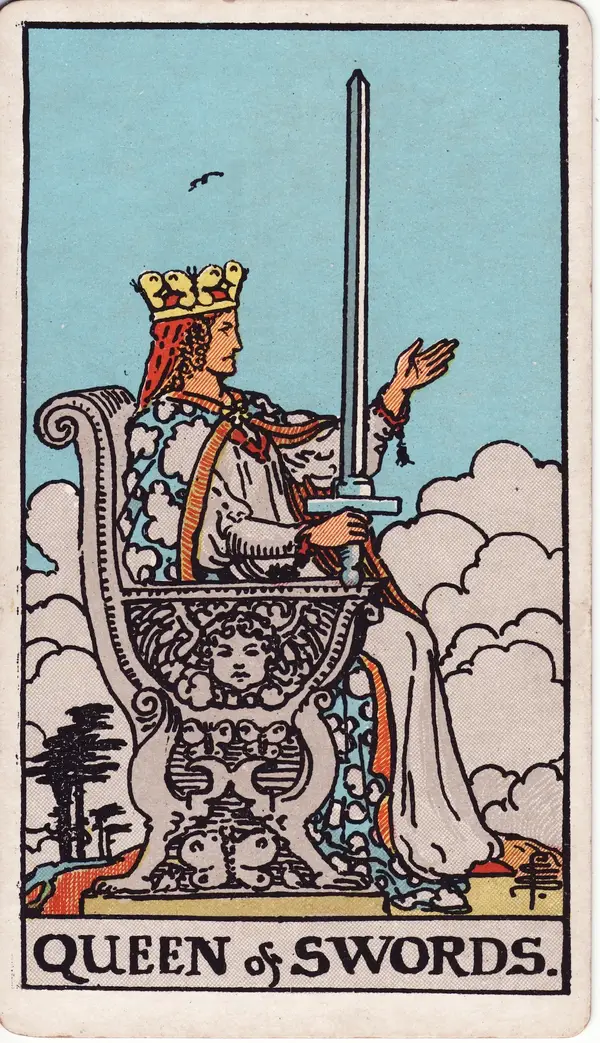
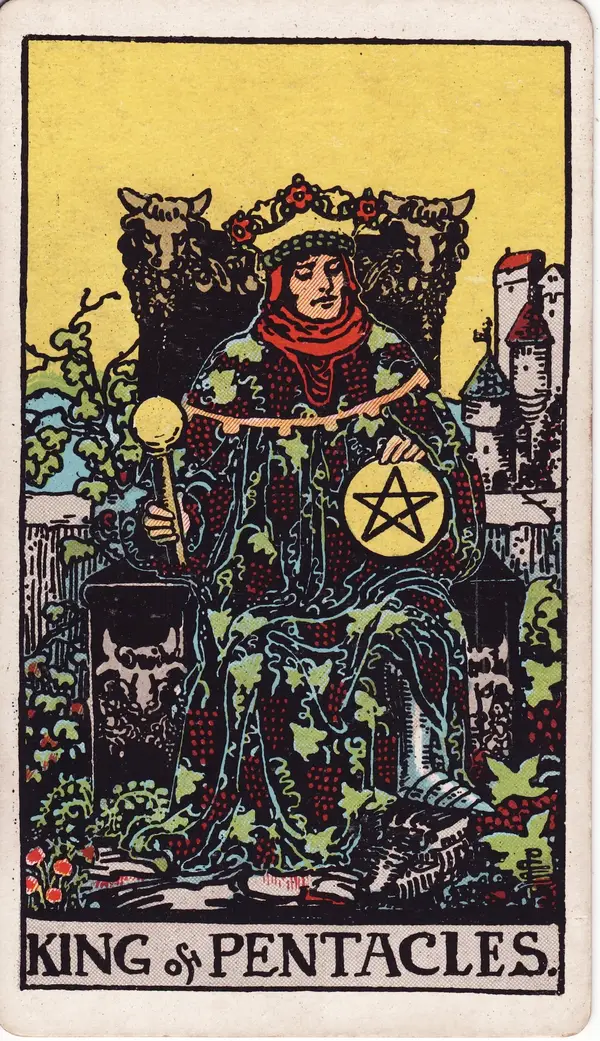
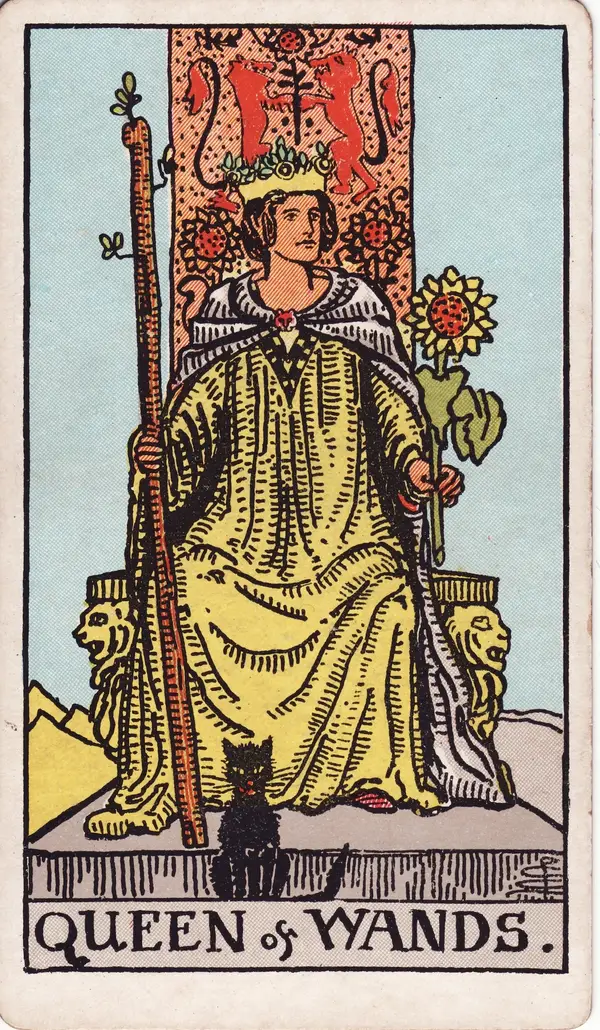
Butterflies, flowers, leaves.
Wreaths and garlands
Wreaths grow rather than being forged, so they mark things that grew: a victory, a friendship, a harvest. The rider in the Six of Wands wears a laurel wreath and carries another on his staff as he comes home to a cheering crowd. The couple in the Two of Cups and the three friends in the Three of Cups wear wreaths of leaves and flowers. The woman in Strength has flowers in her hair and nothing else to show her power.
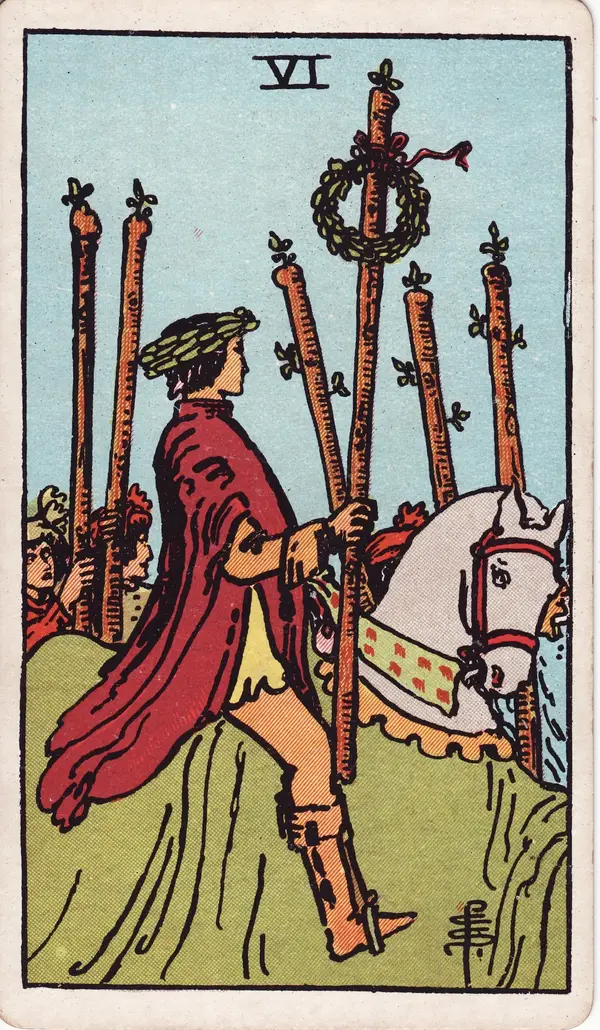
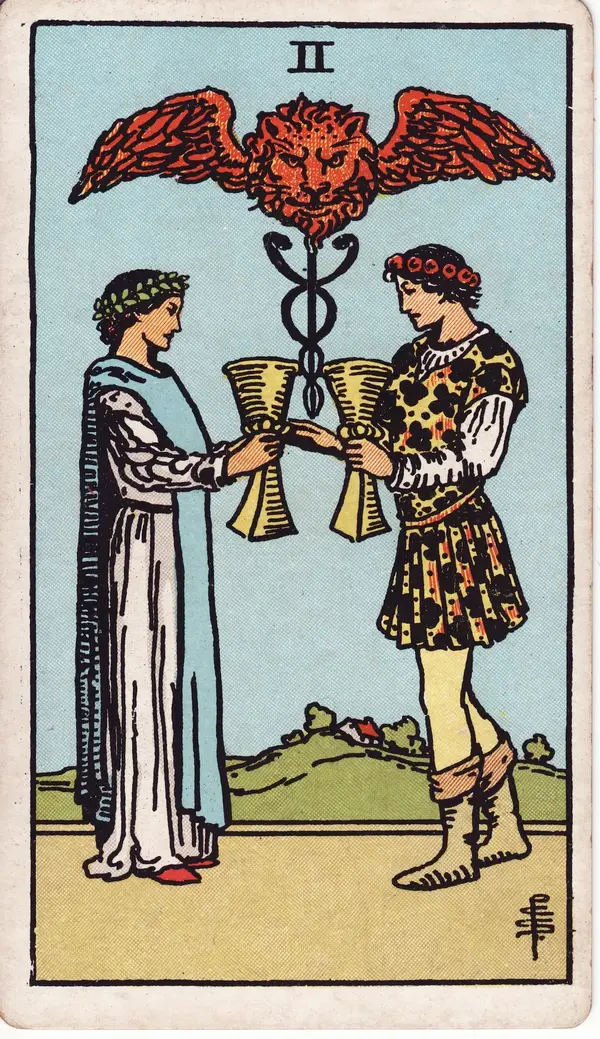
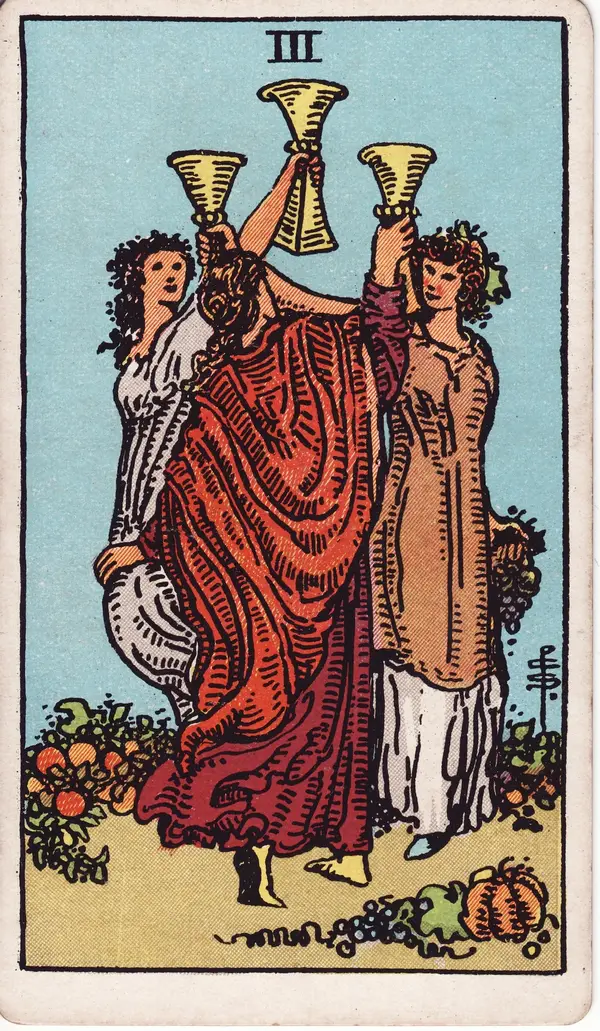
A victor's laurel, and wreaths of friendship.
Helmets and plumes
Helmets belong to the knights and to Death, the figures who ride out to do something difficult. Each knight's helmet suits his suit: the Knight of Wands has a plume like a flame, the Knight of Cups a helmet with small wings, like the messenger god Hermes, and the Knight of Pentacles a helmet topped with a green sprig. Death rides in full armour with a plumed helmet. A helmet protects the head on a dangerous journey; the plume tells you what kind of journey it is.
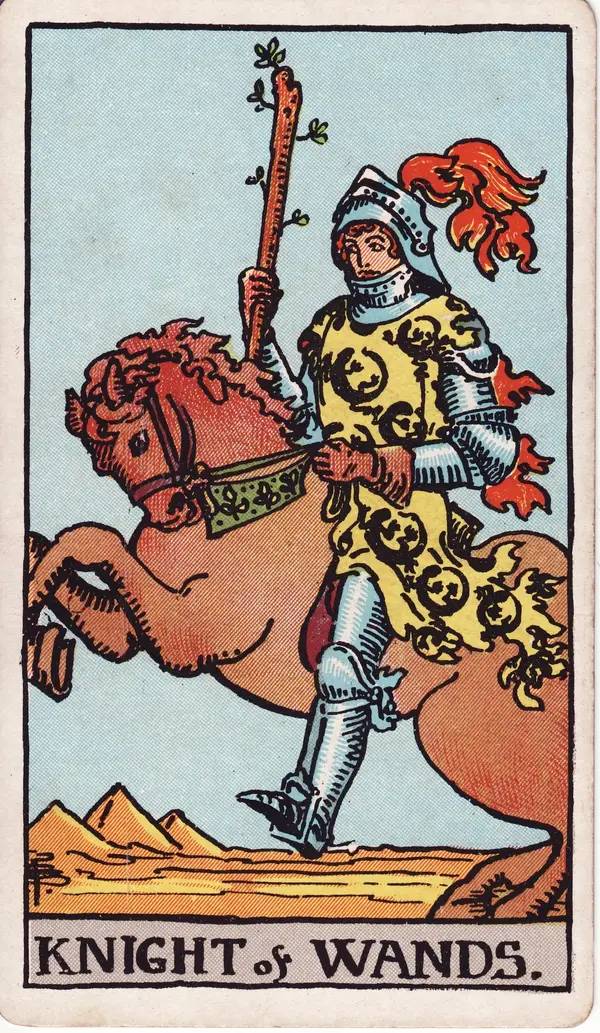
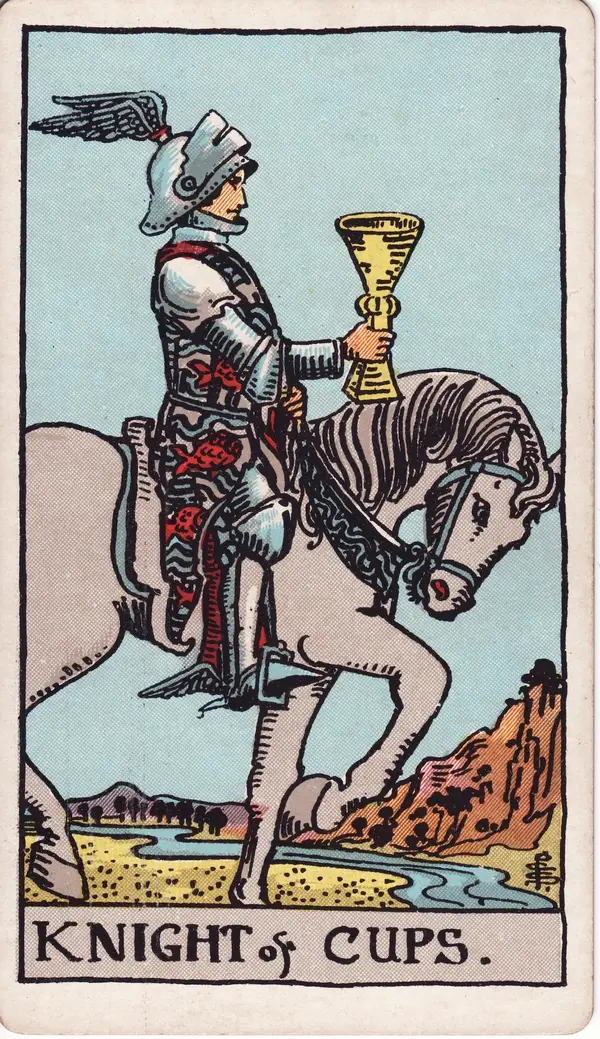
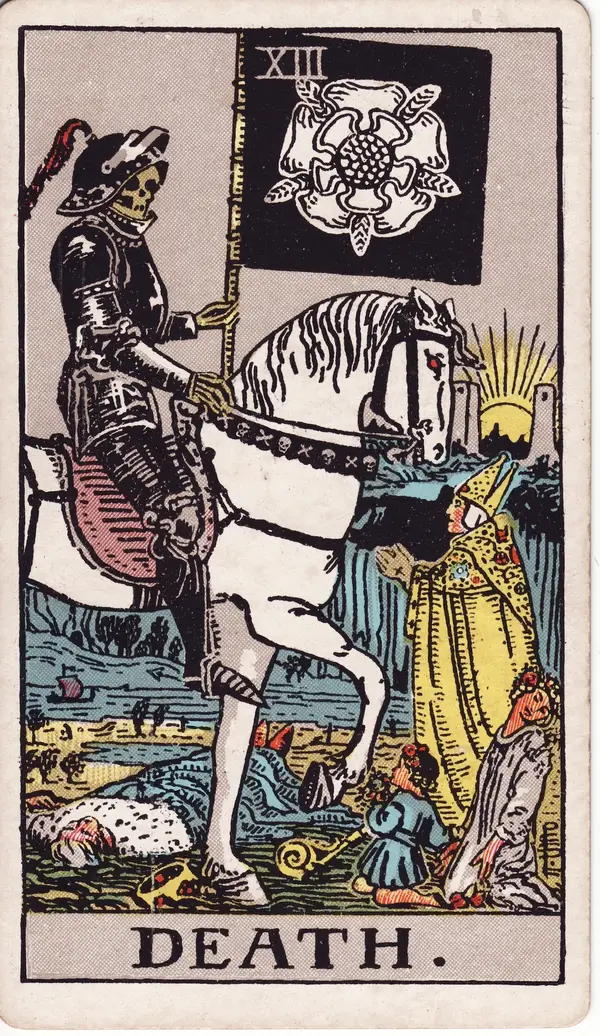
A flame, a pair of wings, Death's armour.
Hoods, halos and bare heads
The Hermit wears a deep hood, turned inward, away from the world. The Hanged Man, upside down, has a halo glowing around his head: understanding that comes from letting go. The angel of Temperance has a sun disc on the brow. And some of the most important figures wear nothing at all. The Star kneels bare-headed and naked by the water, with nothing to hide behind; the World dances with nothing on her head. At the end of the journey, there is nothing left to prove.
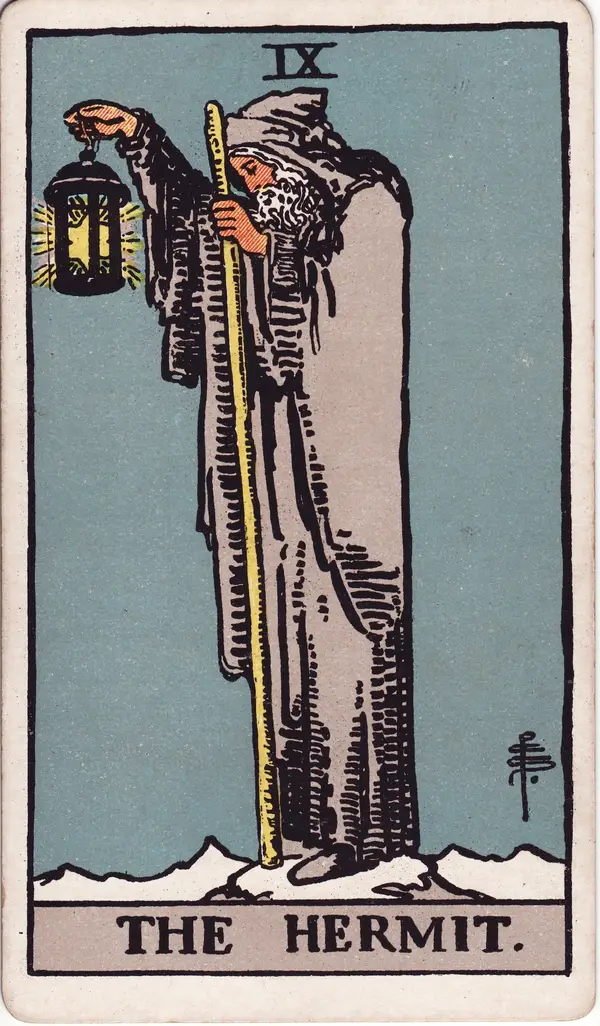
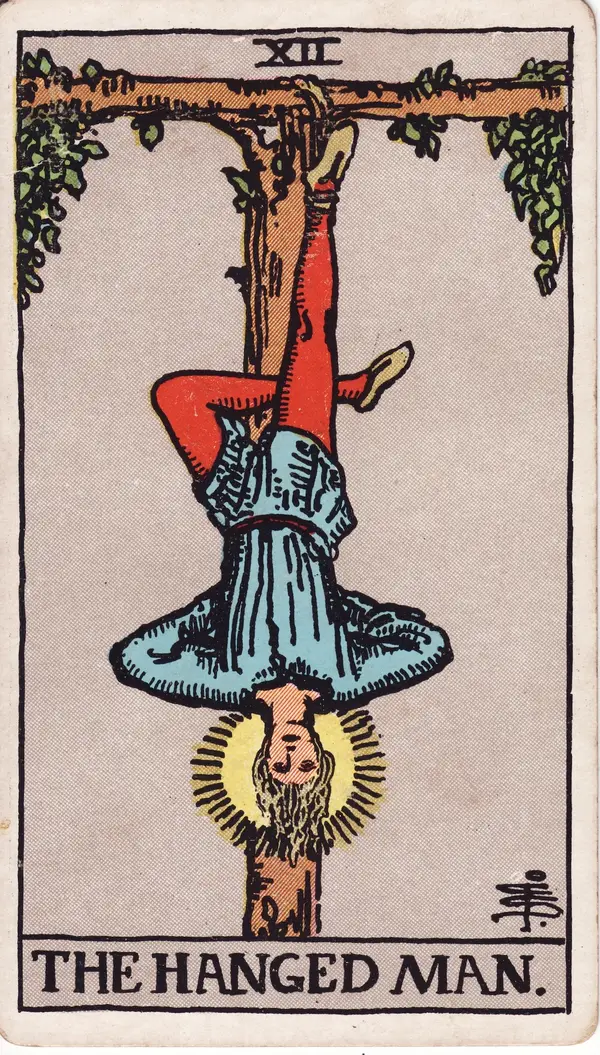
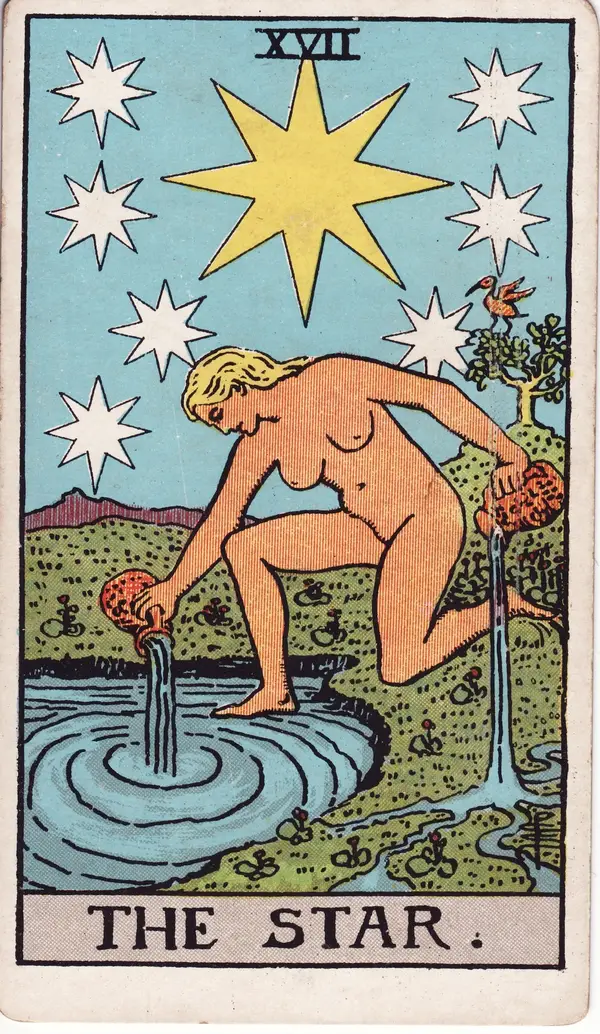
A hood, a halo, a bare head.
Blindfolds and bandages
Two Swords cards cover the eyes. The woman in the Two of Swords is blindfolded and holds two swords crossed over her chest: she will not look, so she cannot choose. In the Eight of Swords, a woman stands blindfolded and loosely bound among eight swords, and nothing in the picture stops her walking out, if she could see. The man in the Nine of Wands has a bandage round his head and leans on his staff, wounded but still on guard.
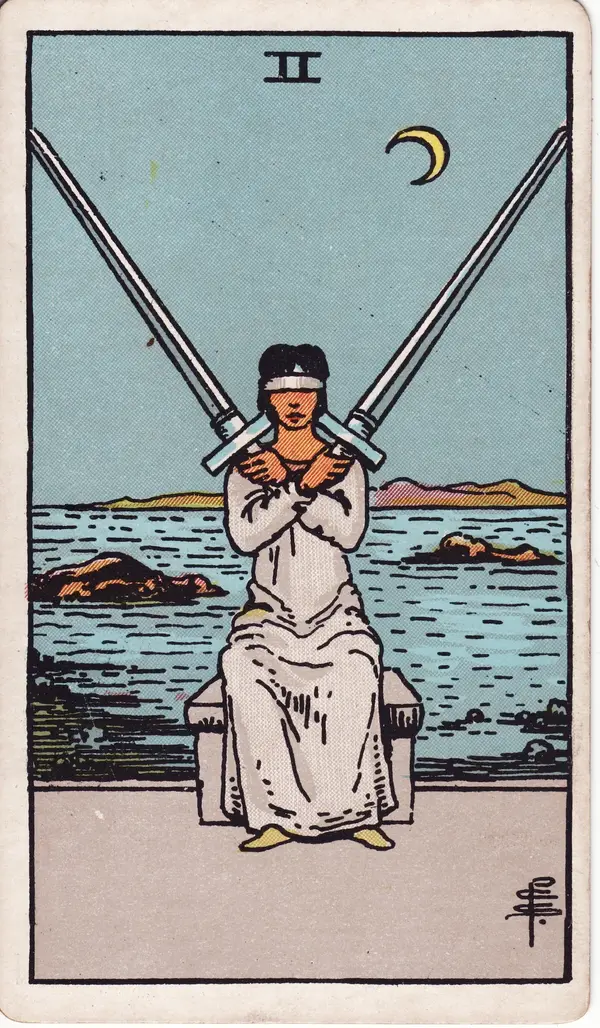
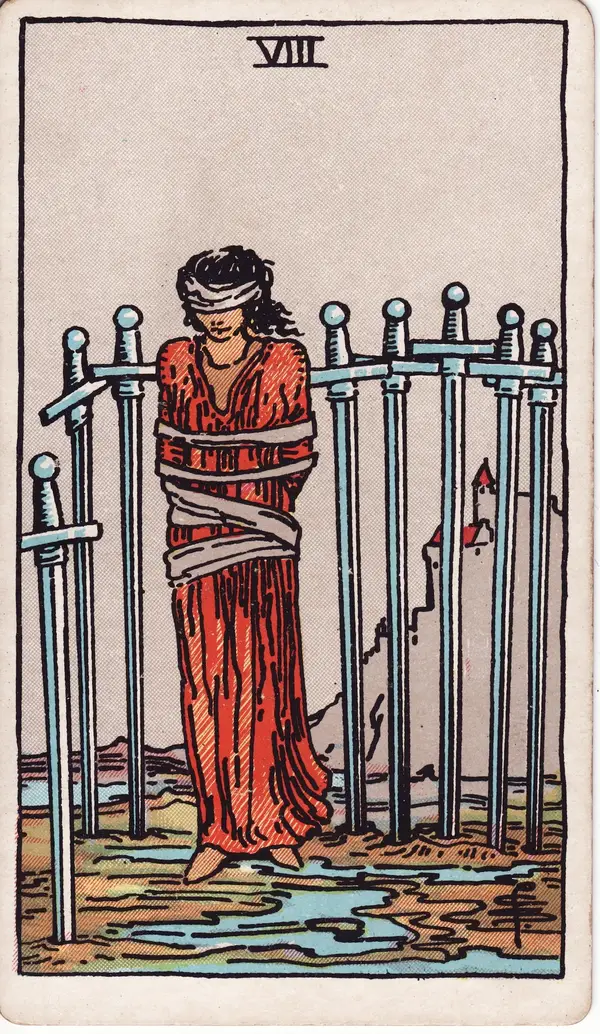
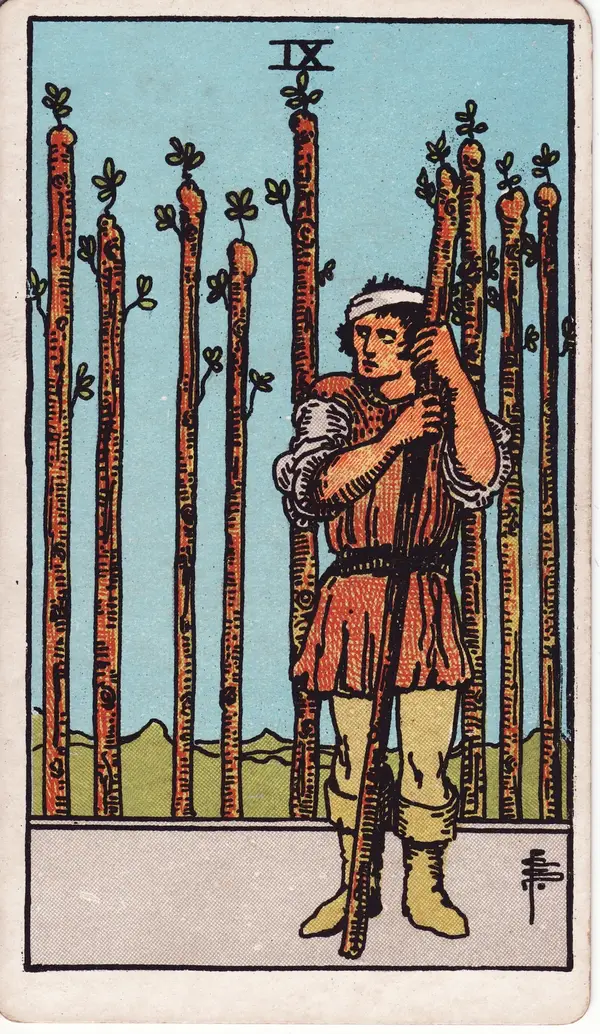
Not looking, not seeing, still standing.
Everyday hats
Many of the minor cards show ordinary people in ordinary hats, and they are full of character. The Nine of Cups has a comfortable red cap and a satisfied smile. The thief in the Seven of Swords sneaks away in a red cap, conspicuous for someone trying not to be seen. The juggler in the Two of Pentacles wears a tall hat, the woman in the Nine of Pentacles a red hood, and the children in the Six of Cups little red hoods. These hats make the people in the cards feel like people.
Next time you draw a card, look at the head before anything else. It often tells you who the figure thinks they are.
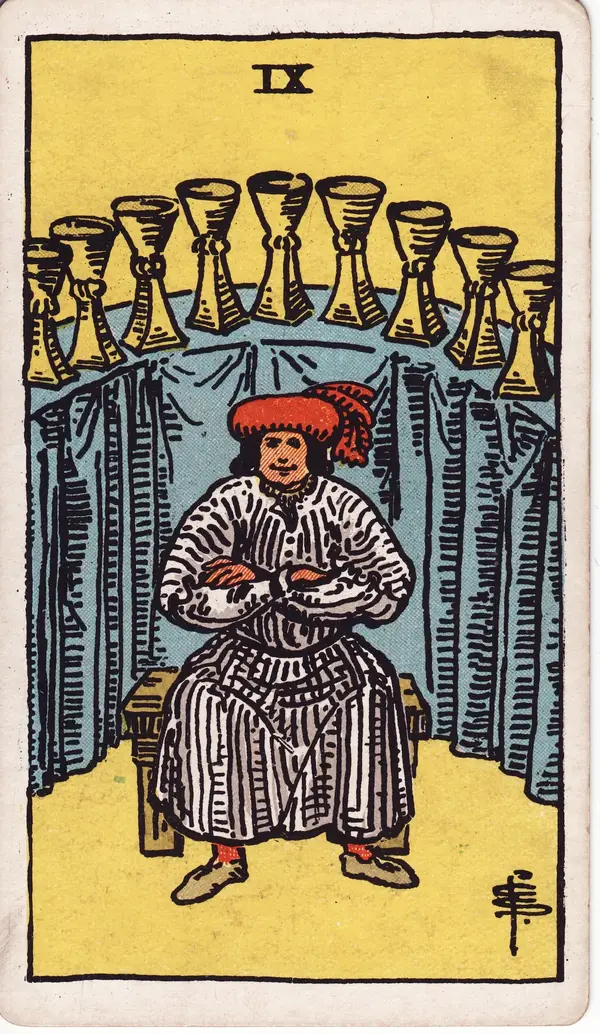
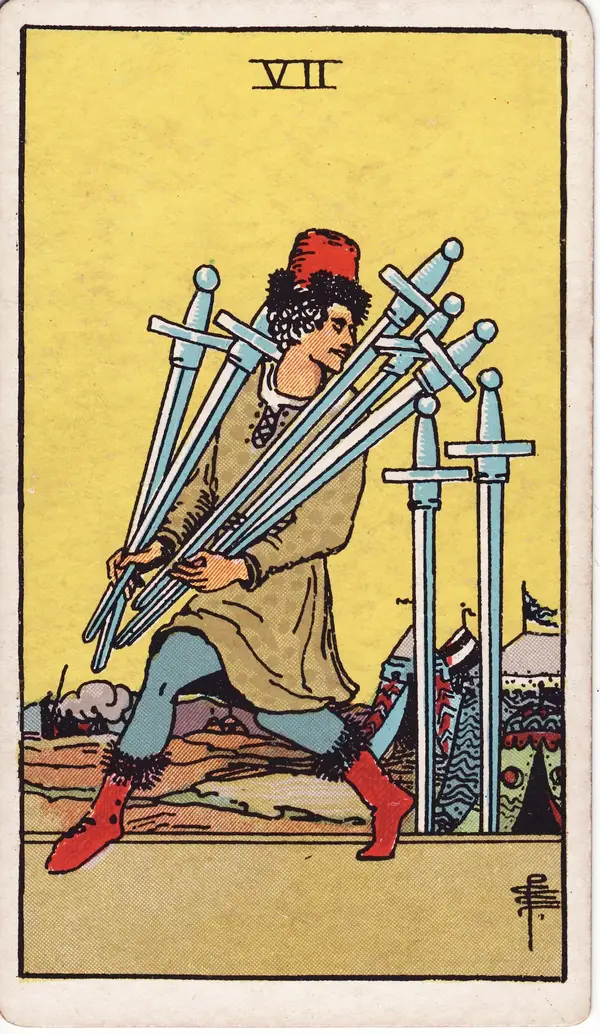
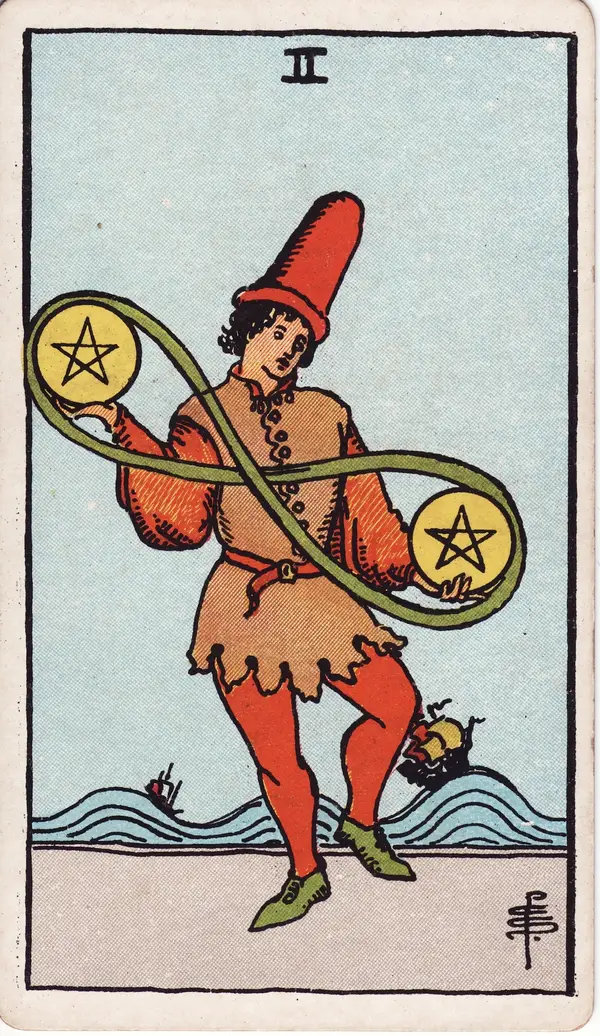
A red cap, a stolen march, a tall hat.
See which three cards come up for you today, read for your star sign and the moon.
Get today’s readingRider–Waite–Smith, 1909 · art by Pamela Colman Smith