The symbols in tarot cards, and what they mean
The 1909 cards are crowded with detail, and very little of it is decoration. Pamela Colman Smith worked from instructions by Arthur Edward Waite, and many of the objects she drew carry a meaning that is centuries older than the deck. Knowing a few of them gives you a way into a card before you have learned what it means. Two of the richest groups, the headwear and the animals, have guides of their own.
The four tools on the Magician's table
Look at the table in front of the Magician: a cup, a coin marked with a five-pointed star, a sword and, in his raised hand, a wand. These are the symbols of the four suits, laid out together on one card, as if everything the deck deals with is within his reach.
Each suit covers one area of life. Cups are feelings and relationships. Pentacles are the material world: work, money, the body, the home. Swords are thought, words and conflict. Wands are drive, ambition and the urge to make something. When one suit fills a reading, it tells you which of those areas the cards are pointing at.
The aces show each tool on its own, held out from a cloud by a single hand, as if offered. The Ace of Cups pours over with five streams of water; the Ace of Pentacles hangs above a garden gate.
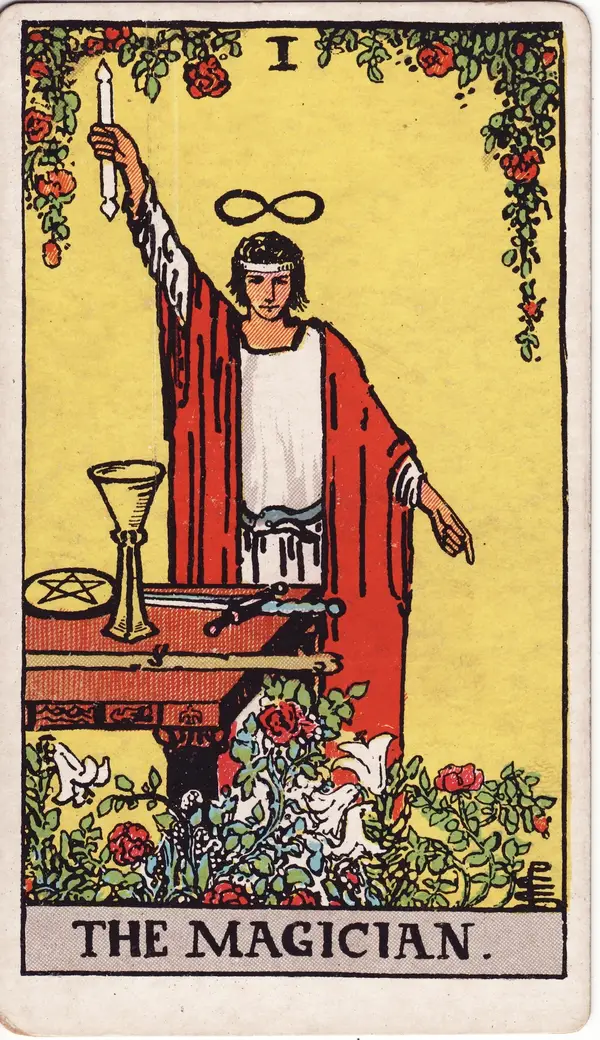
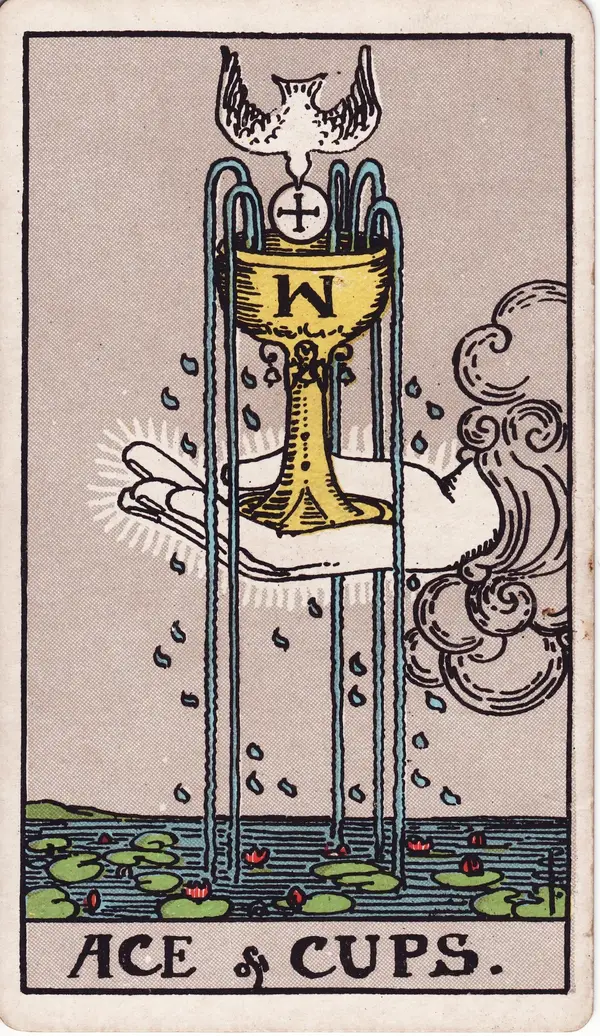
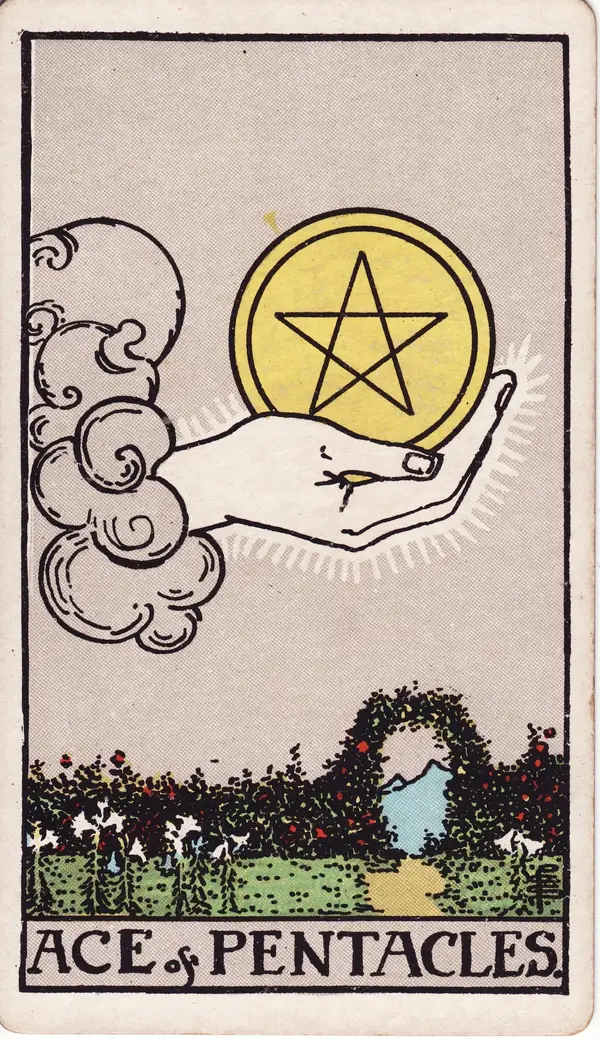
The four suit symbols on the Magician's table, and two of the aces.
Pillars
The High Priestess sits between two pillars, one black and one white, marked B and J. They are Boaz and Jachin, the two bronze pillars that stood at the entrance to Solomon's temple in the Bible. Between a dark pillar and a light one, she is placed between opposites and belongs to neither side.
Pillars return wherever the card is about an institution or a rule. The Hierophant, a figure of tradition and teaching, sits between two grey stone pillars. Justice sits between two more, with a sword in one hand and scales in the other. Where you see pillars, the card is usually about structures people built and agreed to live inside.
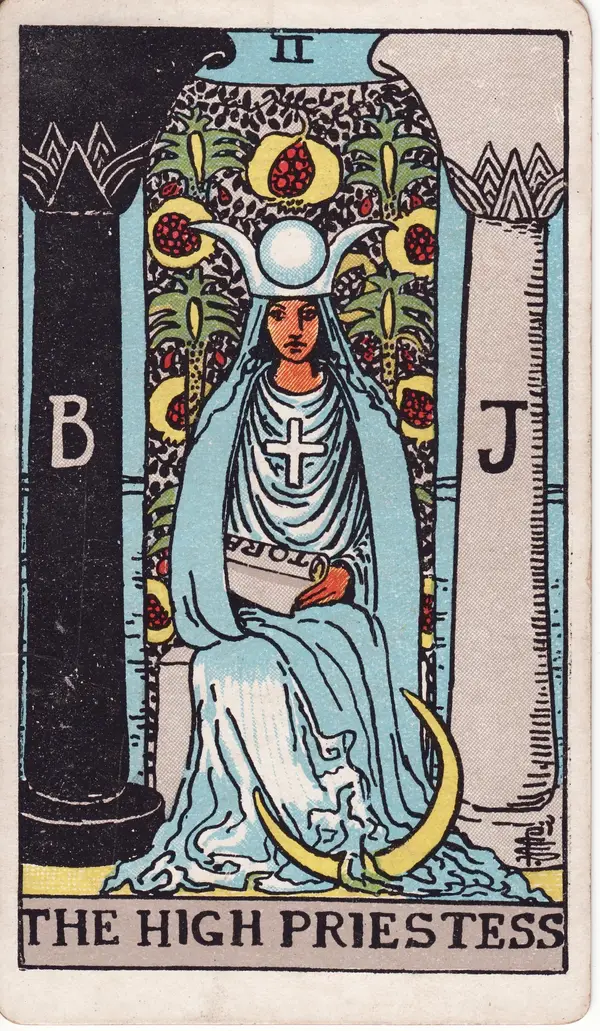
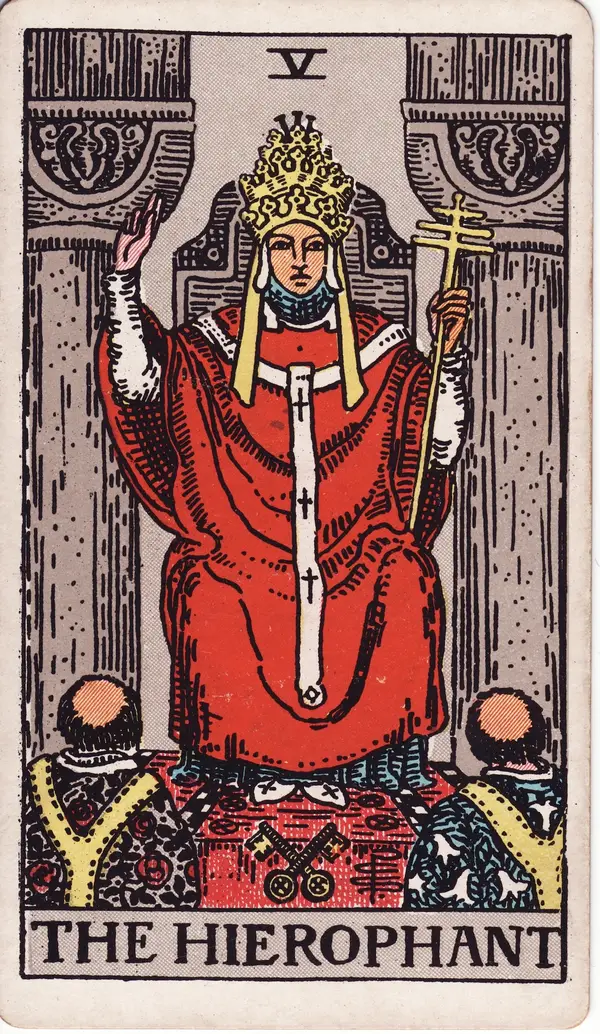
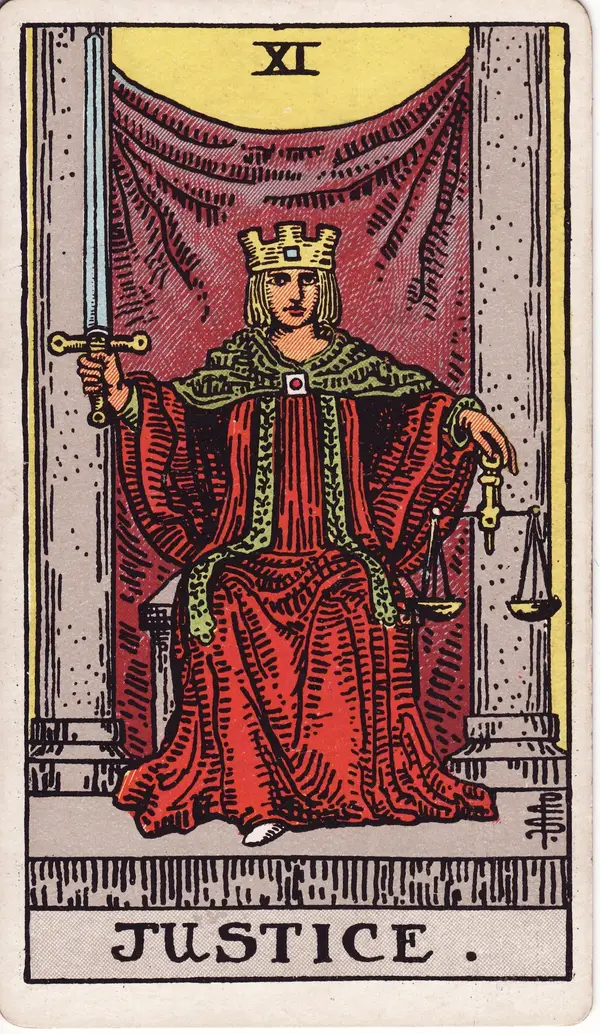
Three cards set between pillars.
The infinity sign
A sideways figure of eight, called a lemniscate, floats above the Magician's head and above the woman in Strength. It stands for something without end, and on these two cards it marks a power that is steady rather than spent in one go: skill on one card, patience on the other.
It appears once more in a humbler place. On the Two of Pentacles, a young man juggles two coins inside a looped ribbon in the same figure-of-eight, while ships ride high waves behind him. The endless loop there is the daily work of keeping two things going at once.
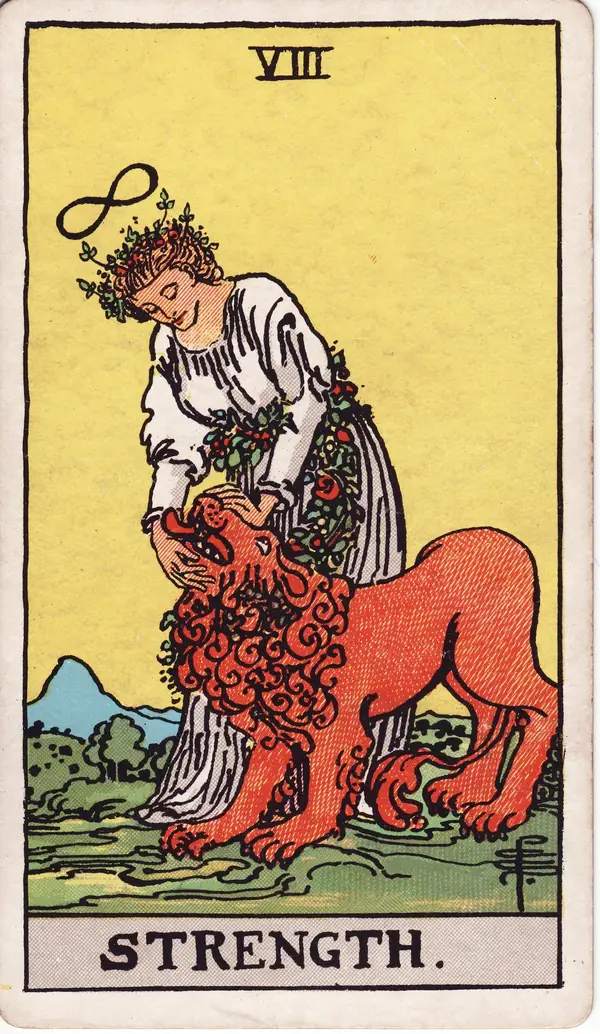
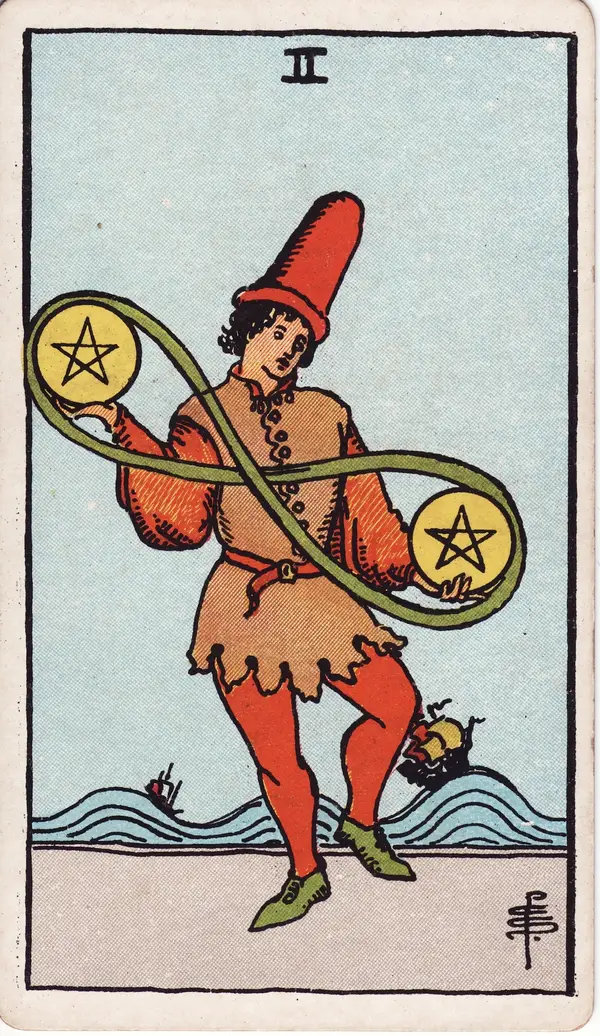
The lemniscate above Strength, and as a ribbon on the Two of Pentacles.
Pomegranates, roses, lilies and wheat
Pomegranates fill the veil behind the High Priestess and the pattern of the Empress's gown. In Greek myth, Persephone ate pomegranate seeds in the underworld and was bound to return there every year, so the fruit carries hidden knowledge as well as fertility. The Empress also sits in a field of ripe wheat, with the sign of Venus on the heart-shaped shield at her side: abundance, growth and care.
Red roses and white lilies grow around the Magician's table, an old pairing of desire and purity. The Fool carries a single white rose, and Death rides under a black banner marked with a white rose. On the Death card the flower softens the message: an ending that clears the ground for something else.
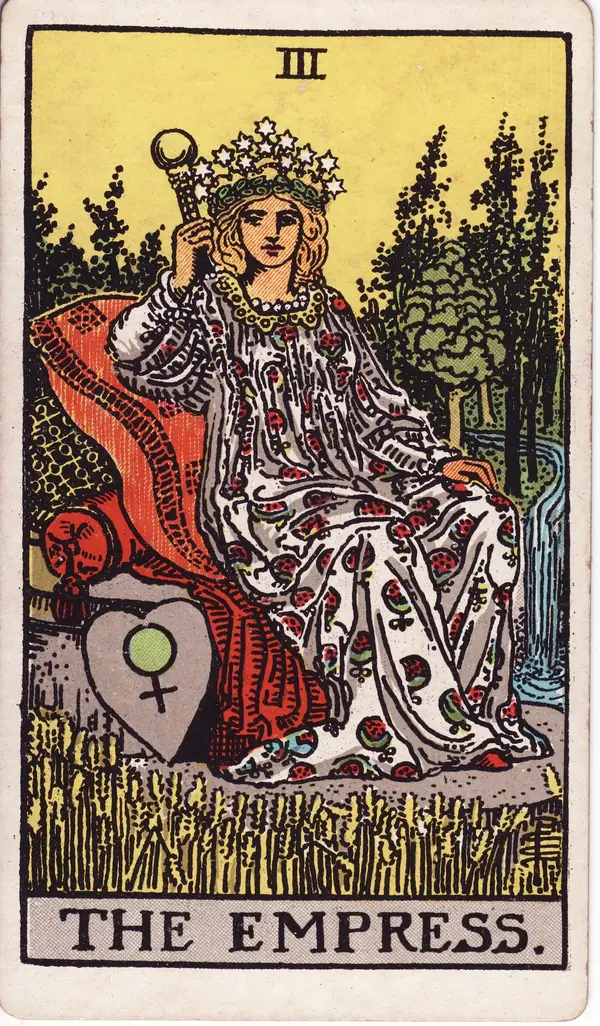
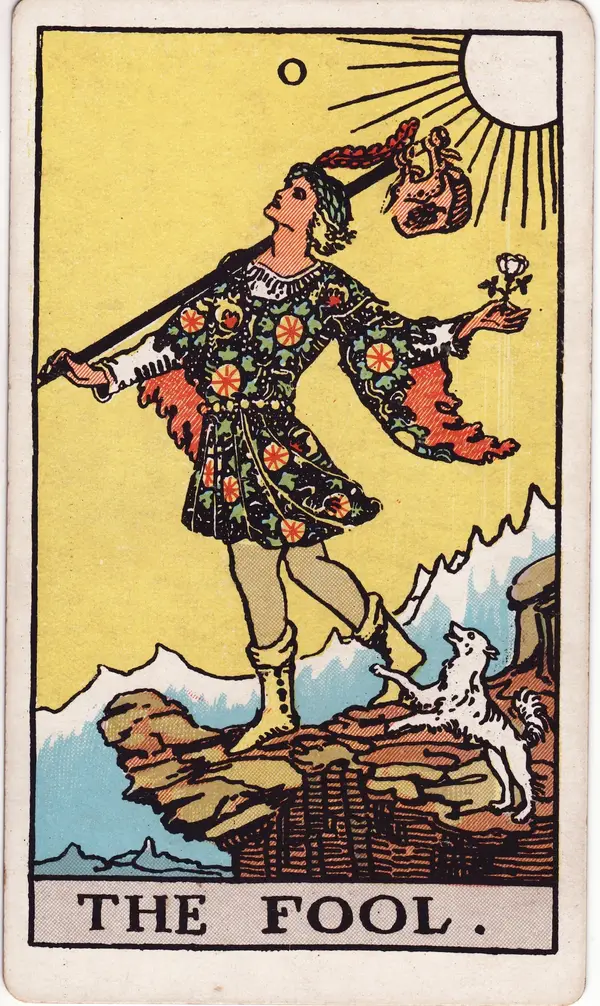
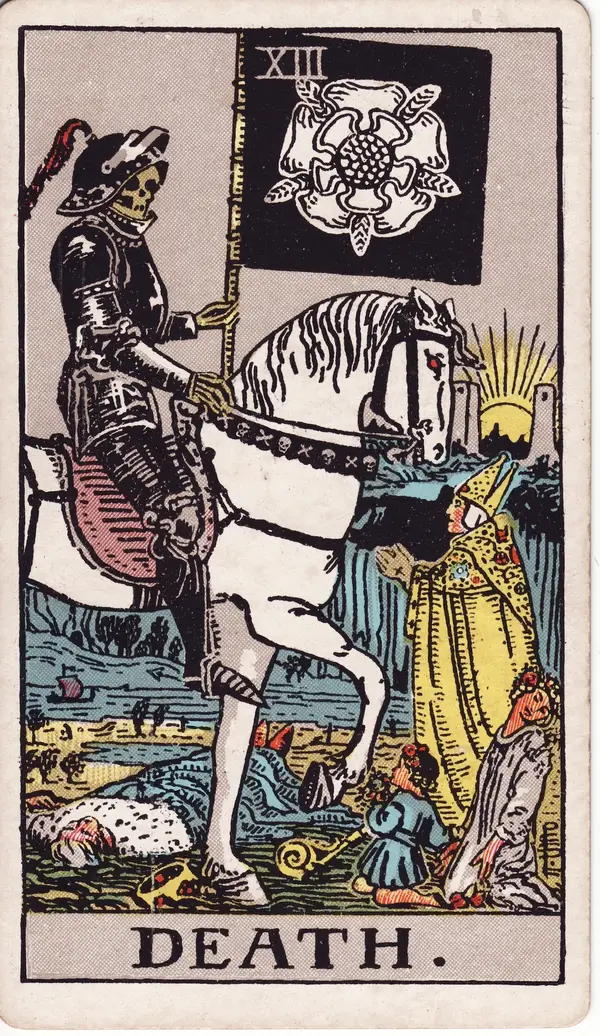
Pomegranates and wheat on the Empress; white roses on the Fool and Death.
Animals
The small white dog at the Fool's heels is often read as instinct, the friend who notices the cliff edge when the traveller does not. On the Moon card, a dog and a wolf howl at the sky, one tame and one wild, while a crayfish climbs out of a pool. The picture is of things rising from below the surface of the mind at night, when the light is uncertain.
Two sphinxes, one black and one white, sit before the Chariot. They pull in different directions, and the driver holds no reins: whatever keeps them moving forward is his will. On the Sun card a child rides a white horse bareback under a wall of sunflowers, as simple a picture of joy as the deck has.
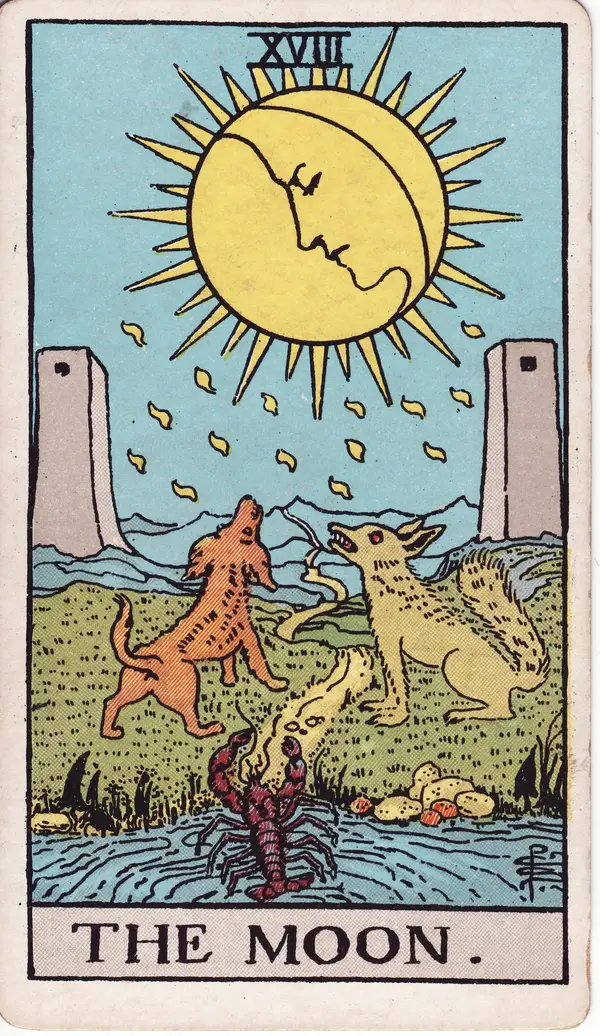
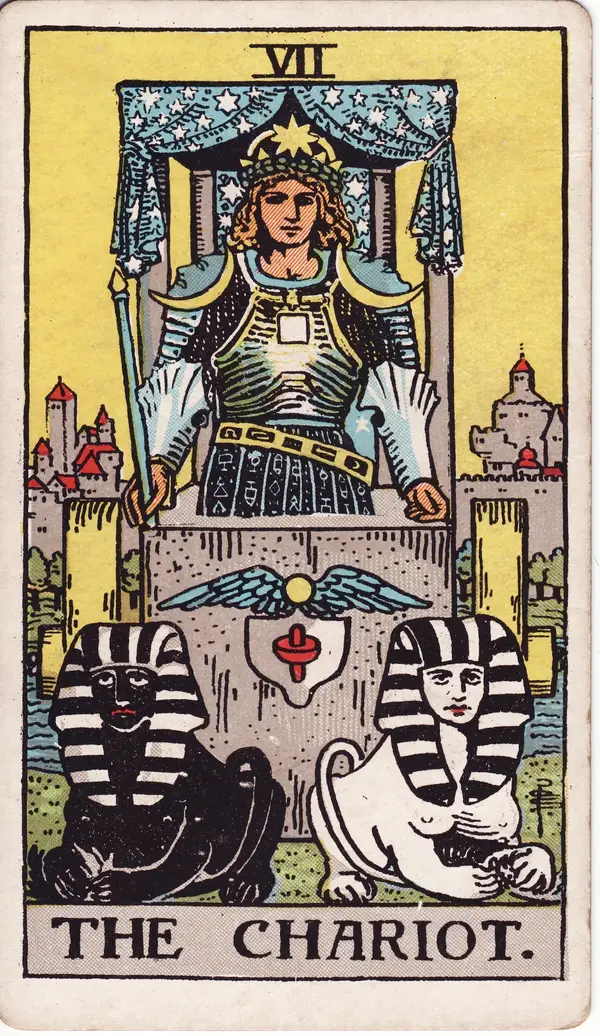
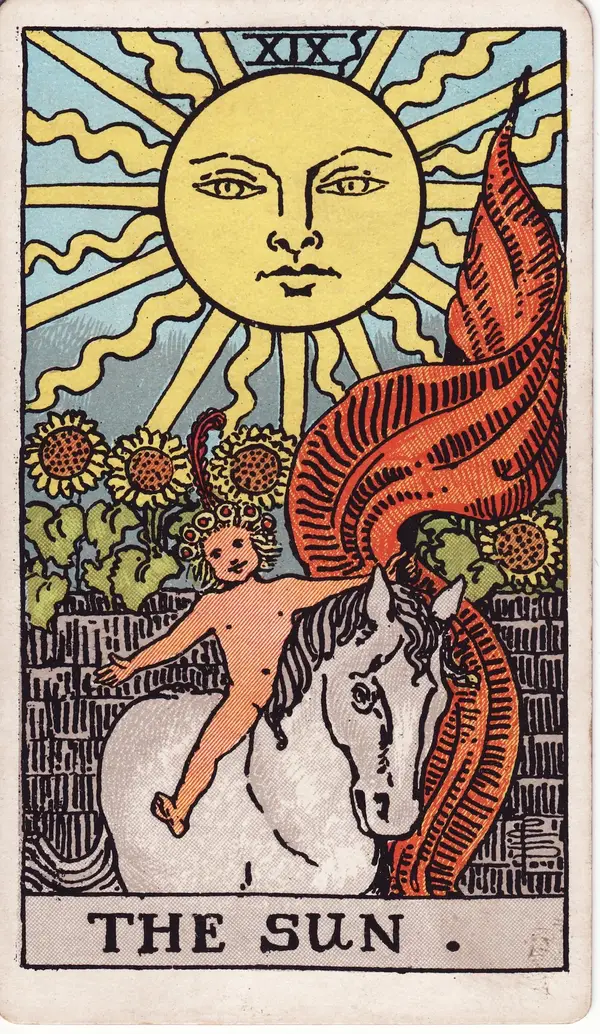
The dog, the wolf and the crayfish; the two sphinxes; the white horse.
The four winged creatures
In each corner of the Wheel of Fortune sits a winged figure reading a book: a man or angel, an eagle, a lion and a bull. They come from the visions in the books of Ezekiel and Revelation, and Christian art has long used them as the symbols of the four gospel writers. The same four look in from the corners of the World, the last card of the major arcana.
In the Golden Dawn system they also stand for the four fixed signs of the zodiac: the man for Aquarius, the eagle for Scorpio, the lion for Leo and the bull for Taurus. Placed at the four corners, they frame the card as something complete and stable while the wheel in the middle keeps turning.
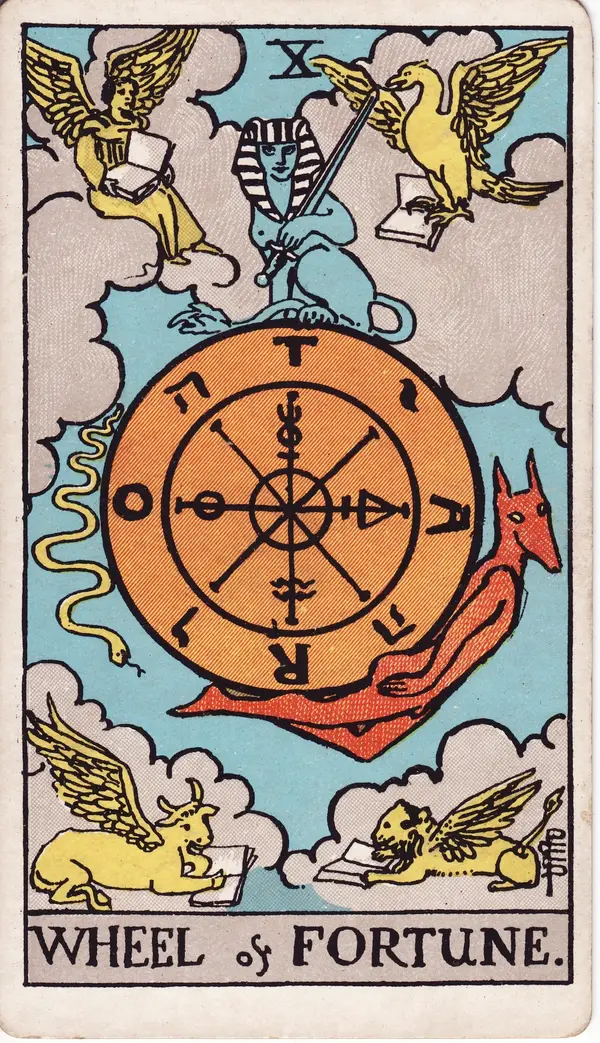
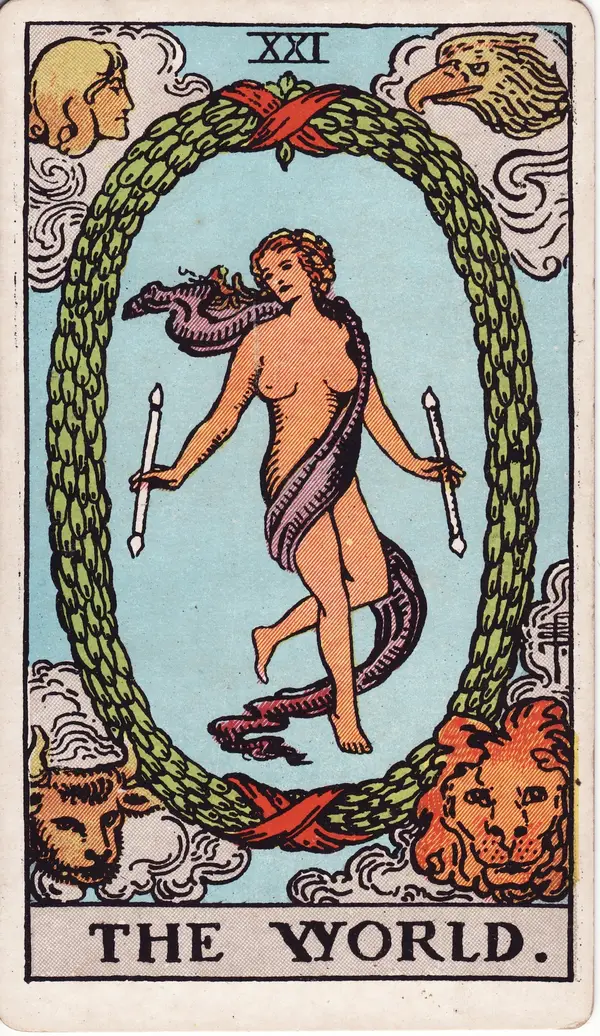
The man, the eagle, the lion and the bull at the corners of both cards.
Water, mountains and light
Water in tarot is feeling. The woman on the Star pours one jug into a pool and the other onto the ground, giving back to both. Calm water usually means settled feelings, and rough sea, as on the Two of Pentacles, means the opposite.
Mountains are effort and distance. The Fool has his back to them, about to begin; the Hermit has already climbed one and stands on its snowy peak, holding up a lantern with a six-pointed star inside it. The light he carries is small and his own, enough to see the next step by.
Colour matters too. Bright yellow skies, on the Fool, the Magician and Strength, are hopeful and open. Grey skies, as behind the Hermit, belong to quieter and more inward cards.
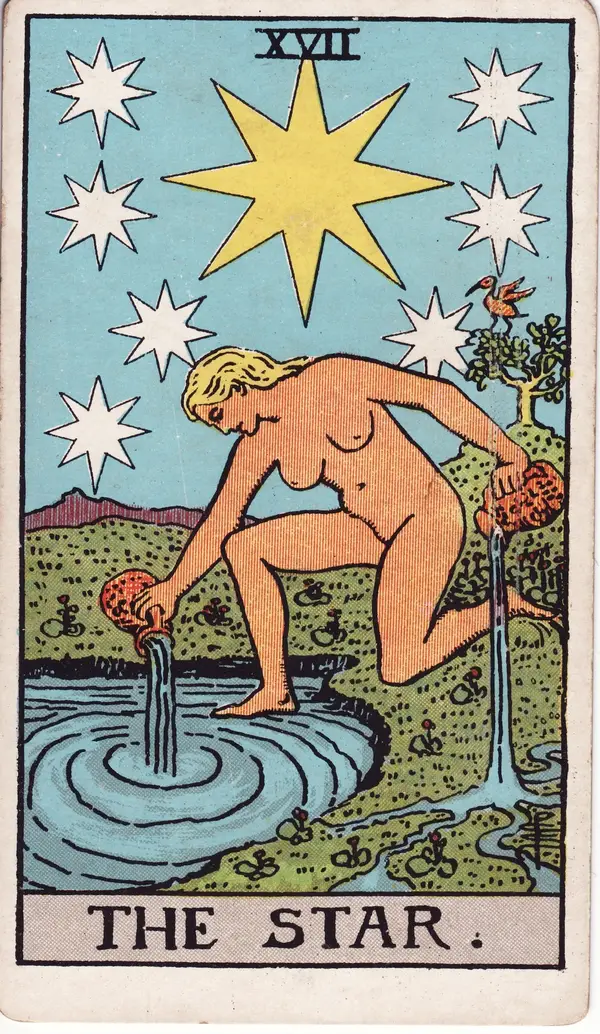
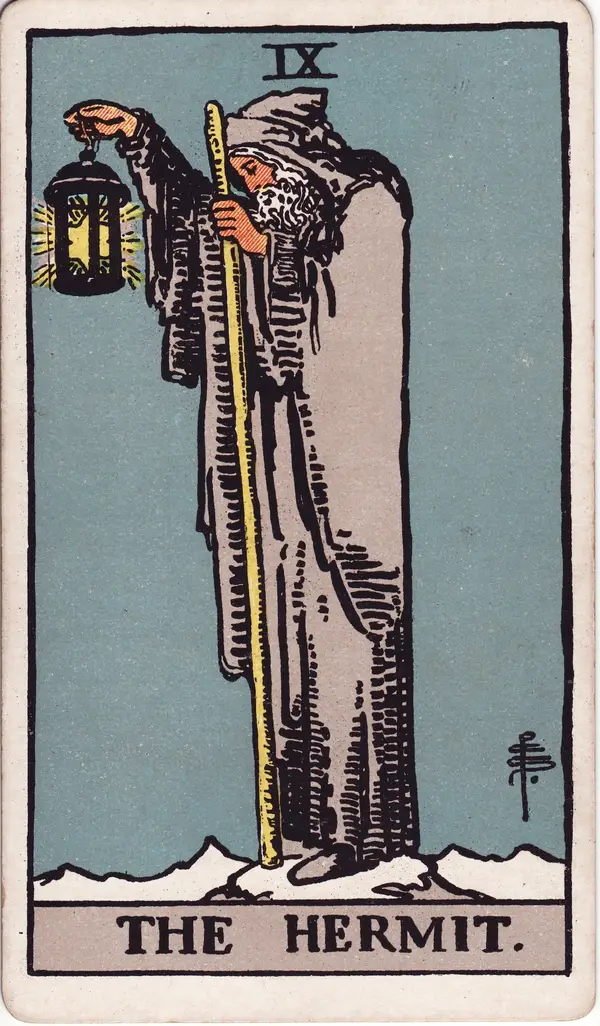
Water poured out on the Star, and the Hermit's lantern on the mountain top.
Using symbols when you read
Before you look up what a card means, look at it. Which way is the figure facing? Is the sky bright or grey? Is anything being held, offered or dropped? A card read this way tells you something even if you have forgotten its keywords, and what you notice first is often what the card has to say to you that day.
Turning a card upside down changes how its objects sit, which is one reason reversed cards are read differently. The guide to reversed cards explains how.
See which three cards come up for you today, read for your star sign and the moon.
Get today’s readingRider–Waite–Smith, 1909 · art by Pamela Colman Smith