Reversed tarot cards: what upside down means
When a card comes up upside down, it is called reversed. Some readers ignore reversals and read every card the right way up. Others give each card a second meaning when it is turned. This site uses reversals, and this guide explains how to read them.
Where reversed meanings came from
Reversals were part of tarot reading almost from the start. The Paris card reader Etteilla, who published the first books on reading tarot in the 1780s, gave every card one meaning upright and another upside down. Later writers kept the idea, and the guide Arthur Edward Waite wrote for the 1909 deck lists a reversed meaning for every card.
A reversal does not turn a card into its opposite or into bad news. A reversed card is still the same card, read from another angle.
Four ways to read a reversed card
Readers tend to use one or more of these:
- Blocked or delayed: what the card describes is there, but held back, slower or harder to reach
- Turned inward: the card is about something private, felt rather than acted on
- Too much or too little: the quality of the card is out of balance: confidence that has become carelessness, caution that has become fear
- Ending or easing: for a hard card, the worst of it is passing
Three examples
The Sun upright is joy and warmth, a child on a white horse in full daylight. Reversed, the sun has not gone out: the joy is dimmed, or slow in coming, or the confidence has tipped into overconfidence. It is a good card having a quieter day.
The Three of Swords upright is one of the deck's saddest pictures, a heart pierced by three swords in the rain. Reversed, it is usually read as recovery: the pain is being released, forgiveness is becoming possible, the storm is clearing.
The Star upright is hope and calm after difficulty. Reversed, hope has gone quiet. The reading is not that the hope was wrong, only that it is hard to feel today, and that it is worth finding again.
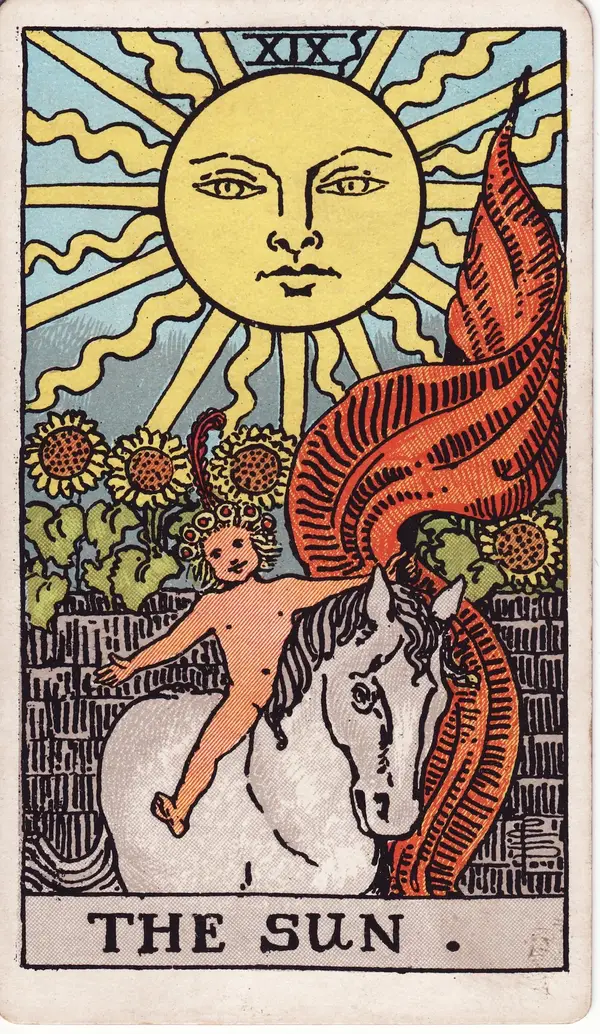
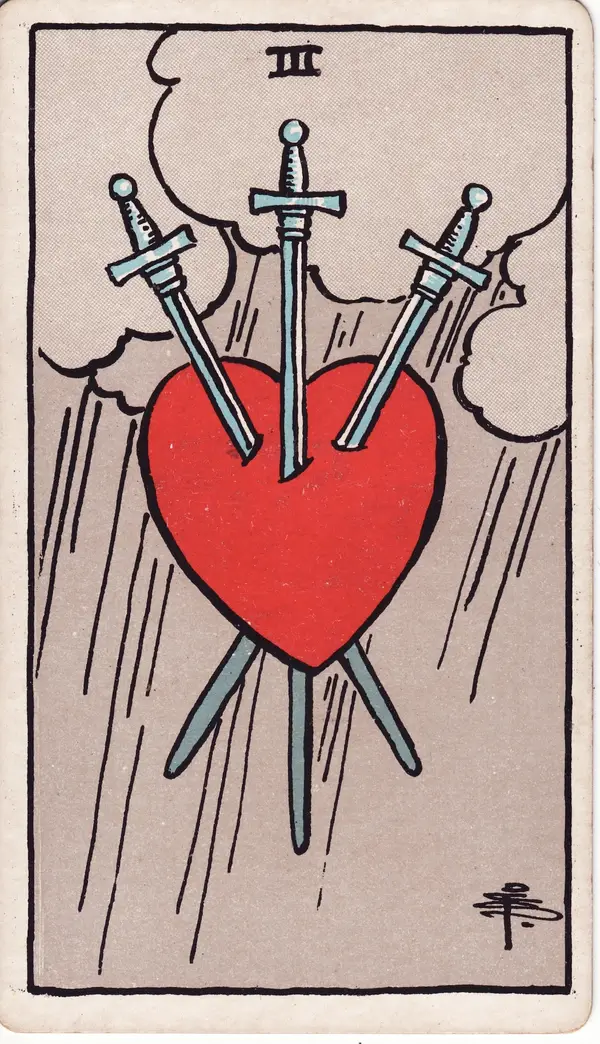
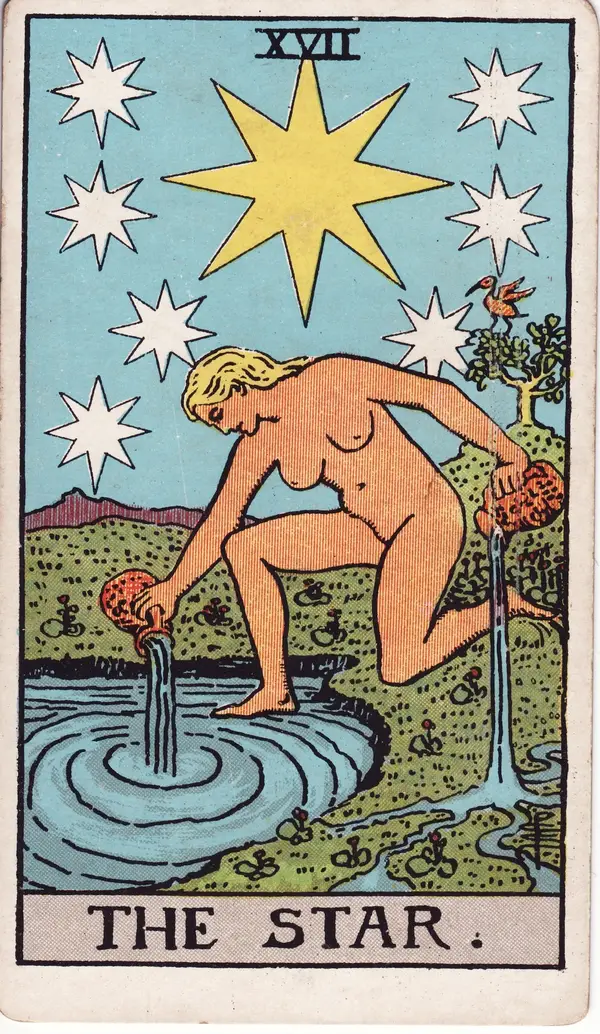
The Sun, the Three of Swords and the Star, reversed.
How reversals work on this site
When your spread is drawn, each card has an even chance of coming up reversed. Every card has its own written readings for both ways up, and for each phase of the moon, so a reversed card is never just the upright text with "not" added.
Each card-meaning page on this site gives the reversed meaning beside the upright one, along with what the card says if it turns up reversed in your reading today.
Should you use reversals?
If you read your own cards, it is your choice. Reading without reversals keeps things simple while you are learning. Reading with them doubles what seventy-eight cards can say, and many readers find a reversed card is often the one that tells them most. A good habit either way: when a card appears reversed, ask what is getting in the way of its upright meaning.
See which three cards come up for you today, read for your star sign and the moon.
Get today’s readingRider–Waite–Smith, 1909 · art by Pamela Colman Smith