What the numbers mean in tarot, from Ace to Ten
Every suit counts from Ace to Ten, and the numbers mean roughly the same thing in each suit. Learn ten ideas and four suits and you can work out most of the forty number cards without a book: a Five in any suit is some kind of trouble, a Ten is something coming to an end.
Ace: the seed
An Ace is a beginning, a gift offered before anything has been done with it. In every suit of the 1909 deck a single hand holds the suit's symbol out of a cloud. The Ace of Cups is a new feeling or relationship; the Ace of Swords a clear idea or a decision. An Ace is potential, not yet a result.
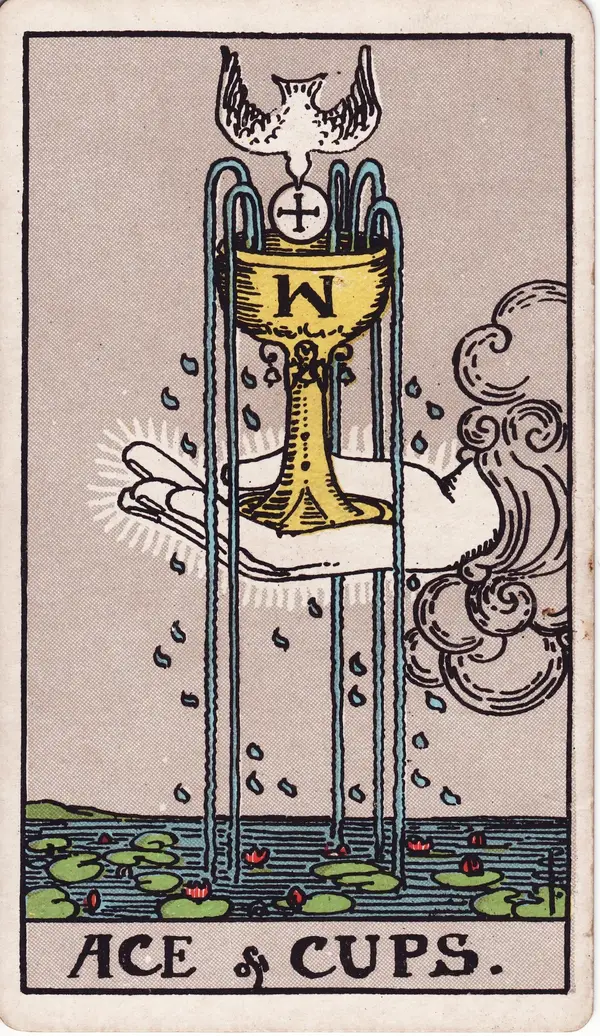
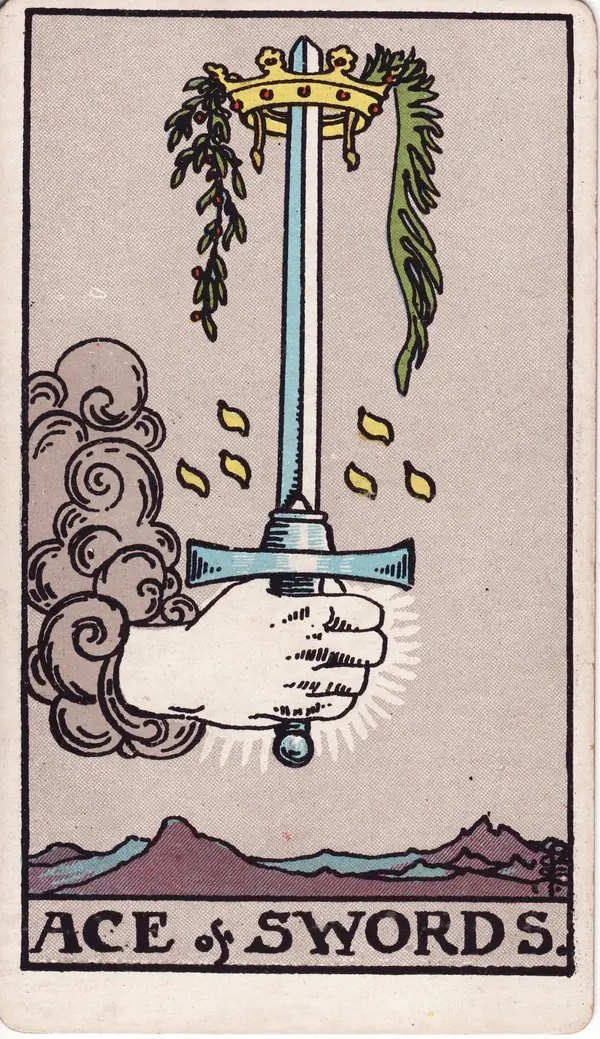
The offered hand: Aces of Cups and Swords.
Two: a pair, a choice
Two is balance and partnership, or a choice between two things. The Two of Cups shows a couple exchanging cups; the Two of Swords a blindfolded woman holding two crossed swords, refusing to choose. Twos ask how two things fit together.
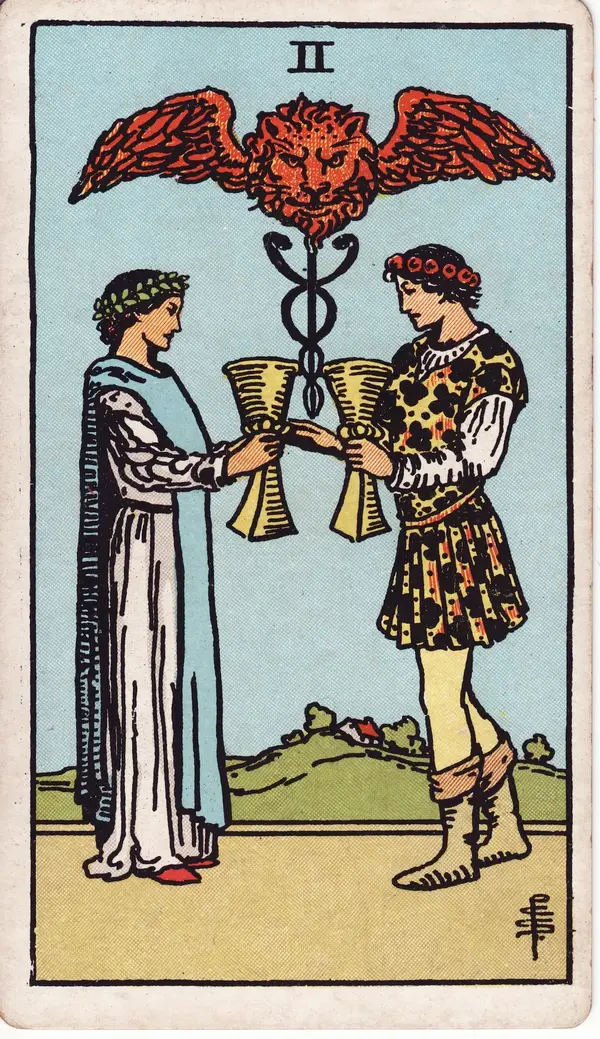
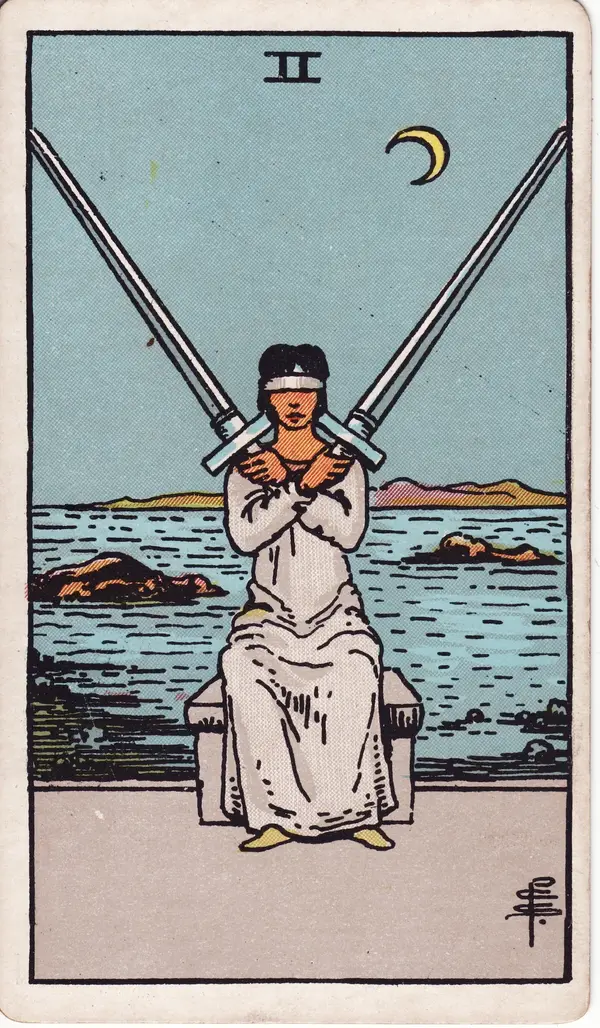
Twos: a meeting, and a stand-off.
Three: the first result
With three, something grows from the pair: the first result, often shared. The Three of Cups is three friends raising their cups together; the Three of Pentacles a craftsman in a cathedral, working with two others who hold the plans. In Swords the first result can hurt, which is why the Three of Swords is a pierced heart.
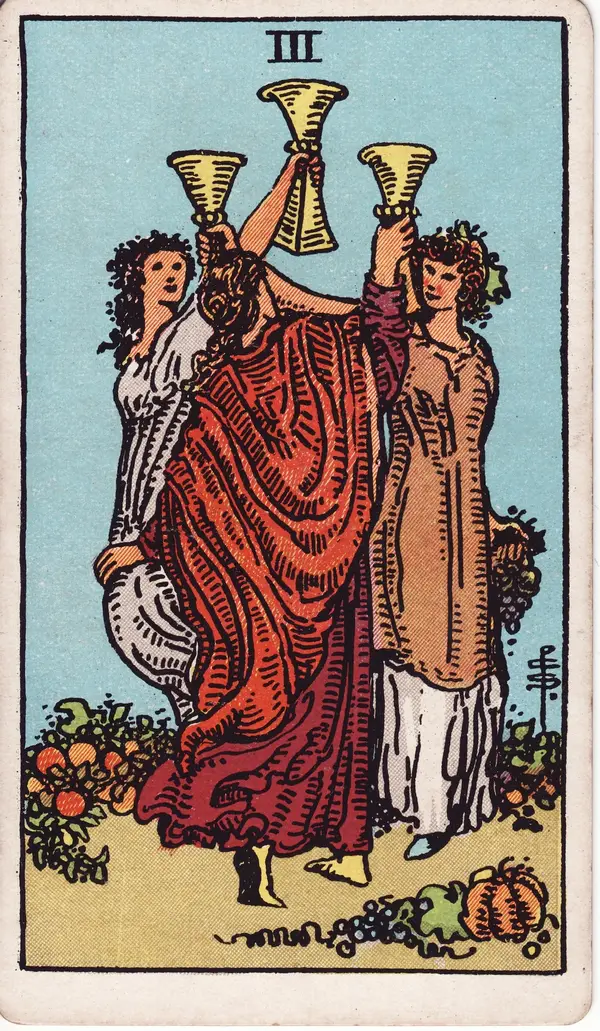
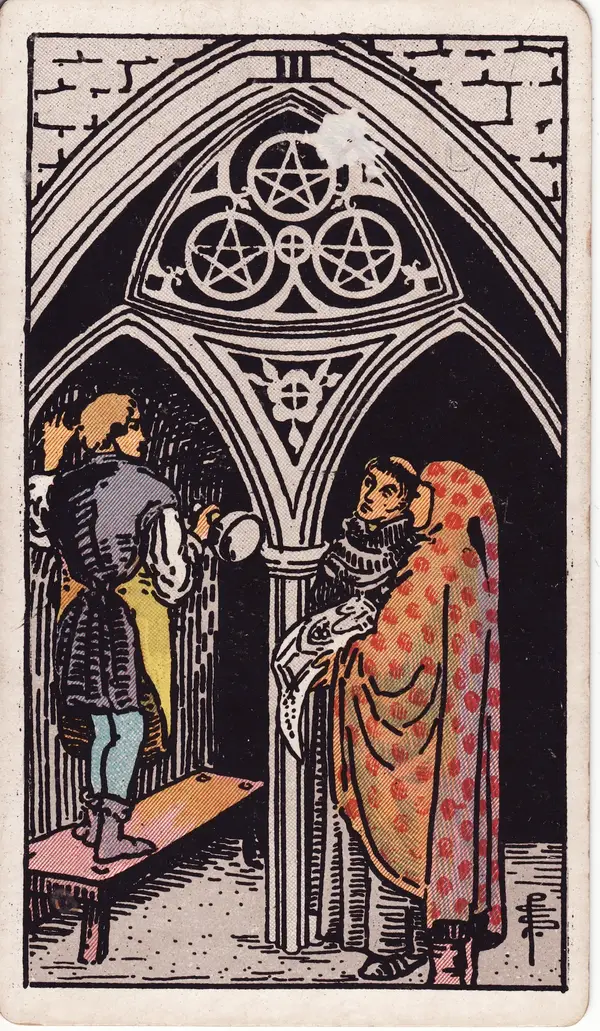
Threes: celebration and collaboration.
Four: steadiness, and standing still
Four is a square, the most stable number: structure, rest and security. The Four of Wands is a garland strung between four staves for a celebration at home. The same steadiness can go stale, as in the Four of Cups, where a young man sits under a tree with his arms folded and ignores a cup offered to him out of a cloud.
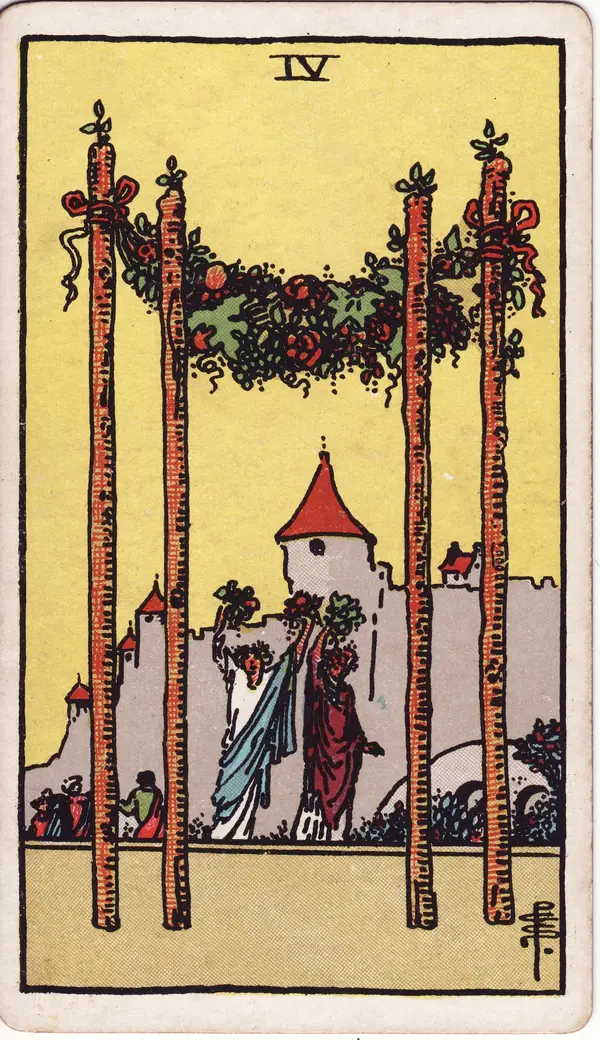
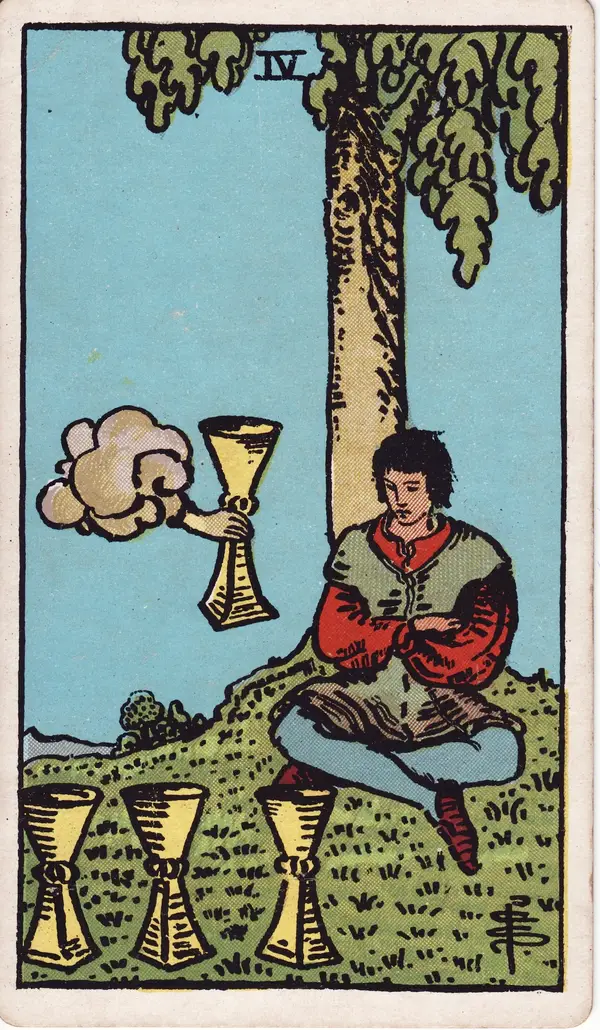
Fours: a safe home, and a closed mind.
Five: the disruption
Five breaks the stable four, so the Fives are the troubles of the deck: loss, conflict, hardship. The Five of Pentacles shows two people in the snow passing a lit church window; the Five of Wands five young men sparring with staves. A Five is rarely a disaster. It is the difficulty that forces a change.
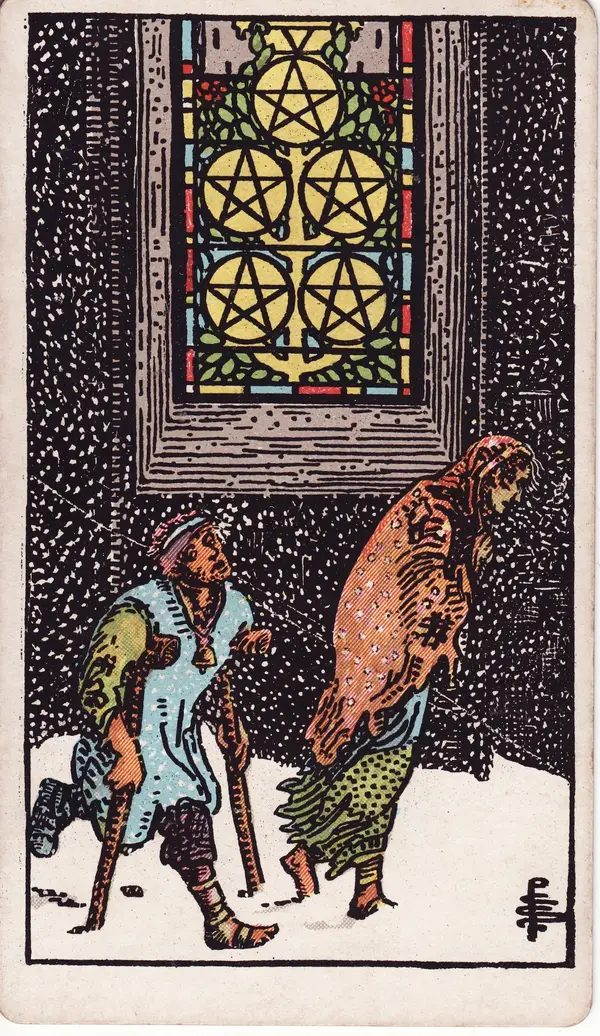
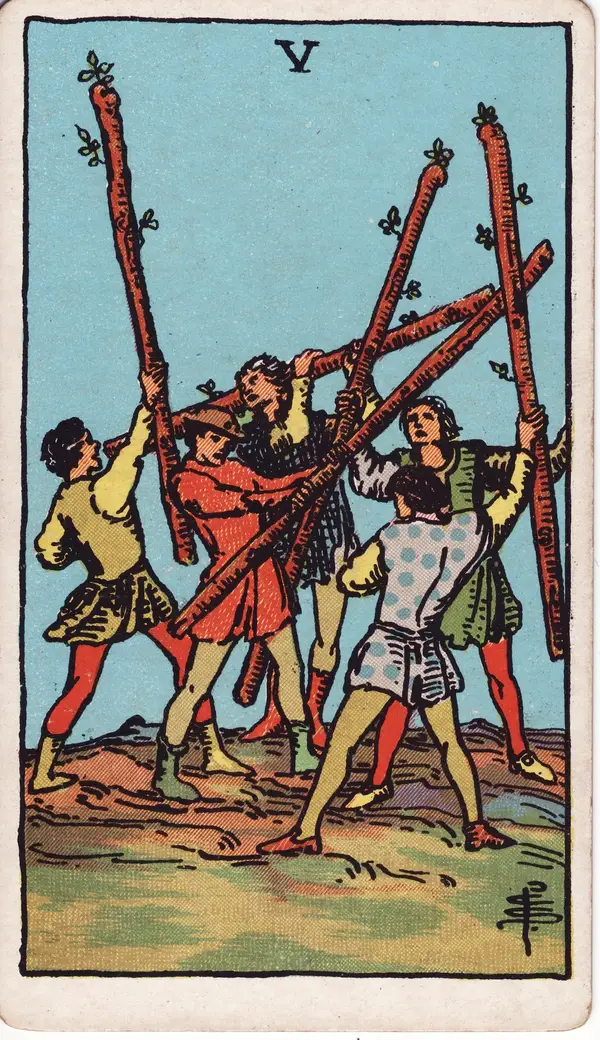
Fives: hardship, and a scuffle.
Six: recovery and give-and-take
After the trouble of five, six restores balance. The Six of Pentacles is a merchant weighing out coins on a pair of scales and giving them to people in need; the Six of Swords is a boat crossing from rough water towards calm. Sixes are about generosity, healing and moving on.
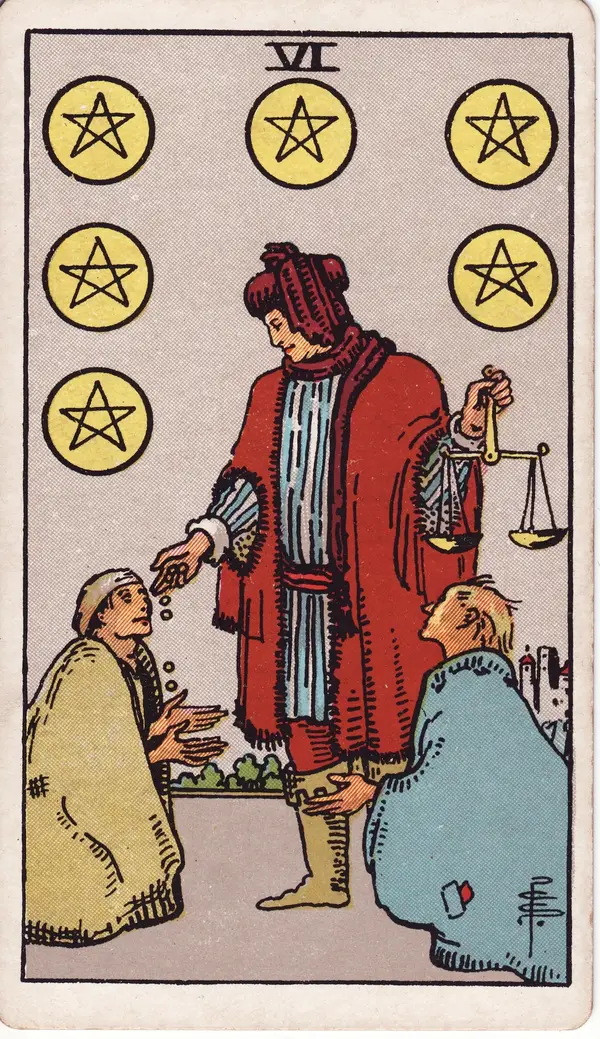
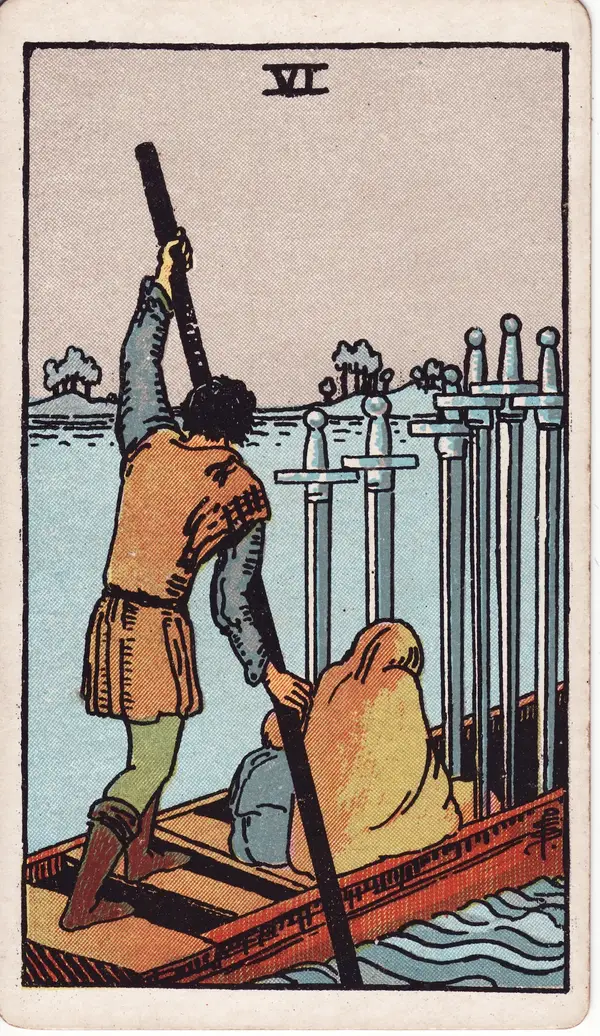
Sixes: giving, and crossing over.
Seven: taking stock
Seven is a pause to assess, often with a test in it. The Seven of Pentacles shows a farmer leaning on his hoe, looking at the coins growing on a bush and wondering if the work was worth it. The Seven of Cups is a figure facing seven cups in the clouds, each holding a different vision, and not knowing which is real.
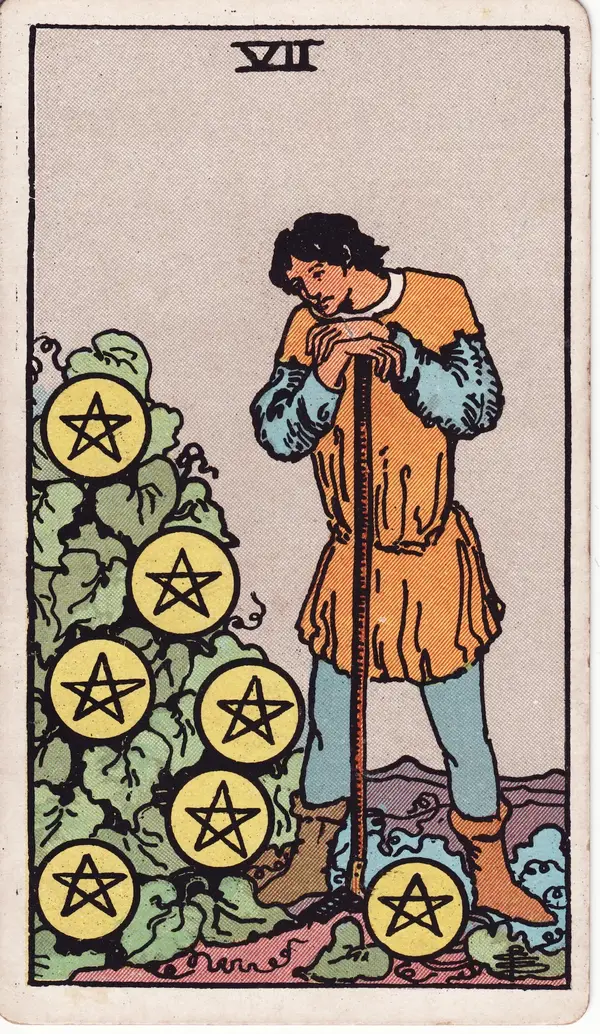
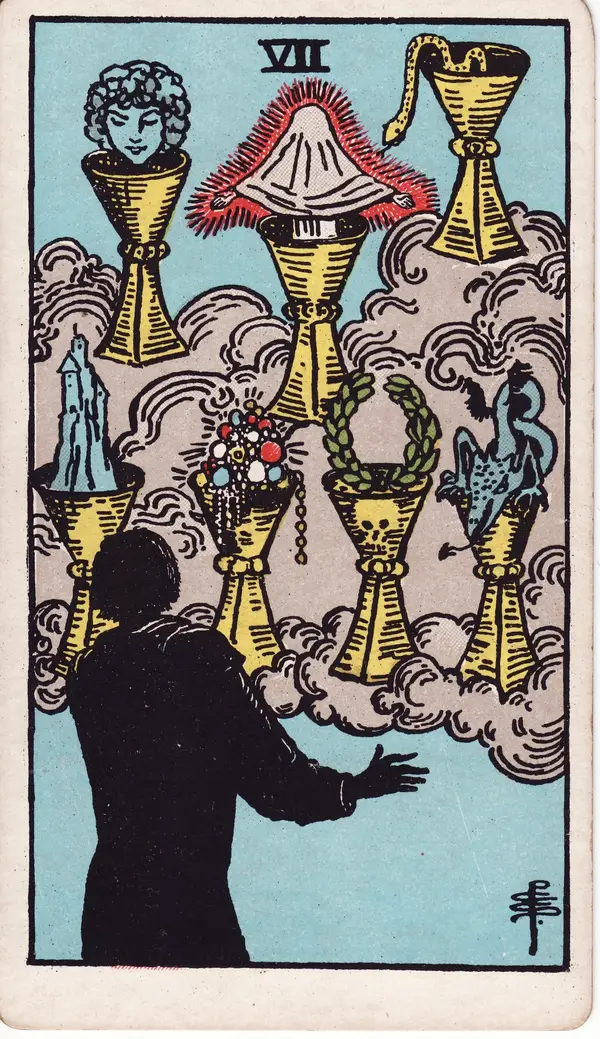
Sevens: patience, and too many choices.
Eight: movement and mastery
Eight is effort turned into progress. The Eight of Pentacles is an apprentice carving coins, one after another, getting better with each. The Eight of Wands is eight staves flying through the air with no person in sight, things moving fast. The Eight of Cups shows the other side of moving: a figure walking away from what no longer satisfies.
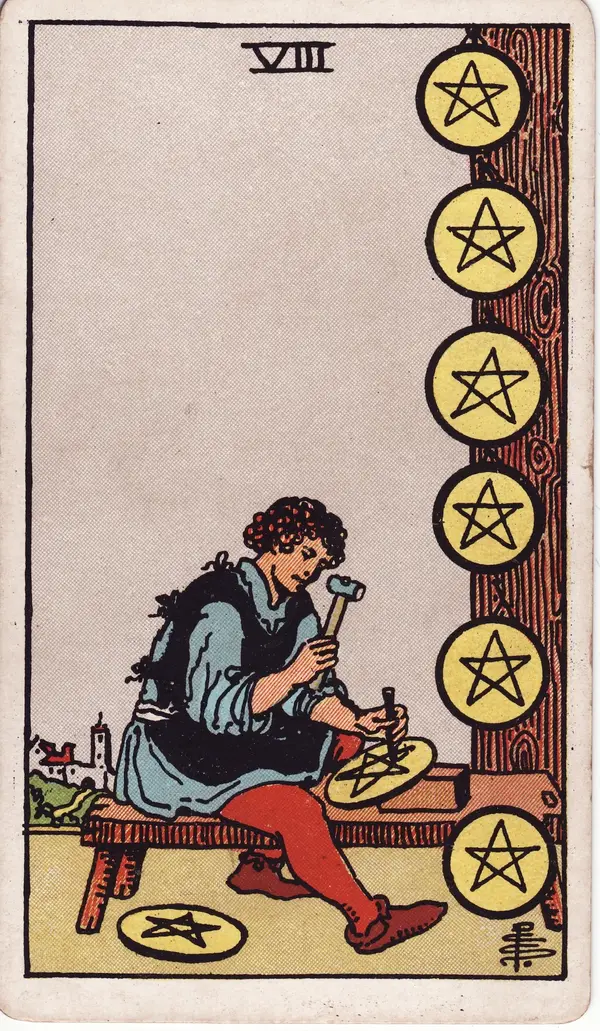
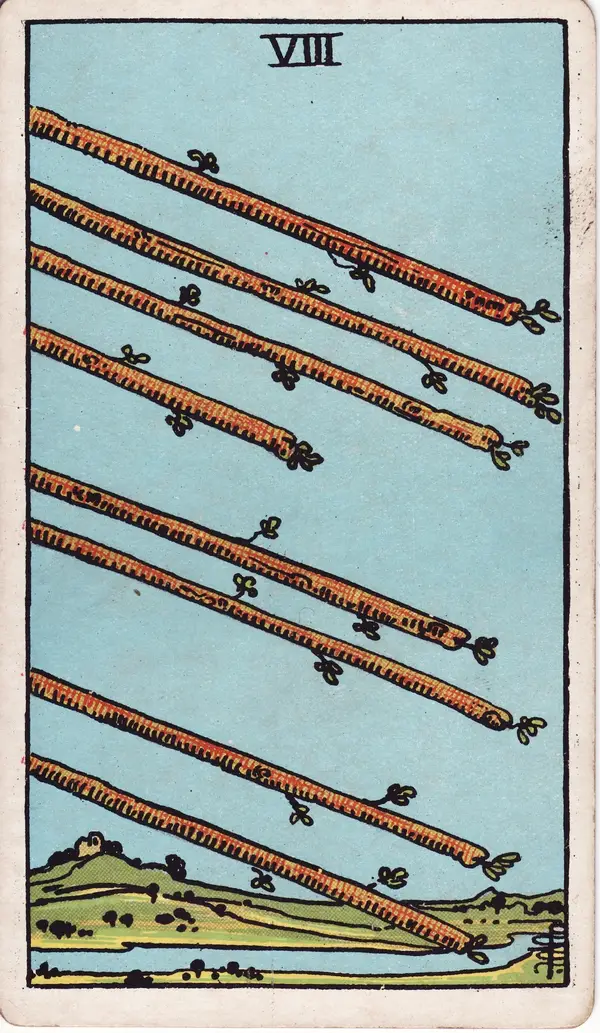
Eights: practice, and speed.
Nine: nearly there
Nine is the last step before completion, and it can be rich or lonely. The Nine of Cups is a contented man sitting in front of nine cups, arms folded, pleased with himself. The Nine of Swords is a woman sitting up in bed in the dark with her face in her hands. Both are alone with what they have.
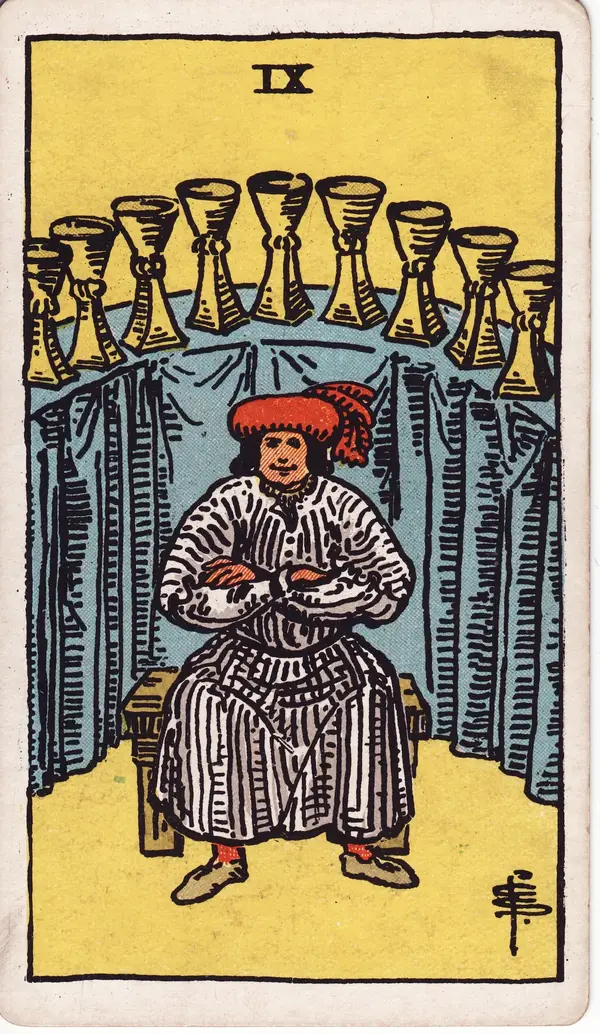
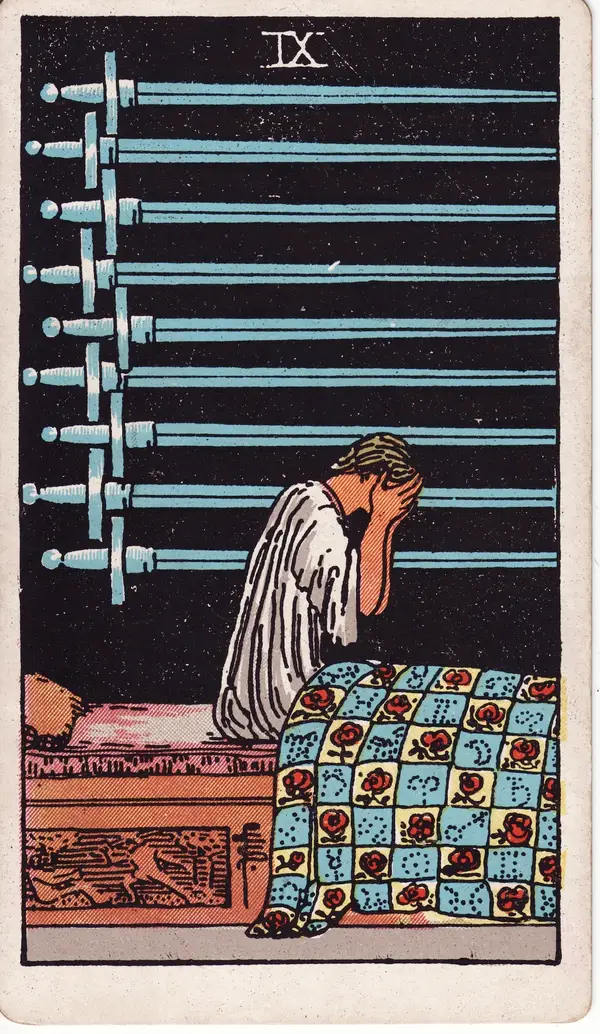
Nines: satisfaction, and a sleepless night.
Ten: the end of a cycle
Ten completes the suit, and with it the cycle: the most of what the suit has to give, good or bad. The Ten of Cups is a family under a rainbow; the Ten of Swords a man face down with ten swords in his back, under a black sky that is turning yellow at the horizon. Even the worst Ten carries the next Ace inside it: the cycle starts again.
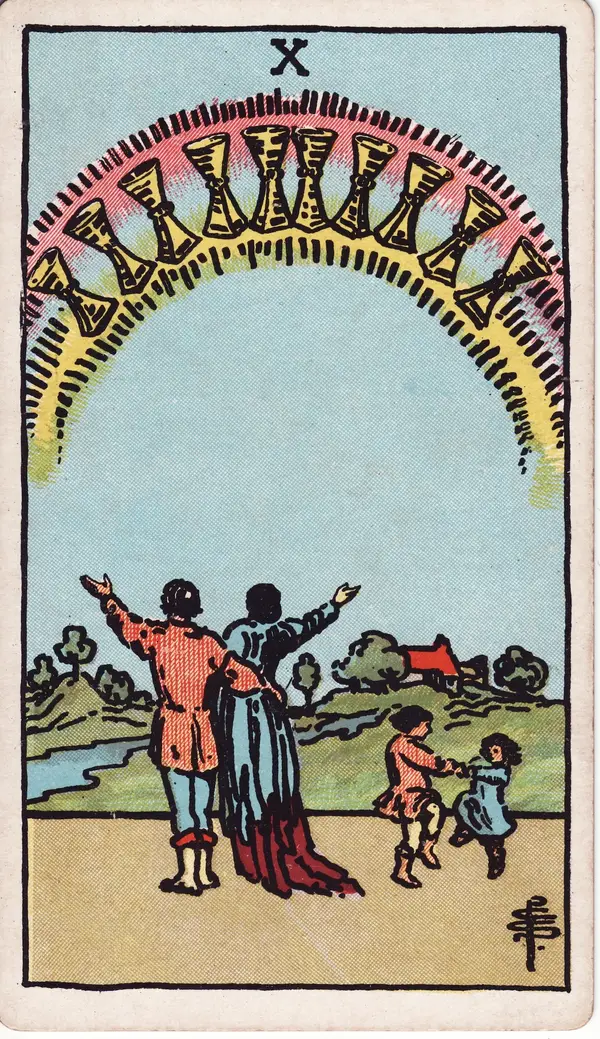
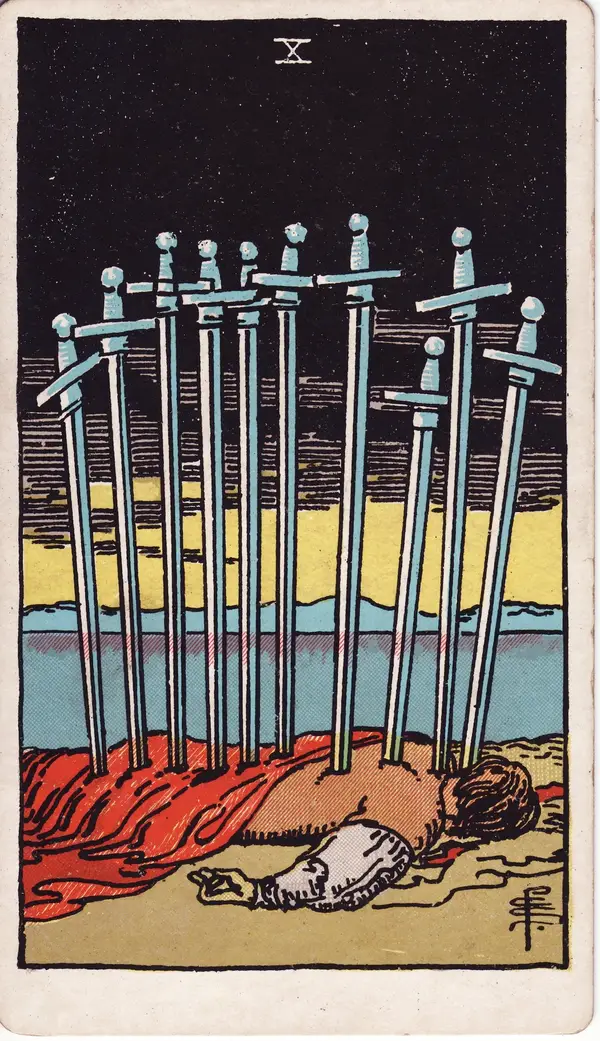
Tens: fulfilment, and the end of the worst.
Numbers in a reading
When the same number turns up twice in a spread, it is worth noticing: two Fives make the day about a difficulty, two Aces about a start. Some readers also link each number to the major card that carries it, the Magician as I, the High Priestess as II and so on, so that a Five also echoes the Hierophant. That is a matter of taste. The numbers alone are enough to begin with.
See which three cards come up for you today, read for your star sign and the moon.
Get today’s readingRider–Waite–Smith, 1909 · art by Pamela Colman Smith