The Fool's journey through the major arcana
The twenty-two major cards are numbered from 0 to XXI, and read in order they tell a story. The Fool, card 0, is a traveller who meets each of the others in turn, learns something from each, and arrives at the World. Thinking of the cards as one journey makes them much easier to remember, and it tells you where you stand when one of them comes up.
Setting out
The Fool stands at the edge of a cliff with a bundle on a stick, a white rose in his hand and a small dog at his heels. He is looking up at the sky rather than down at the drop. He carries the number zero, which places him outside the sequence, and that is why he can travel through all of it. Every reader is the Fool at the start of something.
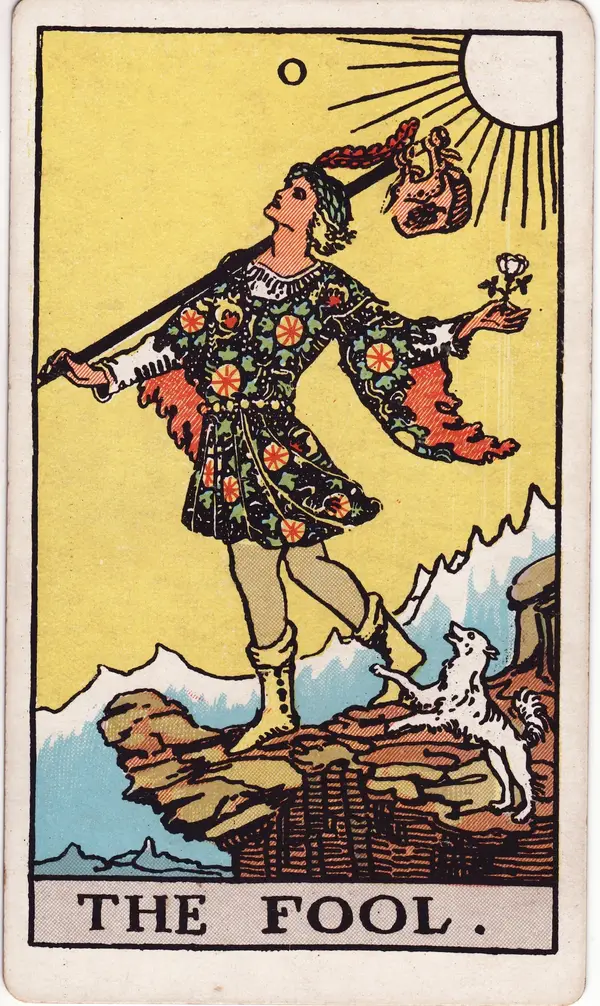
The Fool: 0.
The first teachers: I to V
The Fool first meets the people who shape anybody's early life. The Magician (I) shows him that he has the tools he needs, laid out on the table, and the skill to use them. The High Priestess (II) shows him that some knowledge cannot be taught, only noticed. The Empress (III) is care, nature and growth, the mother of the deck; the Emperor (IV) is order, rules and protection, its father. The Hierophant (V) is tradition: school, faith, the customs of the people around him.
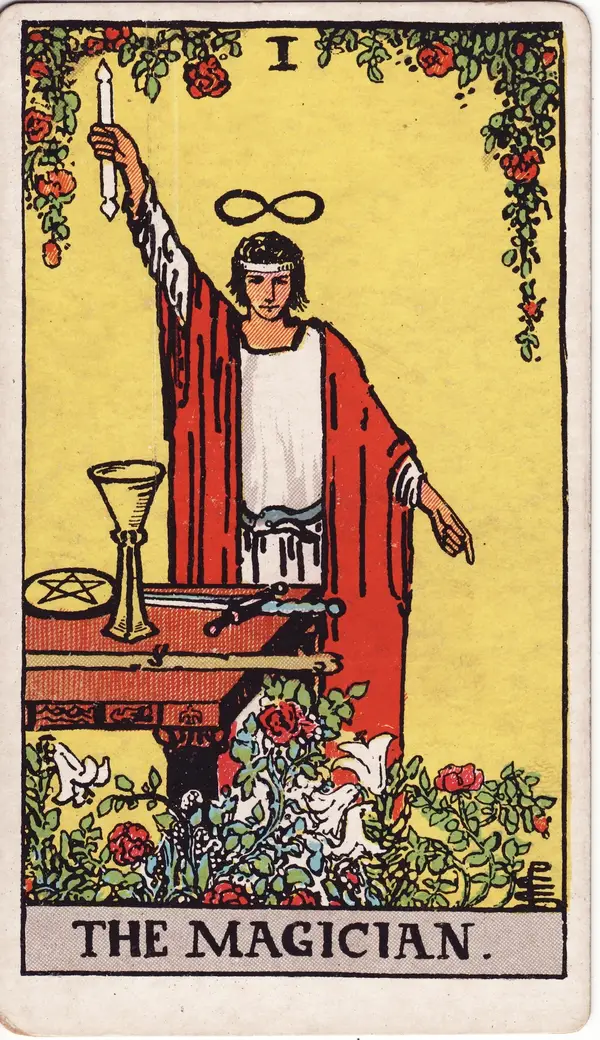
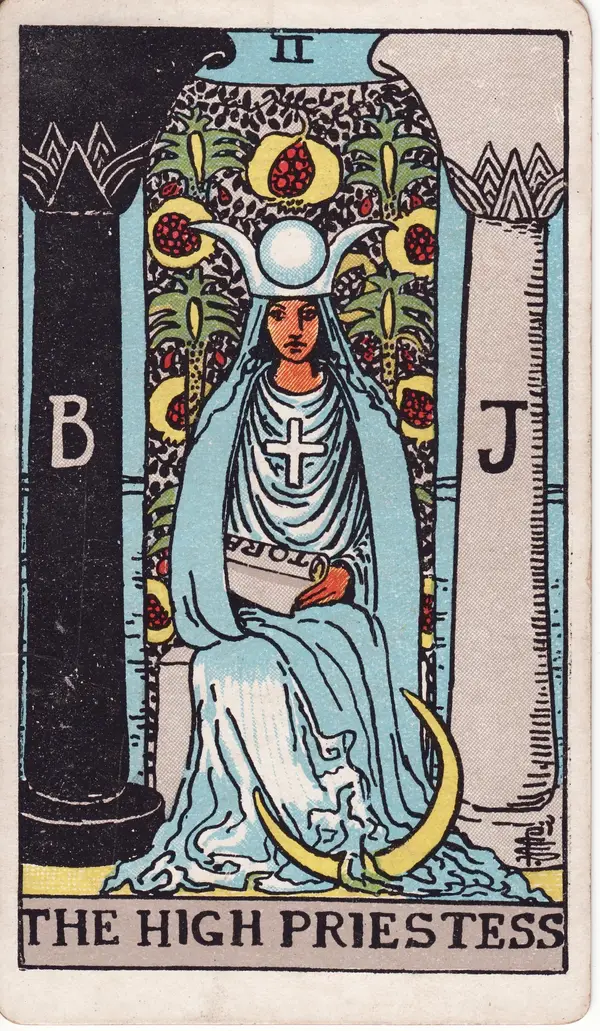
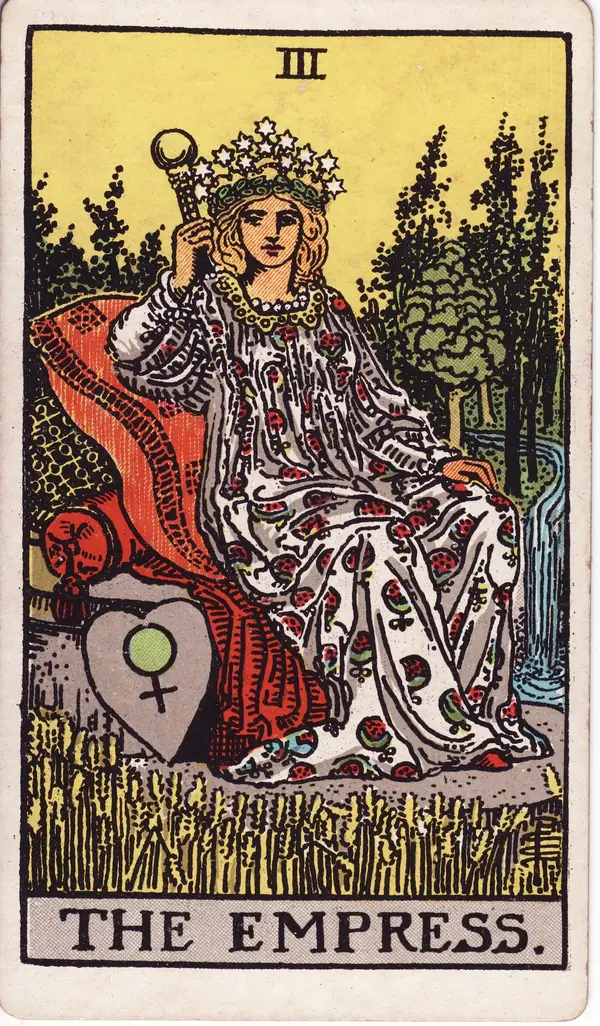
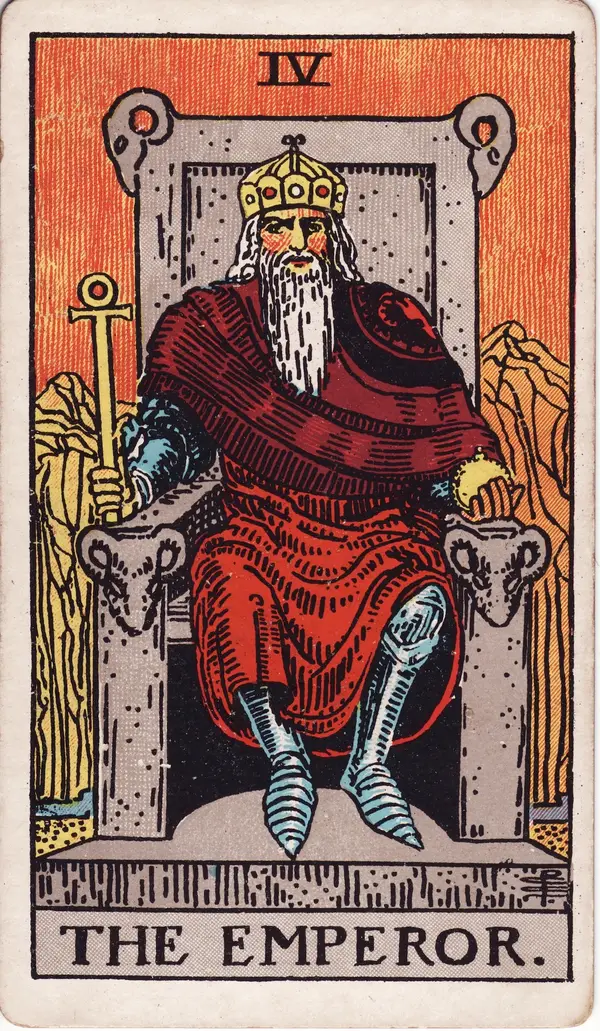
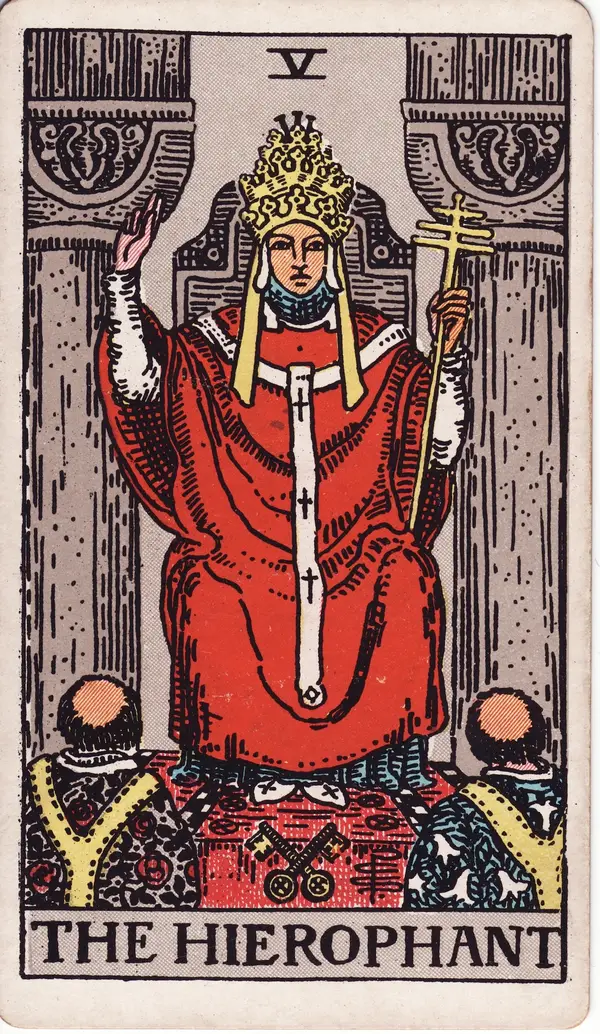
Skill, intuition, care, order, tradition.
Finding his own way: VI to X
Then the Fool has to choose for himself. The Lovers (VI) is a choice made from the heart about what he values. The Chariot (VII) is willpower: the driver keeping two sphinxes, one black and one white, moving forward together. Strength (VIII) is a quieter courage, the woman calming the lion with her hands. The Hermit (IX) climbs a mountain alone and holds up his lantern: some answers only come in solitude. And the Wheel of Fortune (X) turns, reminding him that luck rises and falls whatever he does.
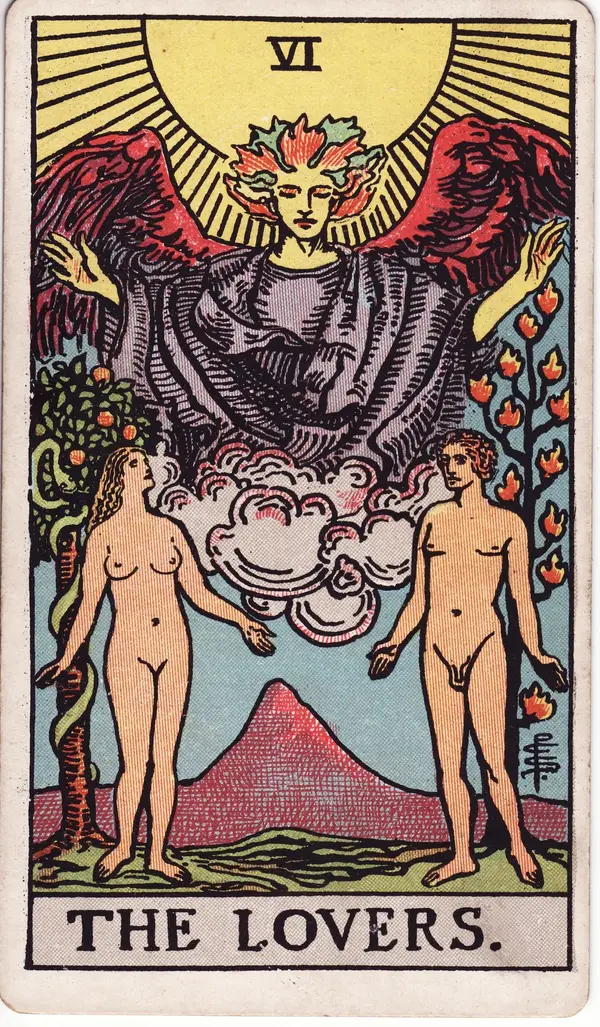
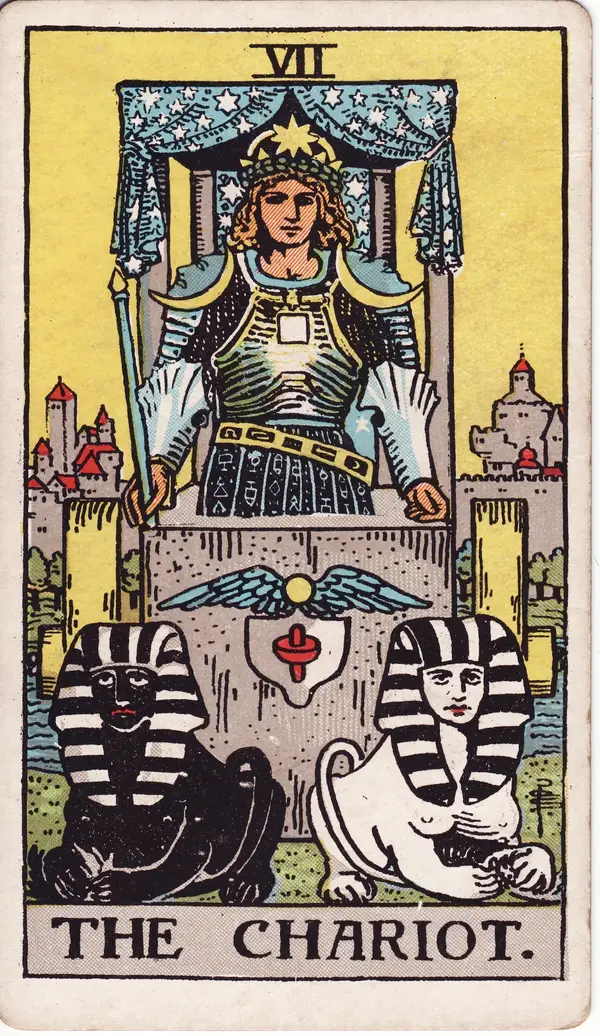
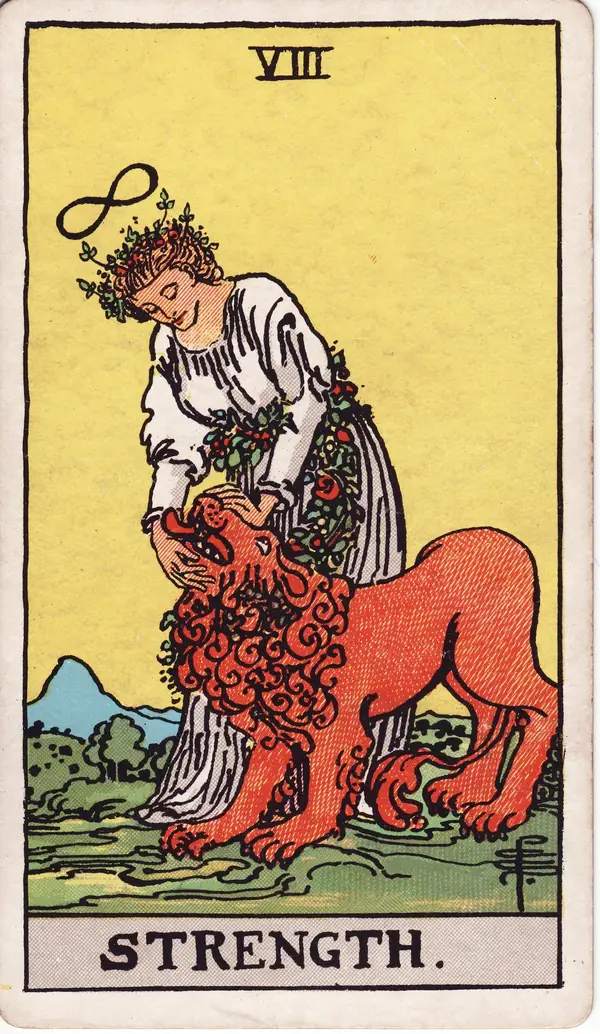
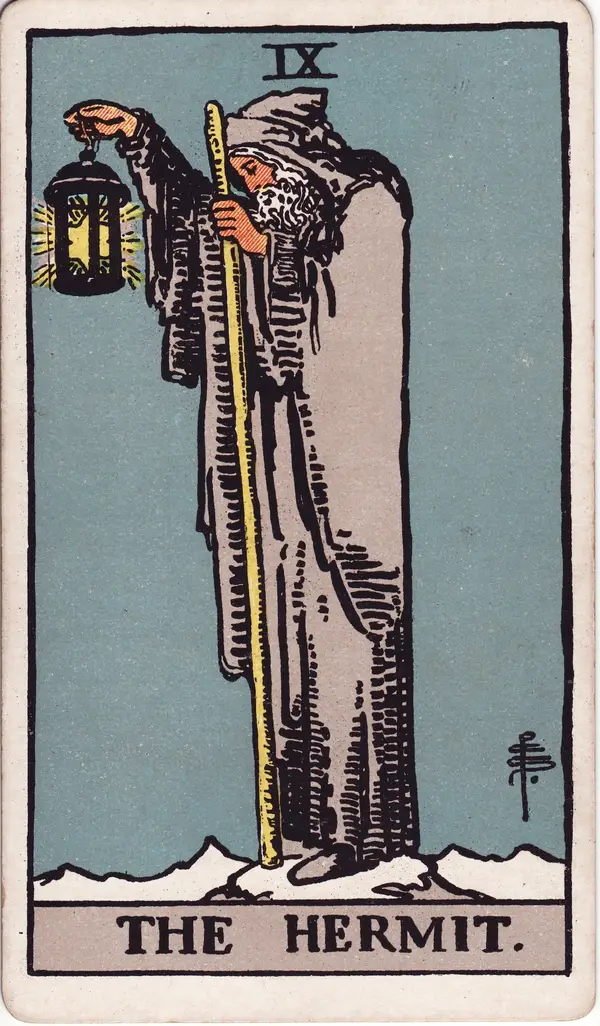
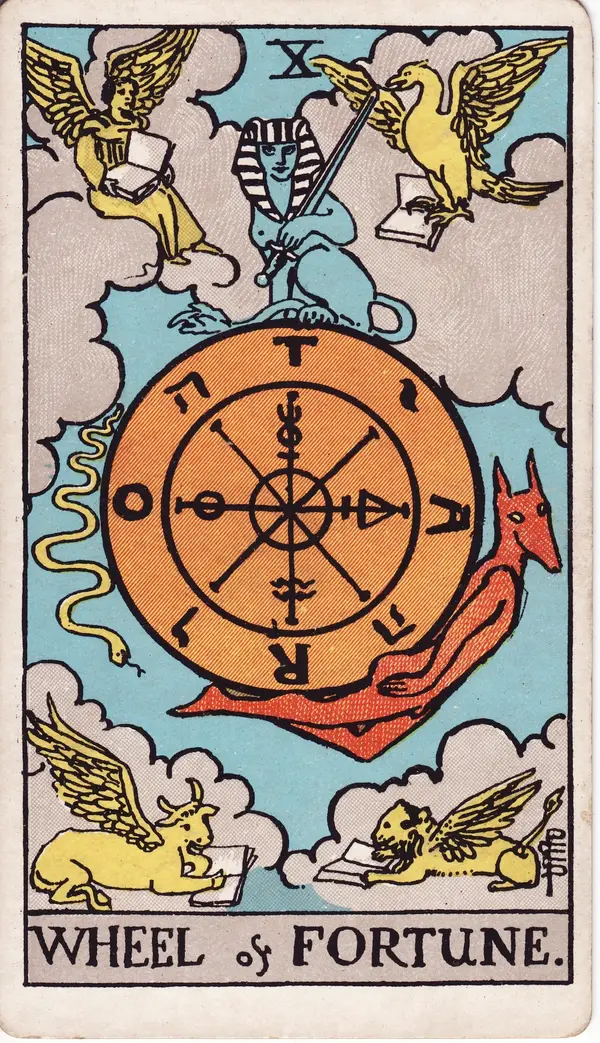
Choice, will, patience, solitude, chance.
The middle of the road: XI to XIV
Halfway through, the journey turns inward. Justice (XI), with her sword and scales, asks him to face the consequences of his choices honestly. The Hanged Man (XII) hangs upside down from a living tree, calm, with a halo round his head: a pause, and the world seen from a different angle. Death (XIII) rides in under a black banner with a white rose: an ending, the kind that clears the ground rather than a literal death. Temperance (XIV) is an angel pouring water from one cup into another, patiently finding the right mix again.
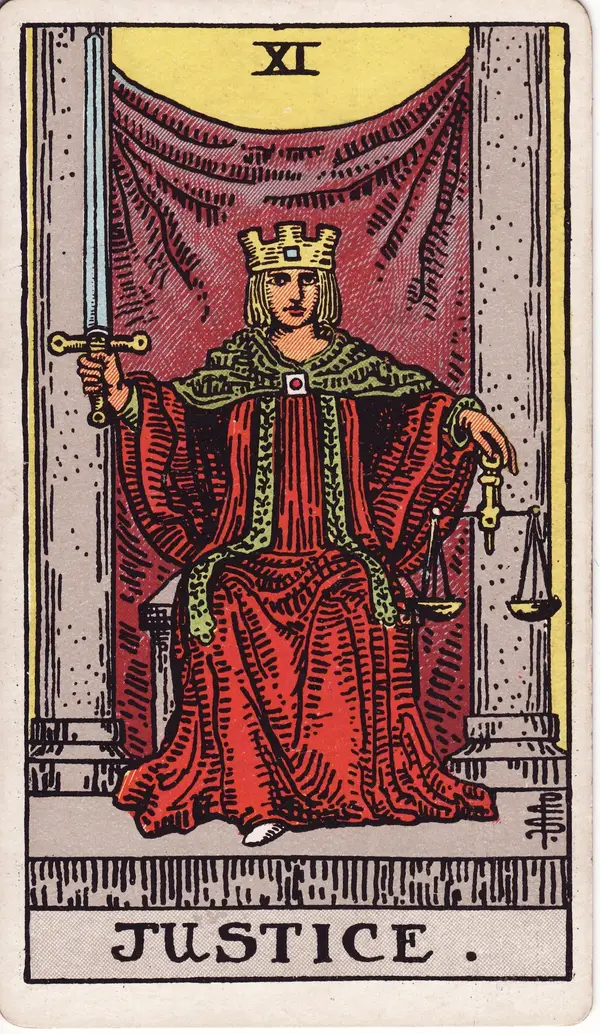
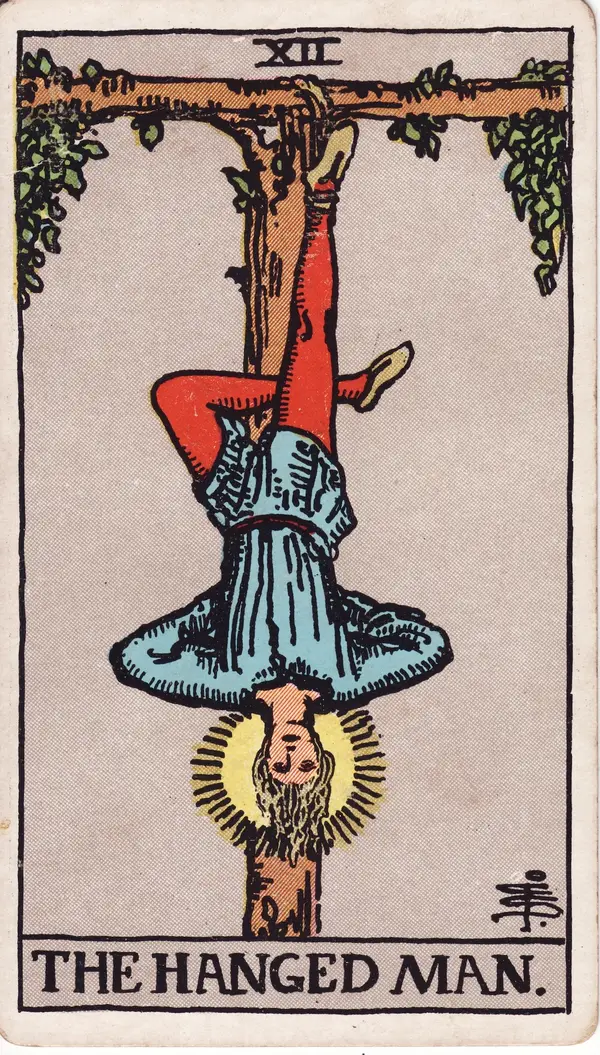
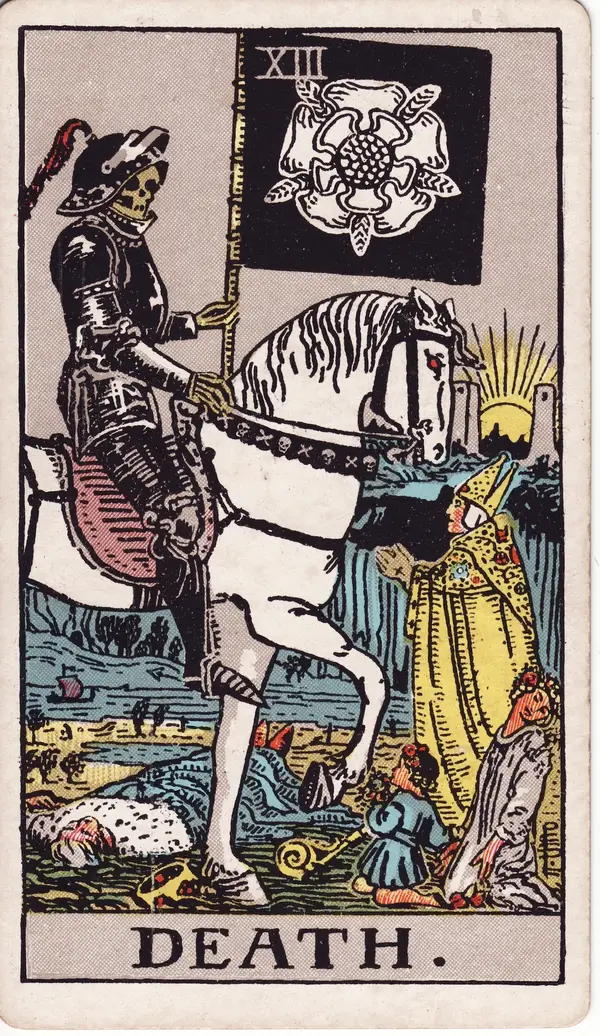
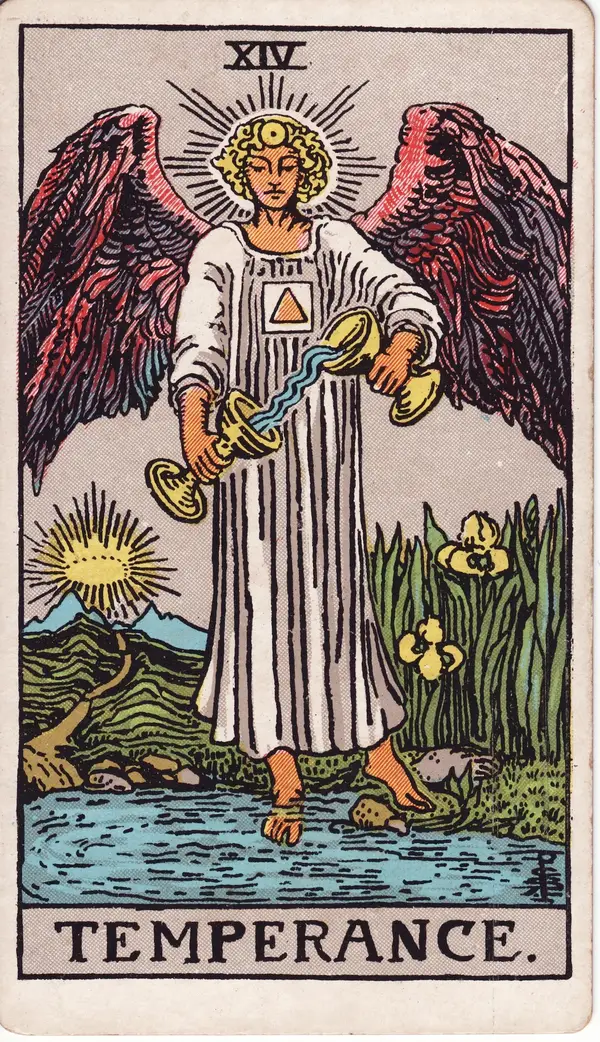
Honesty, surrender, ending, balance.
Through the dark: XV to XVIII
The hardest cards come next. The Devil (XV) shows two figures chained to his perch, though the chains around their necks hang loose enough to lift off: the things we stay attached to by habit. The Tower (XVI) is struck by lightning and its crown knocked off, a sudden collapse of something built on a false foundation. After it comes the Star (XVII), calm water and hope, the first light after the storm. Then the Moon (XVIII), a path running between two towers at night, past a howling dog and wolf: fears and uncertainties that have to be walked through rather than solved.
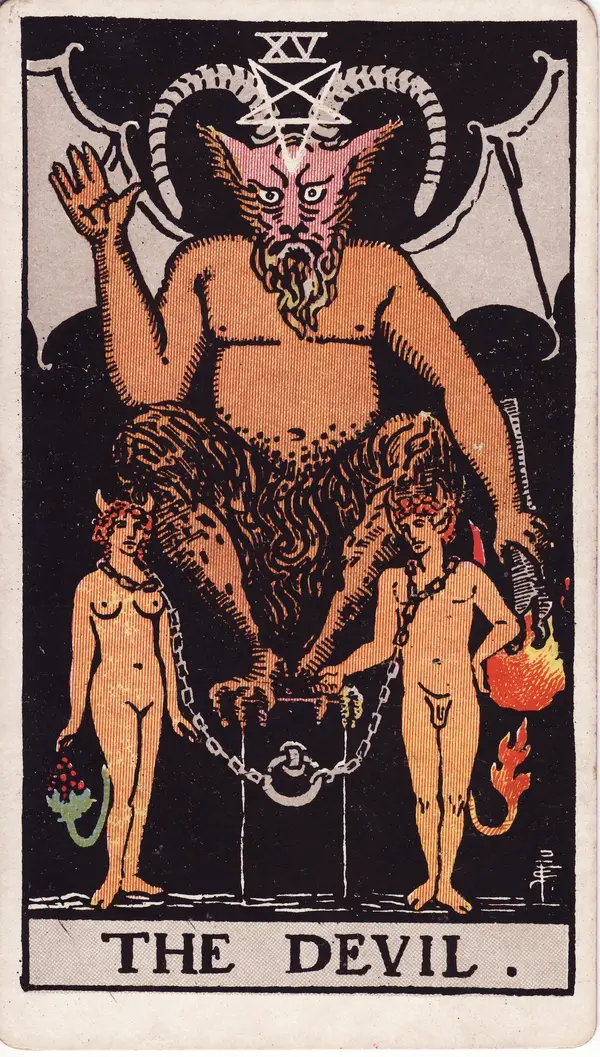
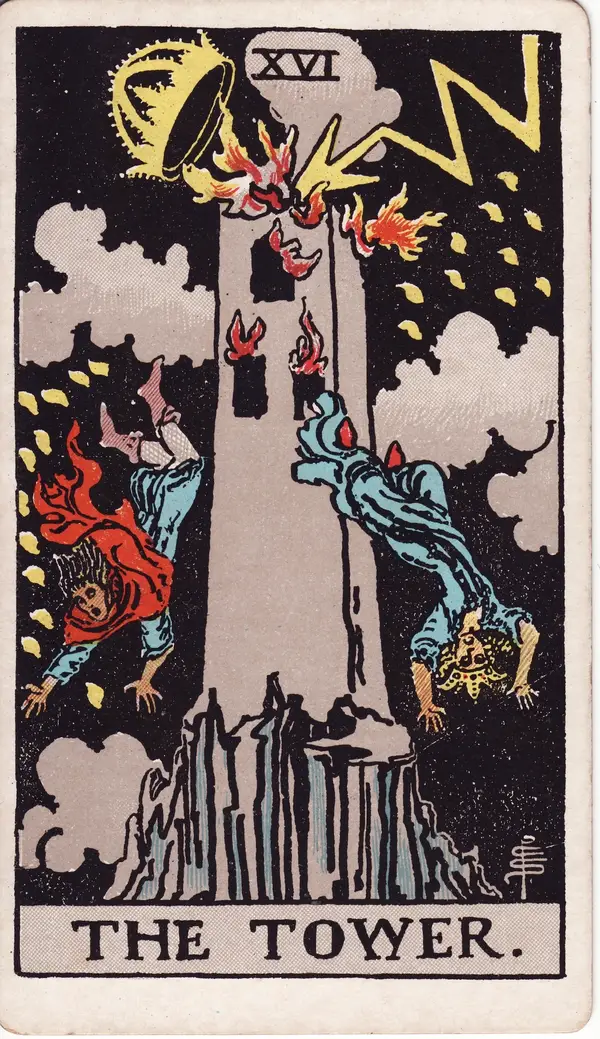
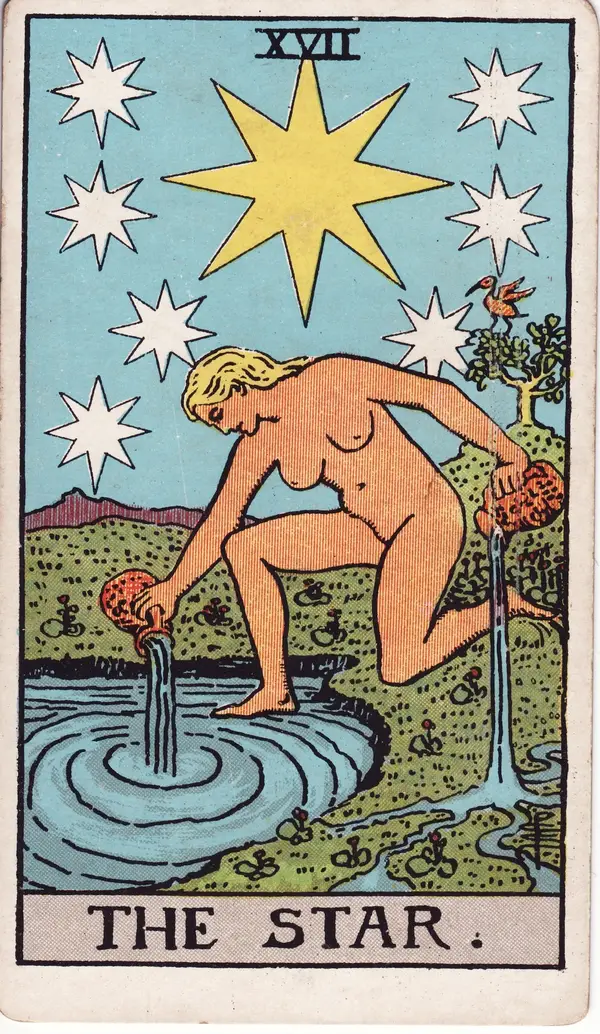
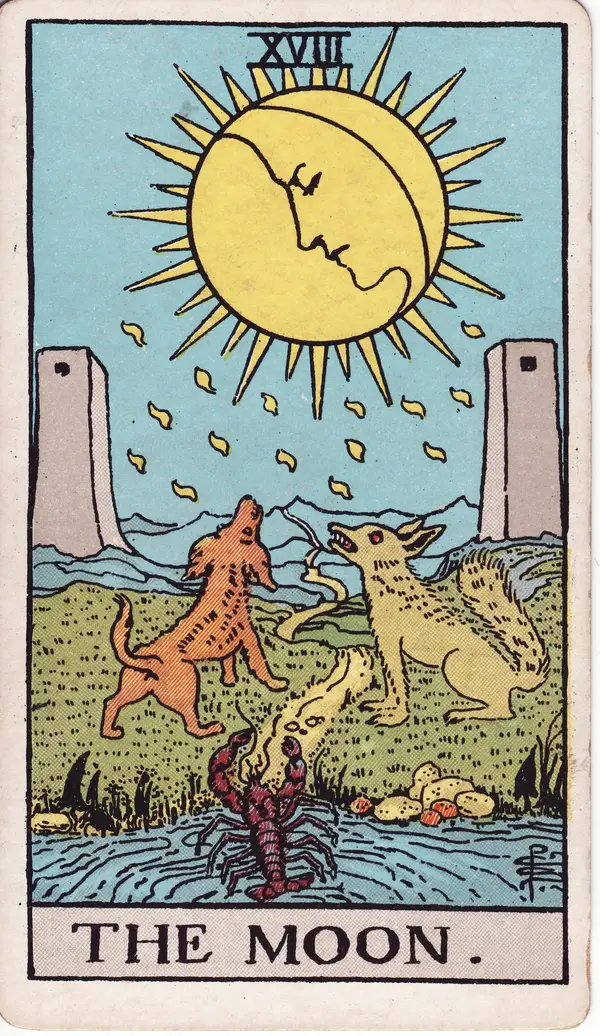
Attachment, upheaval, hope, uncertainty.
Into the light: XIX to XXI
Out of the night the Fool reaches the Sun (XIX): a child on a white horse under a huge sun, joy without complication. Judgement (XX) is an angel's trumpet waking people from their coffins, a call to rise and answer for the life he has lived. And the World (XXI) is a dancer inside a great wreath, with the four winged creatures at the corners: everything brought together, a cycle completed.
The World is not the end. Completion is where the next beginning starts, and the Fool sets out again, a little wiser, on the next journey.
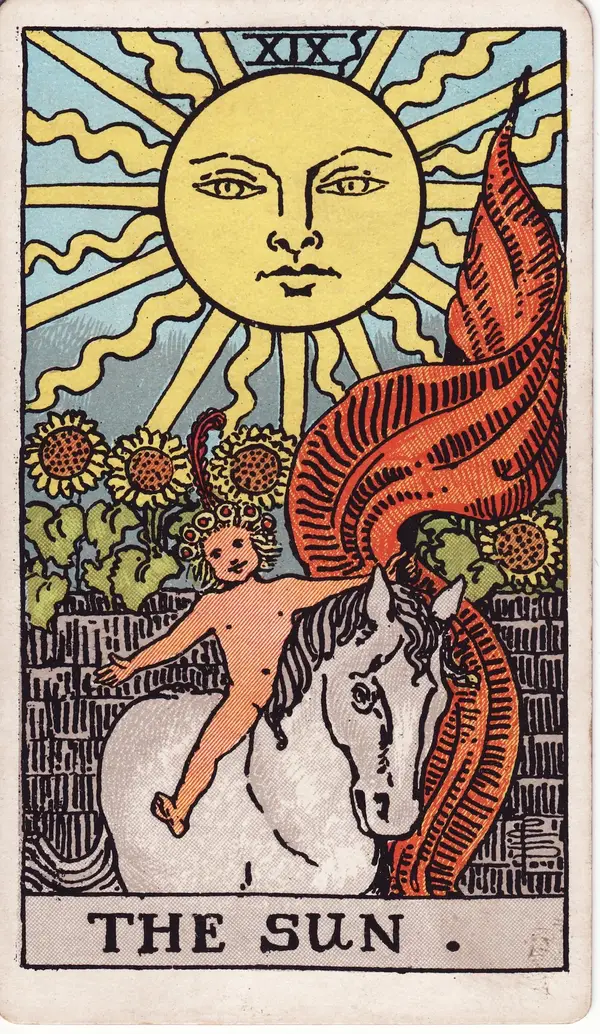
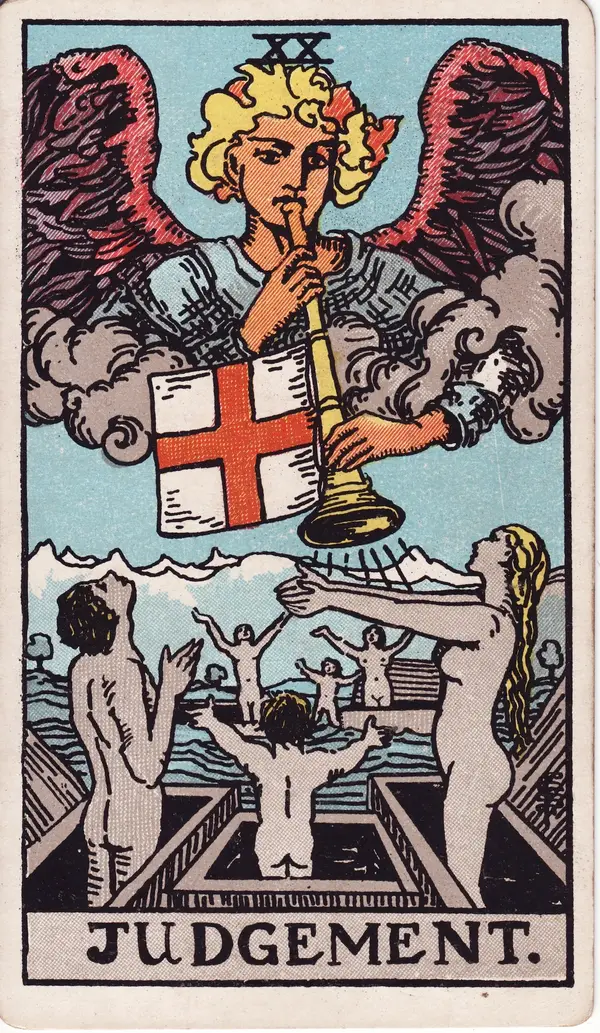
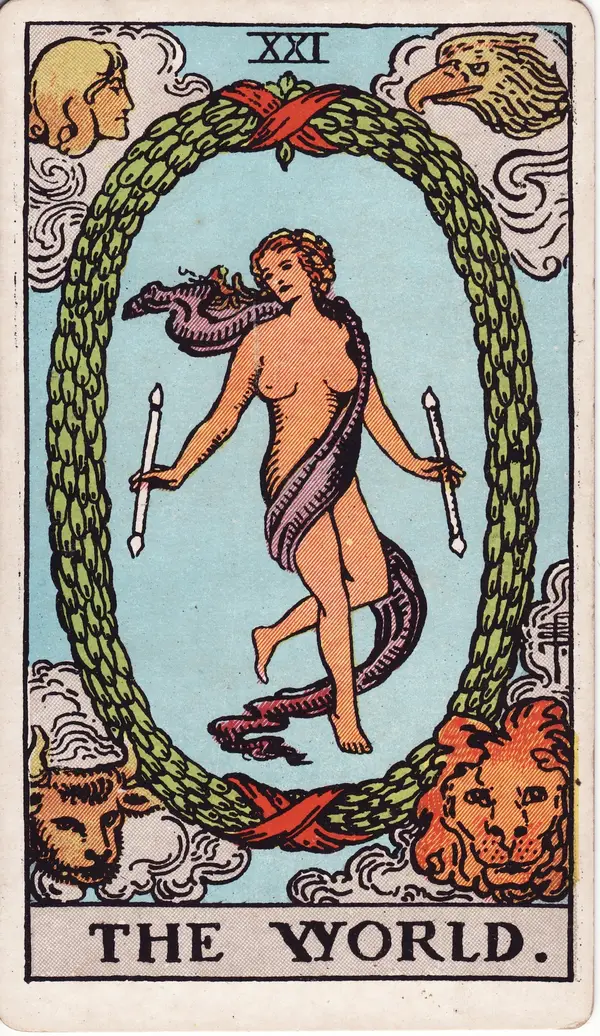
Joy, awakening, completion.
Using the journey in a reading
When a major card comes up, ask where it sits on the road. An early card, I to V, suggests something new that you are still learning about. A card from the middle suggests a test or a turning point. A card from the dark section of the road is hard but leads somewhere, and the Star always follows the Tower. A late card suggests something close to finished.
Many readers also see the three rows of seven, I to VII, VIII to XIV and XV to XXI, as three stages: learning about the world, learning about yourself, and meeting what is larger than both. It is one way to think about the cards, not a rule, but it gives every major card a place.
See which three cards come up for you today, read for your star sign and the moon.
Get today’s readingRider–Waite–Smith, 1909 · art by Pamela Colman Smith